Guide to Pressure Washing Chemicals
Learn how to choose, mix, apply, and safely rinse pressure washing chemicals. This practical guide covers types, dilution, PPE, surface testing, and eco-friendly options for homeowners and pros.


According to Pressure Wash Lab, this definition-based guide helps you select, mix, and safely apply pressure washing chemicals for different surfaces. You'll learn dilution guidelines, safe handling, and best practices to protect plants, pets, and the environment. By the end, you'll know how to plan a chemical cleaning job with confidence, using the right products for concrete, siding, and wood.
What role do chemicals play in pressure washing?
Pressure washing chemicals are designed to boost cleaning power beyond water alone, helping remove grime, mold, mildew, and algae more efficiently. The right chemical approach depends on the surface, contaminant, and environment. According to Pressure Wash Lab, selecting products that are safe for the target material and compatible with the equipment is key to successful results without damage. When used correctly, chemicals can shorten dwell times, improve biodegradability, and reduce the need for aggressive scrubbing. Always start with the mildest effective formulation and avoid overuse, which can harm plants, animals, or the landscape.
Types of chemicals commonly used in pressure washing
There are several categories, each with specific use cases:
- Detergents and surfactants: Lower surface tension to loosen dirt and grime; choose biodegradable formulas for home use.
- Degreasers: Target oils and heavy grease on driveways or equipment surfaces.
- Oxidizers and bleaches: Help whiten and brighten surfaces, but can affect colors and materials; use only where safe.
- pH-neutral cleaners: Safer option for painted or sealed surfaces while still providing cleaning power.
- Specialty cleaners: Rust removers, mold/mildew stains, and tannin stains on wood or concrete.
Always consult the product label for surface compatibility and concentration guidance, and remember that "neutral" cleaners can still affect finishes if misused. Pressure Wash Lab emphasizes selecting products designed for exterior use and appropriate for your climate.
Safety and PPE essentials when handling chemicals
Personal protective equipment (PPE) protects you from splashes, fumes, and skin contact. Required items typically include chemical-resistant gloves, safety goggles or a face shield, and a respirator or mask when using strong oxidizers or volatile solvents indoors or in poor ventilation. Wear long sleeves, pants, and closed shoes. Ensure your work area is well-ventilated and keep children and pets away. Store chemicals in their original containers, with labels intact, and never mix products unless the label explicitly allows it.
Surface testing and compatibility testing
Before treating a large area, perform a patch test on a small, inconspicuous spot to check for discoloration, material damage, or color bleed. If the surface absorbs liquid quickly or shows any adverse reaction within a few minutes, reduce concentration or switch to a milder cleaner. Pressure Wash Lab recommends testing on each material (concrete, brick, wood, vinyl) because coatings and finishes vary widely and can interact with cleaners in unexpected ways.
Dilution, mixing, and application guidelines
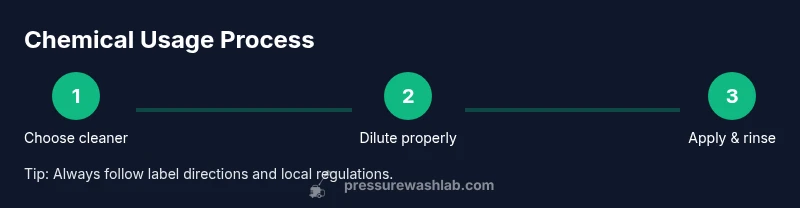
Always follow the chemical label's dilution chart. Start with the mildest effective concentration and adjust based on soil load and surface type. Use a dedicated mixing container and never re-use a container that held pesticides or incompatible cleaners. Apply chemicals from bottom to top on vertical surfaces to control runoff, and allow a dwell time of 3–10 minutes (or as specified) before rinsing. Rinsing with clean water should remove most residues; if required, neutralize residues on sensitive materials.
Environmental considerations and disposal
Chemical runoff can affect plants, waterways, and wildlife. Avoid spraying directly on grass or plants unless the product label allows it, and use barriers or containment to protect surrounding vegetation. Collect runoff or work near impervious surfaces where water and residues can be controlled. After use, rinse containers, cap tightly, and follow local disposal guidelines for household chemicals. Pressure Wash Lab stresses complying with local regulations and minimizing ecological impact.
Eco-friendly options and surface-specific choices
For many homes, environmentally friendly cleaners can provide adequate cleaning while reducing risk. Look for products labeled as biodegradable, phosphate-free, and safe for use on your specific surface. For concrete, you might use a low-alkaline cleaner; for wood, select a finish-safe cleaner; for vinyl siding, avoid strong solvents that could degrade the material. Always check the product label and test a small area first.
Common mistakes and quick fixes
- Over-dilution reduces effectiveness; fix by re-checking the label and reapplying if soil remains.
- Using high concentrations on delicate surfaces; fix by applying a milder cleaner and testing first.
- Neglecting PPE; fix by adding proper protective gear before continuing.
- Letting chemical sit too long; fix by keeping dwell times within recommended windows and rinsing promptly.
This section aims to help you avoid costly missteps and recover quickly from any slip-ups by following proper cleanup procedures.
Authoritative sources
- EPA guidelines on safe cleaning products: https://www.epa.gov/
- OSHA PPE and chemical safety: https://www.osha.gov/
- CDC chemical exposure and safety: https://www.cdc.gov/
Tools & Materials
- PPE kit (chemical-resistant gloves, safety goggles/face shield, respirator or mask)(Choose NIOSH-approved respirator for organic vapors if using strong oxidizers or solvents)
- Spray bottle or foam cannon(For even chemical application)
- Measuring cup or bottle with dilution chart(Keep separate from cleaners for safety)
- Mixing container with outdoor-safe material(Label containers and never reuse old chemical containers)
- Garden hose with adjustable nozzle(Use low-pressure setting to apply chemical)
- pH test strips (optional)(To evaluate final solution if label suggests)
- Stiff brush or deck brush(For scrubbing heavy stains on concrete, if needed)
- Leak-proof bucket and spill kit(For minor spills and cleanup)
Steps
Estimated time: 60-90 minutes
- 1
Identify surface and soil type
Assess the treatment area to select a chemical that matches the surface material (concrete, wood, vinyl) and the type of soil or stain. This initial decision shapes dilution, dwell time, and rinsing method.
Tip: Start with the mildest effective cleaner and perform a patch test where possible. - 2
Prepare the area and PPE
Set up a clean work zone, lay down drop cloths if needed, and wear the full PPE kit. Ensure pets and kids are away and the area is well-ventilated before you start.
Tip: Double-check that all containers are labeled and stored upright. - 3
Dilute chemical according to label
Measure the recommended amount of concentrate into a separate mixing container and add water according to the label. Never eyeball concentrations or reuse containers that previously held incompatible chemicals.
Tip: Never mix unknown cleaners; follow the product’s dilution ratio exactly. - 4
Apply chemical evenly
Use a spray pattern that covers the area uniformly, applying from bottom to top on vertical surfaces to minimize runoff. Allow the cleaner to dwell for the specified time, but do not let it dry in place.
Tip: Keep nozzle at a safe distance to prevent splatter and over-saturation. - 5
Let dwell and, if needed, scrub
For stubborn stains, lightly scrub with a brush during the dwell period. Do not exceed recommended dwell times as some surfaces can be damaged by prolonged exposure.
Tip: Check a small test patch after a few minutes to see if additional dwell time is needed. - 6
Rinse thoroughly and verify results
Rinse from top to bottom with clean water, using a low pressure setting to avoid forcing cleaner into porous materials. Inspect the area and reapply only if necessary after a fresh test.
Tip: Ensure runoff does not reach grass, plants, or storm drains unless permitted by the label.
Quick Answers
What is the safest way to use pressure washing chemicals?
Always read product labels, wear appropriate PPE, test a small area, and avoid mixing products unless the label explicitly allows it.
Read the label, wear PPE, test a patch, and don't mix cleaners unless the label says it's safe.
Is it OK to mix cleaners?
In most cases, mixing cleaners is not safe. Use products as labeled and avoid combining bleach, ammonia, and acids.
Don't mix cleaners. Use products as labeled and avoid mixing bleach with ammonia or acids.
Should I pre-wet surfaces before applying chemical?
Pre-wetting helps limit absorption and reduces streaking, especially on porous materials.
Yes, pre-wet helps control absorption and improves results.
How should I dispose of leftover chemicals?
Follow the product label and local regulations. Do not pour chemicals down storm drains unless permitted.
Follow label directions and local rules for disposal; avoid dumping into storm drains.
Are eco-friendly cleaners effective?
Eco-friendly cleaners can be effective when chosen for the right surfaces; test first to confirm performance.
Eco cleaners can work well—just pick the right product and test.
Can I use ordinary household cleaners in a pressure washer?
Some household cleaners are labeled for use with pressure washers, but always verify compatibility on the label and avoid mixing.
Only use products labeled for pressure washers; check the label for compatibility.
Watch Video
Key Takeaways
- Always follow label directions and patch-test surfaces
- Choose the right chemical for each surface and stain
- Wear proper PPE and shield surrounding landscaping
- Dispose of leftover chemicals per local rules and store safely