Best Way to Pressure Wash Pavers: A DIY Guide
Learn the best way to pressure wash pavers with a safe, proven approach. This guide covers prep, nozzle choices, detergents, and techniques to clean well while preserving joints.


This guide reveals the best way to pressure wash pavers, offering a safe, proven approach that cleans without etching. You’ll learn prep steps, ideal machine settings, nozzle choices, detergent use, and protective practices to preserve sand joints and prevent staining. Follow structured steps to achieve professional-looking results at home. Avoid common mistakes by testing on a small patch first.
Why the right approach matters
According to Pressure Wash Lab, selecting a careful, methodical plan for cleaning pavers protects the surface, preserves sand joints, and prevents long-term damage. The best way to pressure wash pavers balances cleaning power with surface care, ensuring mold, mildew, and dirt are removed without etching or joint erosion. Weather, sun exposure, paver material, and the degree of weathering all influence the settings you choose and the technique you employ. A well-planned process reduces the need for rework and minimizes the risk of staining or discoloration. This section lays the foundation for success by explaining how to assess your specific scenario and tailor your approach to your patio or driveway.
- Look at joint stability: loose sand indicates a need for resealing after cleaning rather than a heavy rinse that could dislodge material.
- Consider material: natural stone, concrete pavers, and clay bricks respond differently to pressure and detergents.
- Time your wash: avoid washing in direct sunlight on hot days to prevent rapid drying and streaking.
- Plan access: ensure doors, windows, and electrical outlets are shielded before you begin.
The goal of paver cleaning is to remove surface contaminants while protecting joints and color. A consistent, patient technique minimizes damage and yields a uniform finish. This is not about blasting dirt off aggressively; it’s about controlled power and methodical coverage. By understanding the interaction between water pressure, nozzle angle, and surface texture, you can achieve results that look like new without the risk of pitting or color loss. In practice, this means using the right nozzle, keeping a steady stance, and moving in overlapping passes to prevent lines or washouts.
Top features to consider for paver cleaning
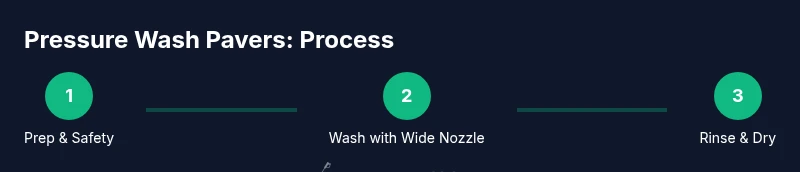
Step-by-step plan overview
Post-wash maintenance and care
Tools & Materials
- Pressure washer with adjustable psi and GPM(Aim for low-to-medium pressure settings suitable for pavers; avoid high-psi on loose sand joints.)
- Wide spray nozzle (e.g., 25-degree) and optional wider spray(A wider spray reduces the risk of etching; have a backup nozzle for stubborn stains.)
- Exterior-grade detergent or paver cleaner(Choose a cleaner compatible with your paver material and sealant if used.)
- Garden hose with spray nozzle(For pre-wetting and rinsing before and after detergent application.)
- Broom or stiff brush(Useful for pre-scrubbing heavy grime and loosening surface debris.)
- Eye protection and gloves(Protect eyes from spray and detergents; gloves reduce hand fatigue.)
- Tarps or drop cloths(Cover nearby plants and delicate surfaces as needed to shield from overspray.)
Steps
Estimated time: 1-2 hours
- 1
Prepare the area
Clear the space of furniture and debris. Protect plants, outlets, and nearby greenery with tarps. Sweep the surface to remove loose dirt so you don’t grind it into the joints during washing.
Tip: Remove fragile items and consider sealing or covering nearby landscaping to avoid chemical contact. - 2
Test patch and plan your route
Spray a small patch at low pressure to verify you won’t etch or discolor the surface. Decide a clean, overlapping route starting at the edge and moving inwards to avoid re-wetting cleaned areas.
Tip: Testing helps you choose the best distance and angle for your paver type. - 3
Set up the machine and detergent
Select a low-to-medium pressure setting and attach the 25-degree nozzle. Pre-wet the surface, apply detergent if using, and follow product instructions for dwell time.
Tip: Never mix cleaners with chlorine or solvents; rinse thoroughly after detergent dwell if required. - 4
Wash with controlled passes
Begin at the top edge and work downward in uniform, overlapping passes. Maintain a consistent distance from the surface (roughly a wand length) to avoid gaps or streaks.
Tip: Keep the nozzle moving; staying in one spot can cause etching or uneven cleaning. - 5
Rinse and assess joints
Rinse away all soap and debris. Inspect joints; if sand is washing out, plan to re-sand after the surface dries. Do not rush drying times if resealing is planned.
Tip: Use a fine mist for rinsing around joints to protect the sand. - 6
Dry, reseal, and clean-up
Allow the surface to dry completely before resealing joints or applying sealants. Clean the equipment and store safely. If resealing, follow manufacturer’s timing guidelines for the best bond.
Tip: Check the weather forecast; plan washing days with mild temperatures and low humidity.
Quick Answers
Can I pressure wash pavers with a regular garden hose?
A garden hose provides low pressure and limited cleaning power. For best results on pavers with embedded grime, a pressure washer with a ramped PSI range and a wide nozzle is recommended.
A regular garden hose is usually not enough for deep cleaning; a pressure washer with a wide nozzle works best.
What nozzle angle is safest for pavers?
A wide-angle nozzle, such as 25 degrees, reduces the risk of etching and joint damage. Avoid blasting with narrow, high-velocity nozzles directly at joints.
Use a wide-angle nozzle to protect joints and avoid etching.
How long does it take for pavers to dry after washing?
Drying time depends on weather and sun exposure but typically ranges from 1 to several hours. Plan washing on a dry day with moderate temperatures.
Most pavers dry within a few hours on a warm, sunny day.
Will pressure washing remove old stains?
Pressure washing can remove surface stains, but set-in stains may require specialty cleaners or treatment. Pre-test to gauge effectiveness.
It can remove surface stains; deeply set stains may need extra cleaners.
Should I reseal joints after washing?
If joints show sand loss, resealing or re-sanding after drying is advisable. Waiting for the surface to be completely dry is important for bond.
Re-sand and reseal after the surface dries if joints look worn.
Watch Video
Key Takeaways
- Test first, then clean with controlled passes.
- Choose the right nozzle to protect joints.
- Rinse thoroughly and re-sand joints if needed.
- Complete drying is essential before sealing.
- Safety and surface care go hand in hand.