Can You Pressure Wash Oil Out of Concrete? A Practical Guide
Learn effective, safe techniques to remove oil stains from concrete using pressure washing, degreasers, and pro tips from Pressure Wash Lab. This guide covers prep, methods, and prevention for DIY success.


Yes. You can remove many oil stains from concrete using a pressure washer combined with an appropriate degreaser and a careful cleaning pattern. Start with absorbents to catch fresh spills, test a small area, and choose a PSI and nozzle suited to your surface. For stubborn stains, repeat with a cleaner and a longer spray. Safety first.
Understanding oil stains and pressure washing basics
Oil on concrete presents three challenges: staining depth, surface porosity, and weathering. The question can you pressure wash oil out of concrete? In most cases, yes—especially fresh spills—because oil adheres to the surface, and a combination of mechanical action and solvent-based detergents can loosen and lift it. The key is to adapt your method to the stain age, the porosity of the concrete, and the environment. A light, shallow stain responds well to a targeted spray and detergent, while deep, aged stains may require multiple passes and pre-treatment with a degreaser. Pressure washing alone rarely removes all traces; pairing it with an appropriate cleaner and a dwell time improves results. Always start with blotting, containment, and a test patch to minimize damage or smearing.
According to Pressure Wash Lab, the most effective approach blends mechanical action with chemistry: use the right nozzle angle, an oil-specific degreaser, and controlled dwell times. The goal is to emulsify the oil so the wash can flush it away rather than push it deeper into the pores. We’ll walk you through a practical, repeatable method so you can decide if you can actually clean the stain yourself or if it’s time to call a pro.
Safety, prep, and surface assessment
Before you reach for the wand, assess the surface for cracks or loose aggregate. Oil stains can be slick and hidden under a film of grime. Wear eye protection, gloves, and closed-toe shoes; keep pets and kids away during cleaning. Clear the area of vehicles or planters and place disposable mats or plastic sheeting to protect adjacent surfaces. Absorbents like cat litter, baking soda, or commercial absorbent pads should be laid over the stain for up to 24 hours if feasible, especially for fresh spills. Verify weather conditions; avoid cleaning on windy days if degreasers can drift. Finally, test a small patch on a inconspicuous corner to confirm the cleaner won’t discolor the concrete.
Tools, cleaners, and settings
You’ll need a mid- to high-pressure washer (commonly 2,000–3,000 PSI) with a 25–40 degree nozzle for concrete. Have a degreasing cleaner formulated for oil stains and a stiff-bristled brush for scrubbing. Keep a low-pressure rinse handy for the final pass. Protective gear, plastic sheeting, and absorbent materials are essential. Store all cleaners away from children and pets and follow the manufacturer’s guidelines for dwell times and compatibility with concrete.
Pre-treatments and absorbents
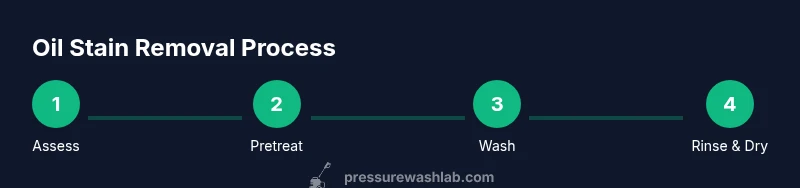
Pre-treat oil stains by applying a degreaser or emulsifying cleaner to the stain and letting it dwell for 5–15 minutes. Agitate gently with a stiff brush, then cover the area with absorbent material to draw out the oil. For older stains, repeat the treatment and allow a longer dwell time (up to 30 minutes if the surface tolerates it). After dwell, rinse carefully to remove loosened oil and cleaner residues, starting from the outer edges and moving inwards to avoid spreading the stain.
Step-by-step overview for fresh vs aged stains
This section provides a practical approach without duplicating the step-by-step list below. Start with blotting and containment for fresh spills, then apply a degreaser specifically designed for oil. If the stain persists, switch to a more intense rinse with a fan spray, and consider a second pass after re-application of cleaner. For aged stains, a longer dwell time and an aggressive rinse may be necessary, but always test a patch first to avoid etching or discoloration.
Dealing with stubborn or aged stains
Stubborn stains may not disappear completely on the first attempt. Consider repeating the degreasing and washing cycle, focusing on the stain center and gradually widening the rinse pattern. If residual oil remains, you can try a heavier-duty cleaner or a solvent-based degreaser designed for concrete, but ensure it is compatible with your surface and local environmental regulations. Avoid scraping with metal tools that could scar the concrete finish.
Rinsing, drying, and sealing considerations
After cleaning, rinse thoroughly with clean water, ensuring all cleaner residues are removed. Allow the surface to dry completely before applying any sealant or coating. Sealing freshly cleaned concrete can help resist future oil penetration, but apply only after the surface is fully dry to prevent trapping moisture. If seasoning or weather changes are expected, consider scheduling sealing in a dry, moderate window.
Common pitfalls and troubleshooting
Common mistakes include using too high PSI on old or porous concrete, which can erode the surface; using the wrong nozzle angle, which can spread the stain; and neglecting to protect surrounding areas. Always test a small area first, monitor dwell times, and avoid blasting at metal or wooden surfaces. If the stain remains after multiple passes, professional remediation may be required.
Real-world results and expectations
Real-world results vary with stain age, concrete porosity, and the cleaners used. Fresh stains often respond well to a single pass combined with pre-treatment; older stains may require multiple cycles. Expect some residual staining on highly porous surfaces; sealing can help but will not remove all evidence. With diligence and correct technique, you can significantly reduce or remove most oil stains.
Maintenance and prevention tips
To prevent future stains, address spills immediately by blotting—not rubbing—then applying a degreaser. Regularly reseal concrete to reduce porosity and ease future cleaning. Place a barrier mat at entryways and consider applying a sponge or towel for quick cleanup after spills.
Tools & Materials
- Pressure washer (2000-3000 PSI)(With a 25-40 degree nozzle; avoid aggressive nozzles on delicate surfaces.)
- Oil-degreasing cleaner(Choose an emulsifying cleaner designed for concrete oil stains.)
- Stiff-bristled brush(For scrubbing stained areas during dwell time.)
- Absorbent material (cat litter, baking soda, or commercial absorbent)(Place over stain to wick up oil; reusable or dispose as waste.)
- Plastic sheeting or tarps(Protect surrounding surfaces and plants.)
- Protective gear (gloves, eye protection, closed-toe shoes)(Never skip PPE when handling cleaners.)
- Wet/dry vacuum or additional rags(Clean up excess liquids after washing.)
- Sealant (optional post-cleaning)(Apply only after surface is dry to reduce future absorption.)
Steps
Estimated time: 60-120 minutes
- 1
Prepare workspace and protect surrounding areas
Clear the area, move furniture, and cover nearby surfaces with plastic sheeting. Place absorbent materials over the stain to capture oil as you begin. This reduces spread and eases cleanup later.
Tip: Protect neighboring plants and surfaces to prevent cleaner runoff from causing damage. - 2
Pre-treat the stain with a degreaser
Apply the degreaser according to the product label. Let it dwell for 5-15 minutes, allowing the chemistry to emulsify embedded oil.
Tip: Avoid letting the cleaner dry out on hot concrete—reapply if it dries before washing. - 3
Set up the pressure washer and nozzle
Choose a 25–40 degree nozzle and a moderate pressure setting suitable for concrete. Do not use a jagged-edged nozzle that can gouge the surface.
Tip: Test on a small patch first to confirm the surface tolerates the chosen setting. - 4
Test patch and adjust technique
Spray a small patch at an angle to verify effectiveness. If the stain spreads, adjust the distance and angle; avoid direct, perpendicular blasting on one spot.
Tip: Start from the edge and work inward to prevent spreading. - 5
Apply cleaner, scrub, and dwell
Apply cleaner to the stained area, scrub with brush for 1–2 minutes, then allow a brief dwell (5–10 minutes) for the cleaner to work.
Tip: Do not over-scrub; excessive agitation can damage the surface. - 6
Rinse from top to bottom
Begin rinsing at the edge of the stain and move downward, keeping the stream at a slight angle away from itself to avoid pushing oil under surfaces.
Tip: Maintain a consistent distance to prevent uneven cleaning. - 7
Re-wash stubborn spots
If stains remain, re-apply cleaner and repeat the rinse. Persistent stains may need a second dwell or an alternative cleaner.
Tip: Don’t give up after one pass; multi-pass cleanings yield better results. - 8
Final rinse and dry
Rinse thoroughly to remove cleaner residues and oils. Let the concrete dry fully before assessing results.
Tip: Use fans or sunny conditions to speed drying. - 9
Cleanup and storage
Dispose of absorbents and used cleaning materials per local regulations. Store tools and cleaners safely.
Tip: Rinse and wipe down equipment after use to extend life.
Quick Answers
Can I pressure wash fresh oil spills immediately?
Yes, blot the spill to remove excess oil and apply a degreaser. Let it dwell briefly, then wash with a suitable nozzle and water flow. If the stain persists, repeat with a stronger cleaner.
Yes, you can start with blotting and a cleaner, then wash with the right nozzle.
What PSI is best for cleaning concrete without damaging it?
A mid-range setting for concrete is typically around 2,000–3,000 PSI with a wider spray nozzle to avoid etching or gouges. Always test a patch first.
Use a mid-range PSI and test a small patch first.
Will pressure washing remove all oil stains?
Most fresh stains respond well, but aged or deeply embedded stains may remain after one or more passes. Sealed or resurfaced concrete can help prevention and removal.
Most fresh stains come out; older stains might require extra steps or professionals.
Is it safe to pressure wash near plants or grass?
Protect plants and soil with barriers or shields to prevent chemical runoff. Use lower pressure near landscaping and avoid spraying directly into soil.
Protect plants with barriers and avoid direct spray on soil.
When should I hire a professional?
If stains are extensive, the concrete is porous, or the stain resists multiple attempts, a professional has specialized tools and cleaners for deeper remediation.
If stains persist after several attempts, consider a pro.
Watch Video
Key Takeaways
- Prepare and protect the area before cleaning.
- Use a dedicated degreaser and appropriate nozzle.
- Work methodically from edges inward to prevent spreading.
- Rinse thoroughly and allow complete dry before sealing.