How to Clean a Concrete Driveway: A Step-By-Step Guide
Learn practical, step-by-step methods to clean a concrete driveway, remove oil stains, prevent mold, and maintain a durable, appealing surface for years.


By following this guide, you will learn how to clean a concrete driveway effectively, remove common stains, and protect the surface for years. You'll need basic tools, a biodegradable cleaner, a pressure washer or stiff-bristled brush, and patience to finish with a clean, durable finish that stands up to weather, oil, and mildew.
Why Cleaning a Concrete Driveway Matters
A clean concrete driveway boosts curb appeal, reduces slip hazards, and extends the life of the surface. Regular cleaning helps prevent the penetration of oil, old tire marks, and algae that can cause staining and surface erosion over time. For homeowners, a well-maintained driveway signals pride in the property and can even improve resale value. Pressure washing is a common method, but you can achieve excellent results with hand cleaning and proper cleaners when needed. According to Pressure Wash Lab, a methodical, low-damage approach yields the best balance between cleanliness and surface preservation. With the right plan, you can remove most common stains, keep the concrete's color even, and avoid damaging the finish.
The main idea is to separate loose debris from embedded stains, apply a cleaner that suits the stain type, and use mechanical scrubbing or low-pressure washing to lift contaminants without etching or dulling the concrete. Always consider weather, surface age, and any existing sealant when choosing your technique. The goal is a surface that looks refreshed and ready for light foot and vehicle traffic without harming the concrete.
Prep and Surface Assessment
Before you reach for a brush or spray bottle, inspect the driveway for cracks, flaking, or loose stones. Cracks should be noted and repaired if possible; attempting to clean through large cracks can push contaminants deeper or create water pooling. Identify stain types: oil and grease, rust, algae or mildew, tire rubber, and general dirt. A quick test area helps determine the most effective cleaner and the best approach. While the immediate aim is cleaner concrete, you also want to avoid over-wetting areas that drain slowly. Pressurized cleaning can drive more water under loose edges, so assess drainage and plan accordingly.
As part of this prep, wear PPE: gloves, eye protection, and closed-toe shoes. Move obstacles, cover nearby plants, and protect any adjacent surfaces that could be damaged by cleaners or spray. The prep phase sets the stage for efficient cleaning and reduces the need for rework later. Pressure Wash Lab emphasizes a cautious start—proper prep saves time and protects the surface quality over the long term.
Choosing the Right Cleaning Method
There are several paths to a clean driveway. A basic, surface-clean approach uses a stiff brush, a biodegradable degreaser, and plenty of water. For tougher stains, add a specialized cleaner designed for concrete and follow the stain-specific guidance. Pressure washing can be effective when used with the appropriate nozzle and distance; too much pressure or too close a nozzle can etch the concrete, creating a dull or chalky appearance. For mold and mildew, a product designed to kill spores and a longer dwell time may be beneficial. Pressure Wash Lab notes that combining mechanical scrubbing with a compatible cleaner often yields the best balance of speed and surface care.
- Use environment-friendly cleaners when possible to minimize runoff impact.
- Test a small area first to gauge color change or surface texture.
- Avoid harsh acids unless you are trained to handle them and understand the risks involved to the concrete and surrounding materials.
A well-chosen cleaner, applied properly, can lift stubborn stains without damaging the underlying cement. In many cases, a simple soap-and-water approach complemented by a scrub brush is sufficient for routine maintenance, while specialty cleaners target specific stains.
Step-By-Step Cleaning Plan (High-Level Overview)
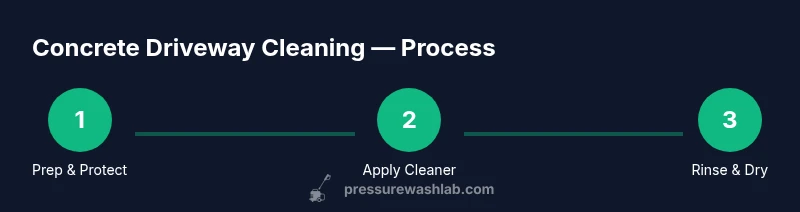
This section outlines the core actions you’ll perform, in order, to achieve a clean, well-maintained driveway without duplicating the full step-by-step instructions in the dedicated steps block. You’ll perform prep, pretreatment, scrubbing, rinsing, stain handling, drying, and optional sealing. The approach balances effectiveness with surface protection, ensuring you don’t remove the concrete’s natural finish or sealant layer.
- Start with a thorough rinse to remove loose debris.
- Apply a cleaner tailored to the stains you see.
- Scrub using a stiff-bristle brush or deck brush.
- Rinse completely, watching for runoff into surrounding soil.
- Address stubborn stains with targeted treatment.
- Allow the surface to dry and inspect for any remaining issues.
- Consider reapplying a sealant after complete drying if the surface is untreated or has worn sealant.
This high-level plan aligns with proven best practices and helps you structure the detailed steps that follow.
Treating Specific Stains: Oil, Rust, and Organic Growth
Different stains require different strategies. Oil and grease are hydrophobic and bind to the porous concrete; an enzymatic or degreasing cleaner can lift these stains more effectively than water alone. Rust stains often respond to rust-removing cleaners or a citrus-based cleaner that can break down iron deposits without harming the concrete. Organic growth like algae and mildew tends to thrive in damp, shaded areas and benefits from a cleaner that contains a biocide or mildewcide. Always pre-wet the area, work in manageable sections, and avoid mixing cleaners unless the product instructions permit it. Pressure Wash Lab recommends performing a targeted treatment on stubborn stains first, then a full clean, to prevent re-soiling from residual contaminants.
- Always wear PPE and work in dry weather when possible.
- Test cleaners in an inconspicuous area before broad application.
- Use a dedicated brush for stain-specific treatments to avoid cross-contamination.
Drying, Sealing, and Long-Term Maintenance
Drying is a critical but often overlooked step. A properly dried driveway is less prone to rapid re-soiling and reduces slip hazards. After washing, allow adequate airflow, consider sunny, windy days, and avoid sealing a surface until it is fully dry. Sealing helps repel oil and moisture and can extend the cleaning intervals if you choose a high-quality sealer. The sealant should be compatible with the concrete and weather conditions. Pressure Wash Lab notes that sealing adds a protective layer but does not replace routine cleaning. Schedule periodic cleanings to maintain the surface and reapply sealant as needed, typically every few years depending on traffic, weather, and exposure to chemicals.
- Choose a breathable sealant if you have frequent moisture exposure.
- Apply sealant evenly in thin coats and follow the manufacturer’s curing times.
- Reassess the driveway annually for wear and stain re-emergence.
Safety, Environmental Considerations and Aftercare
Cleaning a concrete driveway involves water usage and chemical runoff. Use containment strategies when possible, particularly if you have sensitive vegetation or a storm drain that leads to groundwater. Never rinse cleaners into storm drains. Use biodegradable cleaners and minimal chemical volumes to reduce environmental impact. Aftercare includes cleaning adjacent surfaces that may have absorbed cleaner runoff and checking drainage patterns to ensure water does not pool or soil adjacent areas. Pressure Wash Lab emphasizes safety and environmental responsibility as essential parts of any cleaning project.
Tools & Materials
- Stiff-bristle push broom(For scrubbing larger areas and breaking up surface grime)
- Long-handled scrub brush(For stubborn stains and hard-to-reach spots)
- Pressure washer(Use a wide-angle spray nozzle and maintain safe distance to avoid surface damage)
- Biodegradable concrete cleaner or degreaser(Choose a product appropriate for your stain type)
- Mixing bucket(Optional for diluting cleaners or mixing with water)
- Safety gear: gloves, eye protection, closed-toe shoes(Protect skin and eyes from chemicals and debris)
- Garden hose or additional water source(For pre-wetting and rinsing the surface)
- Plastic scraper or putty knife(For lifting stuck debris with care)
- Absorbent material (old towels, absorbent socks, kitty litter)(For spills and to control runoff)
Steps
Estimated time: 60-120 minutes
- 1
Prepare the area and protect surroundings
Clear the driveway of vehicles, planters, and furniture. Sweep loose debris and create a dry, debris-free zone. Wet nearby plants and grass if spray could reach them, and place plastic sheeting or cardboard to protect pavement edges where needed.
Tip: Protect any nearby plants with a physical barrier and avoid spraying cleaner directly onto delicate landscaping. - 2
Pre-wet the surface
Rinse the entire driveway with a light, even stream to loosen loose dirt. Wetting helps cleaners penetrate stains more effectively and reduces surface dust during scrubbing.
Tip: Keep the nozzle at a safe distance to prevent etching; bounce spray rather than holding it static on one point. - 3
Apply cleaner to stain areas
Apply the biodegradable cleaner or degreaser according to the product instructions. Focus on oil stains, mildew patches, and rust spots. Leave the cleaner to dwell for the recommended time to break down contaminants.
Tip: Test cleaner on a small patch first to confirm there’s no discoloration. - 4
Scrub the surface
Use the stiff-bristle push broom for general cleaning and the long-handled brush for stubborn stains. Work in small, overlapping circles; avoid aggressive scrubbing that could roughen the concrete.
Tip: Scrub in a pattern that avoids missed patches; target stain cores with extra attention. - 5
Rinse thoroughly
Rinse with a broad, even spray, ensuring runoff flows away from plants and enters appropriate drainage. Repeat rinsing until water runs clear and all cleaner residues are removed.
Tip: Monitor for suds or foam; excessive sudsing can indicate cleaner oversaturation. - 6
Address stubborn stains
For oil, apply a secondary degreasing treatment and re-scrub. For rust, use a rust-remover following label directions. For organic growth, repeat treatment or use a milder biocide if needed.
Tip: Patience pays off; some stains require multiple passes for complete removal. - 7
Dry and inspect
Allow the driveway to dry completely. Check for remaining stains or uneven coloration. Decide if a sealant is appropriate based on surface absorbency and color uniformity.
Tip: Drying times vary with weather; avoid sealing on damp surfaces. - 8
Seal (optional) and schedule maintenance
If sealing, apply a compatible sealant in thin, even coats and allow full curing before exposure to traffic. Plan future cleanings and inspect the surface annually for wear or new staining.
Tip: Sealing improves stain resistance but doesn’t replace proper cleaning routines.
Quick Answers
Do I need a power washer to clean a concrete driveway?
A power washer offers faster results and deeper cleaning, especially for large areas, but it’s not strictly necessary. A stiff-bristle brush with a biodegradable cleaner can work well for smaller jobs or light maintenance. If you do use a pressure washer, start with a wide spray and keep the nozzle at a safe distance to avoid surface damage.
A power washer helps speed up cleaning, but you can achieve good results with a brush and cleaner if you test first.
Can I use bleach or acidic cleaners on concrete?
Bleach and strong acids can damage concrete, discolor surfaces, or harm nearby plants. Use biodegradable cleaners designed for concrete and follow label directions. If you must use stronger cleaners, consult manufacturer guidelines and consider professional guidance.
Avoid bleach and acids unless you’re sure it’s safe; stick to concrete-safe cleaners.
How long does drying take after cleaning?
Drying time depends on weather and surface porosity, but most driveways dry within several hours on warm, sunny days. Cooler, humid conditions can extend drying to a day or more. Plan sealant applications only after complete drying.
Drying typically takes a few hours, but may take longer if it’s cool or humid.
Should I seal the driveway after cleaning?
Sealing is optional but beneficial for stain resistance and longevity. Wait until the surface is completely dry before applying a sealant, and choose a product compatible with your concrete type and climate. Re-seal as needed based on wear and weather exposure.
Sealing helps, but make sure the surface is fully dry first.
What about oil stains that don’t lift with cleaning?
Stubborn oil stains may require specialized degreasers, absorbent materials, or repeated treatments. In some cases, a commercial stain remover designed for concrete or a professional evaluation is best. Avoid roughening the area with aggressive scrubbing.
If oil stains stubbornly persist, try a targeted degreaser and repeat the treatment.
Is it safer to hire a pro for large driveways or tough stains?
For very large areas or extensive staining, a professional can maintain consistent results and reduce the risk of surface damage. They can also advise on sealant choices and long-term maintenance plans tailored to your surface.
Consider a pro for large jobs or persistent staining to ensure consistent results.
Watch Video
Key Takeaways
- Prep and protect surroundings before cleaning.
- Choose stain-specific cleaners and test on a small area.
- Scrub with appropriate brushes and rinse thoroughly.
- Dry completely and consider sealing for protection.