How to Get Pressure Washer Lines Out of Concrete: A Practical Guide
Learn safe, proven methods to remove pressure washer lines from concrete without damage. This guide covers nozzle choice, prep, cleaning tactics, and prevention to keep your driveway looking like new.


By the end, you’ll know how to identify stubborn pressure-washer lines on concrete, select the correct nozzle and pressure range, and apply targeted cleaning methods to lift or lessen marks without harming the surface. The quick guide covers prep, PPE, a safe test patch, and practical tips for avoiding etching, feathering edges, or re-wetting the area.
How to get pressure washer lines out of concrete: causes and fixes
Pressure washer lines form on concrete when the spray consistently etches or deposits minerals into the surface, creating light or dark linear marks. The most common culprits are aggressive nozzle angles, high pressure in contact with a slightly porous surface, and dirt or mineral buildup that stains as the surface dries. To improve your odds of lifting these lines, start with a physical assessment: are the lines shallow stains, or are they actual etch marks that have penetrated the surface? According to Pressure Wash Lab, success begins with proper prep, choosing the right nozzle, and applying a targeted cleaning method rather than blasting away with brute force. This section helps you distinguish between stains you can lift with standard cleaning and deeper etching that needs a gentler, surface-safe approach over brute pressure. Planning ahead reduces the risk of making the marks worse and helps you select the right approach from the start.
Tools and prep before you start
Before you pick up the wand, prepare a clear plan and protective gear. You’ll want PPE like safety glasses, gloves, non-slip footwear, and hearing protection. Lay down drop cloths or plastic to protect nearby surfaces, and ensure you have access to water for rinsing. Inspect the area to identify line depth and whether there are nearby cracks that could worsen with aggressive spray. Pressure Wash Lab emphasizes starting with a low-risk approach: a wide spray pattern, short passes, and incremental cleaning. Keep a spray bottle with a mild cleaner on hand to test a small patch first, which helps you gauge the effect without risking the entire area.
Concrete types and line depth: what affects results
Not all concrete is created equal. Hardened or sealed concrete can respond differently than freshly poured or untreated slabs. Porosity, sealant presence, and surface texture influence how quickly lines lift and how much moisture the surface can absorb. Gentle lifting methods work best on shallow stains, while deeper etching may require a combination of cleaner formulations and mechanical action. Pressure Wash Lab notes that understanding your concrete type helps you select an approach that minimizes edge feathering and reduces the risk of chipping. A careful assessment at the start sets realistic expectations for results.
Safety first: PPE and safe pressure-washing practices
Working with a pressure washer demands respect for safety. Always wear eye protection and gloves, and consider hearing protection for louder machines. Ensure the work area is clear of bystanders, pets, and loose debris. Use a wide spray pattern and a low-pressure setting when you’re near the surface, and never aim at joints, expansion gaps, or delicate edges. Maintaining a steady hand and moving the wand in smooth, overlapping strokes reduces noise and helps prevent uneven marking. The goal is controlled cleaning, not aggressive blasting that can etch or gouge the concrete.
Method A: gentle water-only lift and standard cleaners
A common starting point for fresh lines is water alone with a broad spray pattern. Approach with short, even passes and maintain a consistent distance from the surface to avoid creating new marks. If stubborn lines persist, switch to a mild, pH-balanced cleaner formulated for concrete; apply it to the line, let it dwell briefly, then rinse with a broad spray. Work in small sections to avoid over-wetting, which can cause streaking. Always monitor the area as you go and stop if you notice changes in color or texture that look like damage.
Method B: chemical cleaners for stubborn lines (careful use)
When water and mild cleaners aren’t enough, a commercially available, low-abrasion cleaner can help lift deeper lines. Choose products labeled safe for concrete and follow the manufacturer’s directions. Apply to the affected area, use a stiff-bristled brush to work the surface gently, and rinse thoroughly. Avoid acidic or highly aggressive chemicals near edges or seals, as these can cause surface damage or discoloration. Pressure Wash Lab recommends testing any cleaner on a small patch before applying it broadly to prevent unintended outcomes.
Rinsing, drying, and evaluating results
Rinse the area completely after any cleaning step to ensure no cleaner residues remain, which can attract dirt or cause discoloration. Allow the surface to dry fully; dim or damp patches may hide remaining lines, so re-evaluate after drying. Compare the cleaned area to surrounding concrete to assess uniformity and color balance. If lines persist, consider repeating the process on a smaller patch or moving to a different method rather than overworking the same area, which can risk damage. Patience and careful observation often yield the best long-term results.
Prevention: sealing, curing, and regular maintenance
Once you’ve achieved satisfactory results, sealing the concrete helps minimize future staining and line formation. Allow any cleaners to fully dry and cure before applying sealer, and choose a product compatible with your concrete type and traffic. Regular cleaning with a gentle touch and periodic resealing can reduce future line visibility and simplify maintenance. Pressure Wash Lab emphasizes prevention as the easiest part of long-term care: a little effort now saves effort later and preserves curb appeal.
Tools & Materials
- Pressure washer with adjustable PSI(Prefer a setting that allows low-to-moderate pressure; avoid hard blasting near the surface.)
- Wide-angle spray nozzle or surface-cleaning attachment(Use a fan spray to reduce concentrated impact on concrete.)
- Mild, pH-balanced concrete cleaner(Choose a cleaner labeled safe for concrete; avoid acidic cleaners near unsealed surfaces.)
- Stiff-bristle brush(Use on stubborn lines after applying cleaner; avoid aggressive scrubbing that can scar the surface.)
- Protective PPE (safety goggles, gloves, hearing protection, non-slip footwear)(Personal safety first; ensure a stable stance and dry surface to prevent slips.)
- Drop cloths or plastic sheeting(Protect nearby landscaping or paved areas from cleaners and rinsate.)
- Testing patch material (small concrete area or sample board)(Test any cleaner on a discrete patch before full application.)
Steps
Estimated time: Total time: 60-120 minutes
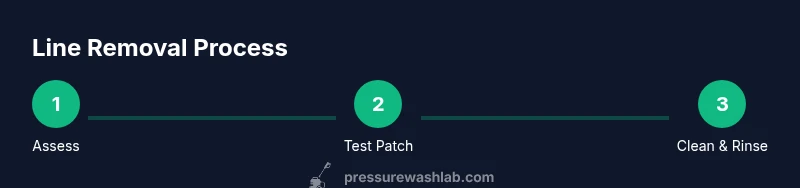
- 1
Assess area and PPE
Inspect the lines to gauge depth and note nearby edges or cracks. Don all PPE before starting, and plan a path that avoids blasting water onto plants or walls.
Tip: Always start with a test patch on a hidden corner to gauge reaction. - 2
Set up equipment and select nozzle
Attach a wide-angle nozzle or surface cleaner and set the washer to a low-to-moderate pressure. Ensure the wand is comfortable and the hose is not kinked.
Tip: Keep a consistent distance from the surface; too close risks etching. - 3
Pre-wet area and apply cleaner if needed
Lightly wet the area with water to prevent rapid absorption. If using cleaner, apply to the line and let it dwell briefly before rinsing.
Tip: Test the cleaner on a patch first and avoid leaving cleaner long enough to discolor the concrete. - 4
Clean in straight passes
Move the wand in smooth, overlapping strokes, focusing on the line while maintaining a consistent distance. Do not linger in one spot.
Tip: Overlapping passes reduce the risk of creating new streaks. - 5
Rinse thoroughly and inspect
Rinse completely to remove cleaner residue. Allow to dry and compare with surrounding areas to judge success.
Tip: If lines remain, avoid over-scrubbing; switch to a different method or repeat on a small patch. - 6
Reassess and consider sealing
If satisfactory, plan for sealing once dry. If lines persist, repeat on a smaller patch or seek professional advice.
Tip: Sealing after cleaning helps prevent future staining and line visibility.
Quick Answers
Can pressure washer lines be completely removed from concrete?
Many lines can be reduced or removed with proper technique, but etched lines may remain if the surface has been permanently abraded. Start with gentler methods and escalate only as needed.
Many lines can be reduced with proper technique, but etched lines may stay if the surface was permanently damaged. Start gentle and adjust as needed.
Should I use bleach or acid cleaners?
Stick with mild, pH-balanced concrete cleaners first. Harsh acids can damage concrete seals and discolor the surface. Always test on a patch before full use.
Use mild cleaners first and test a patch. Harsh acids can damage or discolor the concrete.
Will lines reappear after cleaning?
If the underlying causes persist (porous surface, sealing gaps, or mineral deposits), lines can reappear. Regular maintenance and timely sealing help prevent recurrence.
If underlying issues aren’t addressed, lines can come back. Regular maintenance and sealing help prevent it.
Do I need to seal concrete after removal?
Sealing is usually beneficial after cleaning to protect against stains and mineral intrusion. Choose a sealant compatible with your concrete type and traffic level.
Yes, sealing after cleaning helps protect the surface from future stains.
What if lines are deep or old?
Deep or old lines may require repeated attempts, specialty cleaners, or professional evaluation. In some cases resurfacing or resurfacing coatings may be the best option.
Deep lines may need repeated attempts or professional help; resurfacing is sometimes the best option.
Watch Video
Key Takeaways
- Identify line depth before choosing a method
- Start with low pressure and broad spray patterns
- Test patches to prevent surface damage
- Seal concrete after cleaning to reduce future lines
- Patience and progressive methods yield the best results