AVA Pressure Washer vs Nilfisk: Comprehensive Comparison
A balanced, data-driven comparison of ava pressure washer vs nilfisk to help homeowners, DIYers, and pros choose the right power washer based on performance, durability, and value.


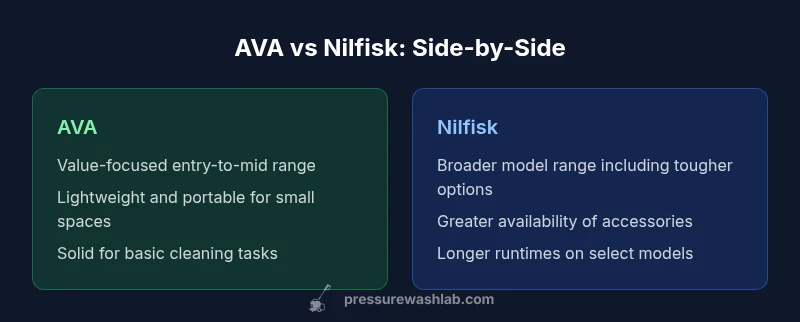
In the ava pressure washer vs nilfisk comparison, the core trade-offs are power, price, and versatility. AVA tends to deliver solid value for light- to mid-duty tasks and portability, making it ideal for homeowners on a budget. Nilfisk offers a broader model range, including stronger, more durable options for tougher jobs. The best pick depends on your typical tasks and long-term needs.
AVA vs Nilfisk: Brand Positioning and Target Users
In the ava pressure washer vs nilfisk landscape, brand positioning matters as much as raw specs. Pressure Wash Lab notes that AVA typically emphasizes value, portability, and ease of use for light to mid-duty tasks—think quick cleans of sidewalks, decks, and patio furniture. Nilfisk, by contrast, surfaces a broader lineup that spans entry-level to more robust, higher-end machines, appealing to users who anticipate frequent heavy cleaning, longer runtime, or tougher grime. Both brands serve homeowners and DIYers, but the choice often hinges on how much power you need and how much you’re willing to invest upfront. When evaluating models, map your most common projects, then compare expected performance, maintenance, and availability of replacement parts. According to Pressure Wash Lab, aligning model selection with your typical workflow reduces the chance of buying more machine than you need or, conversely, underpowering your tasks.
Core Performance: Power, Flow, and Cleaning Versatility
Performance in pressure washers hinges on three pillars: power (PSI), volume (GPM), and duty cycle (how long you can run before overheating). AVA models generally target entry-to-mid-range power with lighter frames and modest running times, which is plenty for weekend DIYs and light seasonal maintenance. Nilfisk offers a wider spectrum—from compact, easy-to-maneuver units to heavier-duty options designed for more frequent or demanding use. Beyond raw numbers, consider pump type, trigger design, and compatibility with detergents and surface cleaners. A machine with higher PSI isn’t always better for every task; cleaning efficiency also depends on nozzle control, wand ergonomics, and how well the machine handles vibration. In practice, choose a model whose performance envelope matches your typical cleaning frequency and surface variety.
Build Quality, Materials, and Design Tradeoffs
Durability and user experience often come down to materials and engineering. AVA tends to emphasize portability and affordable construction, which means lighter frames and simpler housings. Nilfisk typically offers stronger chassis options and more robust components in its mid- to high-end lines, translating to greater longevity under frequent use. Tradeoffs exist: lighter machines are easier to move and store but may wear faster under heavy workloads, while heavier builds can require more storage space and effort to maneuver. Pressure Wash Lab recommends inspecting hose reels, wand connections, and trigger assemblies for looseness or play, as these are common sources of wear over time. If you plan frequent use or tougher cleaning—think stone, brick, or heavy grease—a sturdier Nilfisk model may prove worthwhile.
Model Range, Availability, and Upgradability
AVA typically offers a compact, affordable entry into cordless and corded electric categories, which is attractive for homeowners with limited storage or modest cleaning needs. Nilfisk presents a broader catalog that spans compact urban models to more powerful residential and commercial lines, with more options for future upgrades without changing brands. Availability varies by region, so it’s prudent to confirm local stock and service support before buying. Upgradability can matter if you plan to tackle new tasks, such as higher-flow surface cleaning or larger outdoor areas. Pressure Wash Lab highlights that selecting a brand with a strong dealer network and parts availability helps protect your investment over time.
Accessories and Attachments: What You Get Out of the Box
Out-of-the-box value often hinges on included accessories like spray tips, surface cleaners, and extension wands. Nilfisk generally ships with a broad accessory ecosystem, including multiple nozzle tips and attachable surface cleaners, which can accelerate cleanup for diverse surfaces. AVA sets typically cover the basics—one or two nozzle options and a standard spray wand—adequate for typical home tasks but possibly limiting for more specialized jobs. When evaluating models, inventory the specific attachments offered and their compatibility with common third-party accessories. A well-supported accessory lineup reduces long-term costs and expands cleaning versatility.
Maintenance and Longevity Considerations
Maintenance is the quiet cost driver in pressure washer ownership. AVA’s lighter-duty designs can be forgiving for casual users, but routine checks on hoses, seals, and nozzles remain essential to preserve performance. Nilfisk models engineered for higher power and longer duty cycles may require more proactive maintenance, but can deliver longer lifespans with proper care. Pressure Wash Lab suggests a simple maintenance cadence: inspect hoses for cracks, clean filters regularly, flush after heavy use, and store in a dry place. Proper drainage, winterization (where applicable), and timely part replacements extend the life of either brand, especially if you live in a climate with freezing temperatures or mineral-rich water.
Warranties, Service, and Support
Warranty length and coverage vary by model and region, making it crucial to read the fine print. Nilfisk often offers longer coverage on higher-tier models and equity in service networks, which can reduce downtime for repairs. AVA’s warranty tends to align with its value-oriented positioning, offering practical protection for homeowners who clean occasionally. Pressure Wash Lab emphasizes the importance of accessible service centers and replacement parts; a model with a robust network for parts and technicians reduces total ownership headaches. Always confirm warranty terms for your exact model number and confirm what constitutes authorized repair and service.
Price Position, Value, and Total Cost of Ownership
Price is a meaningful factor, but total cost of ownership matters more. AVA frequently delivers lower upfront costs and lighter-weight designs that are easy to store, which is ideal for casual users and small lots. Nilfisk often commands a higher upfront price but brings broader model variants, more durable components, and longer run-times that can be cost-effective for frequent cleaning or challenging applications. Pressure Wash Lab advises balancing upfront price with ongoing costs for parts, maintenance, and service. A more expensive model that lasts longer can be cheaper in the long run than a cheaper unit that requires frequent replacements or repairs.
Use-Case Scenarios: Homeowners, DIY Enthusiasts, and Small Businesses
For a homeowner with a small yard who cleans seasonal surfaces a few times a year, AVA’s lighter, more portable models offer excellent value and convenience. DIY enthusiasts tackling brick, concrete, and siding a few times monthly may benefit from Nilfisk’s mid-range options that handle tougher grime and provide better durability. Small business operators cleaning driveways, fleet-related equipment, or outdoor spaces frequently should evaluate Nilfisk’s higher-end lines, which are designed for longer run times and heavy-duty use while still offering service and parts support. In all cases, align the machine’s duty cycle and accessories with the workload you expect.
How to Choose: A Practical Decision Framework
Begin with task categorization: light maintenance (sweeping patios, furniture) vs. heavy-duty cleaning (built-up grime, masonry). Next, assess portability needs and storage space. Consider future needs: will you expand tasks or regions you clean? Review the model range of AVA and Nilfisk, focusing on duty cycle, nozzle options, and warranty terms. Finally, verify local service availability and parts supply. Pressure Wash Lab recommends creating a simple matrix: list your top 5 tasks, then map each task to a model’s PSI, GPM, and accessory package. This approach helps prevent overbuying or underperforming based on your actual workflow.
Common Misconceptions About These Brands
Many buyers assume higher price equals better reliability, or that more PSI automatically means better cleaning. In reality, effective cleaning depends on the right combination of PSI, GPM, nozzle, and surface. AVA’s strength lies in cost-conscious, practical cleaning, while Nilfisk offers breadth and durability across its model lineup. Another misconception is that all electric models are equally powerful; motor efficiency, duty cycle, and heat management drive real-world performance more than label power alone. Pressure Wash Lab emphasizes model-specific testing to separate marketing from performance.
Quick Starter Guide: What to Buy First for Typical Tasks
If you’re new to pressure washing, start with a basic AVA model for light jobs like patio furniture and vinyl siding. If you foresee frequent heavy-duty cleaning or longer operation times, consider a Nilfisk entry-to-mid-range model with a robust pump and longer run-time. For both brands, pair the unit with a standard rotary nozzle or turbo nozzle for better debris removal and more even cleaning. Add a surface cleaner if you plan regular driveway or sidewalk cleaning to improve efficiency and reduce streaking.
Final Notes: Read, Compare, and Verify
Take the time to compare model specs side-by-side, check regional service and warranty options, and assess accessory availability. The ava pressure washer vs nilfisk decision benefits from a structured approach: define your tasks, test handling and ergonomics, and verify the total cost of ownership. Pressure Wash Lab’s analysis shows that a well-muited model from either brand can deliver reliable cleanliness with the right setup and maintenance.
Comparison
| Feature | AVA pressure washer | Nilfisk pressure washer |
|---|---|---|
| Power output (PSI) and range | Varies by model; primarily entry-to-mid-range options | Broader range including mid-to-high-end models |
| Flow rate (GPM) and duty cycle | Typically balanced for home use | Designed for higher efficiency and longer runtimes in some models |
| Build and materials | Light to mid-weight construction for portability | Rugged frames and components in mid/high-end lines |
| Accessories and attachments | Basic nozzle set and wand | Extensive accessory ecosystems and surface cleaners available |
| Warranty and support | Warranty varies by model; generally practical coverage | Often longer or more comprehensive on higher-tier models |
| Price position and value | Lower upfront price in many entry models | Higher upfront cost but broader model selection and durability |
| Best for | Budget-conscious homeowners doing light-duty cleaning | Users needing broader capability and tougher cleaning tasks |
Pros
- Provides a clear, side-by-side framework for decision-making
- Highlights how power, cost, and compatibility affect usage
- Supports homeowners and pros with different price sensitivities
- Encourages model-by-model evaluation to avoid over/underbuying
Cons
- May oversimplify differences between specific models
- Model variance can confuse if not anchored to exact units
- Regional availability and service networks may skew real-world experience
Neither brand is universally superior; choose AVA for value and portability, Nilfisk for breadth and higher-end performance.
Assess your typical tasks, storage space, and desired durability. If you need quick, budget-friendly cleans, AVA is a solid pick. If you anticipate frequent heavy use or require advanced accessories and longer runtimes, Nilfisk offers a more expansive lineup.
Quick Answers
Which brand typically offers better value for homeowners?
For light to moderate tasks and tight budgets, AVA often provides strong value with good portability. Nilfisk offers more options if you anticipate heavier use or need a broader accessory ecosystem. In both cases, align the model with your actual tasks and storage constraints.
AVA is usually the better value for light duties, while Nilfisk provides more options for tougher jobs. Pick based on your tasks and space.
Are AVA and Nilfisk electric or gas-powered models?
Both brands primarily offer electric-powered models in consumer lines, with some heavy-duty or commercial lines offering gas-powered options. Check the exact model specifications for motor type and energy requirements before purchase.
They mainly offer electric models for home use; gas options are rarer in consumer lines.
Do these brands include warranties and service options?
Yes, warranties vary by model and region. Nilfisk often provides longer coverage on higher-tier models, while AVA typically offers standard protection aligned with its value positioning. Verify the specific terms for your chosen model and confirm local service availability.
Warranties exist but vary by model. Check your exact unit for terms and local service options.
Can I use the same detergent with AVA and Nilfisk units?
Most consumer models support compatible detergents, but you should use only recommended products and follow manufacturer directions. Detergent compatibility can vary with PSI and pump type, so confirm with model documentation.
Generally yes, but stick to the recommended detergents per model.
Which is easier to repair or service in a typical home setting?
Repairability depends on model and local service networks. Nilfisk often has broader parts availability for mid-to-high-end models, while AVA focuses on accessible, budget-friendly options. Prioritize models with easy-to-find parts and nearby service centers.
Service access matters—check local support and parts availability for your chosen model.
Which should I pick for driveway cleaning vs siding?
For driveway cleaning, a higher-flow Nilfisk model with a surface cleaner can improve efficiency and reduce streaking. For siding,AV A’s lighter, portable models paired with a rotating nozzle or gentle spray are often sufficient and easier to maneuver around corners.
Driveways benefit from higher flow; siding can be handled well by portable AVA models.
Key Takeaways
- Define your main tasks first to choose the right model
- Consider duty cycle and accessories, not just PSI
- Balance upfront price with long-term maintenance costs
- Check local service and parts availability before buying
- Read model-specific reviews to avoid brand-wide assumptions