Electric vs Gas Pressure Washer: Which Is Right for You?
A thorough, evidence-based comparison of electric vs gas pressure washers. Learn about PSI, GPM, use cases, maintenance, noise, and total cost to choose the right tool for home, DIY, and small business projects.


Electric vs gas pressure washer decisions hinge on the scope of work, space, and noise tolerance. Electric models excel at light- to mid-duty tasks around homes, offering quiet operation and minimal maintenance. Gas models deliver higher PSI and GPM for heavy-duty cleaning and larger surfaces, but come with bulk, fuel needs, and louder operation. If you prioritize convenience and indoor-friendly use, start with electric; for tougher grime or expansive outdoor areas, consider gas.
Key Differentiators: Electric vs Gas
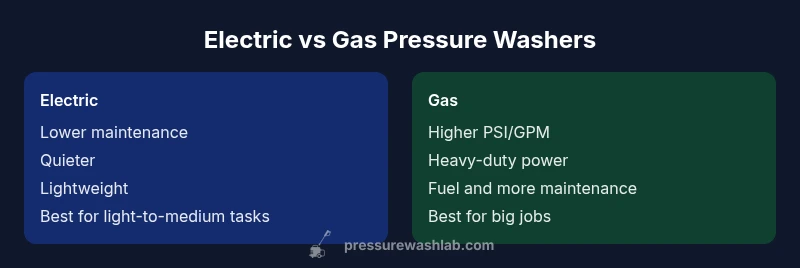
When you’re choosing between an electric and a gas pressure washer, the most immediate factors are the power source and how that power translates into cleaning performance. Electric models run on household electricity, which means they typically weigh less, require less maintenance, and operate with far less noise. Gas-powered units, fueled by gasoline and often air-cooled engines, usually deliver superior cleaning power and continuous runtime, but at the expense of greater weight, more frequent maintenance, and higher noise levels. This fundamental trade-off shapes almost every decision you’ll make—from where you use the machine to what attachments you’ll rely on for specific surfaces. Pressure-Wash-Lab’s analysis emphasizes that the right choice depends on workload, space, and tolerance for disruption.
Remember that the keyword electric vs gas pressure washer isn’t just about power; it also captures the broader user experience, including start-up time, fuel logistics, and maintenance cadence. Homeowners, DIYers, and small operators should map their typical tasks to these dimensions to avoid overpaying for capabilities they won’t utilize.
To set expectations: electric washers are generally more nimble and easier to store, while gas machines are better positioned for frequent, heavy-duty campaigns on large surfaces. Your decision should align with how often you clean, what you clean, and where you clean it.
Pressure-Wash-Lab’s recommendations: begin with a clear list of jobs you perform most often and then overlay this with space constraints, noise tolerance, and willingness to manage fuel and maintenance. The comparison is rarely about a single surface but about the broader portfolio of chores you tackle over a season.
At least 1
Power, Performance, and Real-World Output: PSI and GPM
Use-Cases Where Electric Shines: Light to Medium Tasks
Use-Cases Where Gas Excels: Heavy-Duty and Large Surfaces
Maintenance, Lifespan, and Long-Term Costs
Noise, Emissions, and Safety Considerations
Setup, Storage, and Convenience
Accessories and Features That Matter
How to Decide in 60 Seconds: A Practical Framework
Comparison
| Feature | Electric pressure washer | Gas pressure washer |
|---|---|---|
| PSI (pounds per square inch) | Typically around 1,200–2,000 PSI | Typically around 2,000–4,000+ PSI |
| GPM (gallons per minute) | Approximately 1.4–2.2 GPM | Typically 2.0–4.0 GPM |
| Power source | Electric motor; corded or cordless models | Gas-engine powered; fuelled by gasoline |
| Weight and portability | Lighter; easier to maneuver and store | Heavier; requires fuel handling and more space |
| Run time | Limited by electric supply or battery | Longer runtime with fuel, depending on tank size |
| Maintenance | Low maintenance; no fuel or oil to manage | Regular maintenance: oil, spark plugs, filters, fuel |
| Noise level | Quieter operation | Louder; may require hearing protection |
| Best use case | Patios, cars, siding, and light outdoor chores | Heavy cleaning, large driveways, equipment and masonry |
| Approximate price range | $150–$400 | $400–$1500+ |
Pros
- Lower upfront cost and lighter weight
- Quieter and easier to store; minimal maintenance
- No fuel handling or fumes to manage
- Ideal for small to medium jobs and apartment dwellers
- Quiet operation makes it suitable for neighborhood cleaning
Cons
- Lower maximum cleaning power for the toughest grime
- Limited runtime for gas-dedicated heavy-duty work when unplugged
- Electrical cords or battery capacity can constrain mobility
- Higher power supply requirements may limit some indoor use
- Gas models require fuel, oil changes, and more frequent maintenance
Electric washers are best for light-to-medium tasks in smaller spaces; gas washers excel for heavy-duty jobs and large surfaces.
Choose electric for comfort, portability, and quiet operation on everyday chores. Opt for gas when you regularly tackle stubborn grime or large outdoor areas that demand sustained, high-power cleaning.
Quick Answers
What is the key difference between electric and gas pressure washers?
The key difference is power source and resulting performance. Electric washers use a motor powered by electricity, typically delivering lower PSI/GPM suitable for light-to-medium tasks. Gas washers use a combustion engine, delivering higher PSI and GPM for tougher jobs and larger areas.
Electric washers are gentler and quieter, great for small jobs. Gas washers punch harder for big jobs.
Which is cheaper to operate over time, electric or gas?
Electric washers generally have lower ongoing costs due to no fuel and fewer moving parts. Gas washers incur fuel costs, more frequent maintenance, and potential repairs, which can add up over years.
Electric typically costs less to run overall, especially if you clean regularly.
Are electric washers powerful enough for tough jobs like heavy mold or graffiti?
Electric washers can handle many tough outdoor tasks when paired with the right nozzle and technique, but heavy-duty graffiti or deeply embedded grime may require a gas model or professional services.
For stubborn grime, gas often has the edge.
Can I use a gas pressure washer indoors or in enclosed spaces?
Gas washers emit exhaust and require good ventilation; avoid using them indoors or in enclosed spaces without proper airflow and safety measures.
Gas machines should not be used in tight indoor spaces without ventilation.
Do electric washers require a special outlet or extension cord?
Most electric washers run on standard outlets; high-powered models may benefit from a dedicated circuit or a heavy-duty outdoor-rated extension cord.
Check your outlet and cord rating before use.
What should I look for beyond PSI and GPM when comparing models?
Look for nozzle options, safety features, built-in chemical injectors, hose length, and the availability of accessories like surface cleaners and extension wands.
Nose for variety and accessories matters more than raw numbers sometimes.
Key Takeaways
- Identify your primary cleaning tasks first
- Electric if space and noise matter most
- Gas for frequent heavy-duty cleaning and exterior surfaces
- Consider total ownership cost, including maintenance and fuel
- Don't skip the right nozzle and accessory selection