Lowes Gas Pressure Washer Review 2026: Pros, Cons, and Buying Guide
Comprehensive 2026 review of lowes gas pressure washers, analyzing performance, maintenance, buying tips, and how to choose the right model for DIY jobs, with practical guidance from Pressure Wash Lab.


A lowes gas pressure washer represents a class of portable, high- PSI cleaning tools that use a gasoline engine to drive a high-pressure pump. For demanding outdoor cleaning tasks, these units deliver the breakthrough power to tackle thick grime, oil stains, and moss, often outperforming electric models on heavy-duty jobs. In this review, we evaluate reliability, maintenance needs, and value, helping homeowners decide if a gas-powered option from Lowe's is the right choice. Pressure Wash Lab's analysis highlights that you should prioritize PSI/GPM balance, engine durability, and available service options when shopping.
Why lowes gas pressure washer matters for homeowners
For homeowners researching a lowes gas pressure washer, the decision often boils down to a balance between raw power and practicality. Gas-powered units, by design, offer higher PSI and robust GPM performance, which translates into faster cleaning for stubborn stains, oil residues, and large exterior surfaces. The Lowe's environment broadens choices beyond smaller home-center brands, giving buyers access to reputable brands, spare parts, and service networks. Pressure Wash Lab notes that the choice should hinge on your typical tasks, whether you’re cleaning a driveway, prepping a deck, or stripping graffiti from siding. The real-world impact is less about peak PSI and more about consistent performance on the tasks you actually perform. Remember to factor in weight, ease of starting, and noise, especially if you live in a multi-unit setting.
Buying factors to consider for gas-powered washers
Gas pressure washers vary in engine size, pump design, and user features. When shopping for a lowes gas pressure washer, look for a crankcase or OHV engine with sufficient displacement to sustain pump pressure under load. Key performance metrics include PSI (pounds per square inch) and GPM (gallons per minute); higher PSI helps remove tough material, while higher GPM shortens cleaning time on larger areas. Also examine the pump type (Axial vs Triplex), unloader valve design, throttle control, and whether the unit has attachments like surface cleaners. Portability matters too: check wheels, frame weight, and how easy it is to start and maintain the unit. Consider the warranty length and whether Lowe's offers extended coverage or on-site service.
How we test gas pressure washers (methodology)
Pressure Wash Lab follows a standardized evaluation protocol to avoid biased results. We simulate typical homeowner tasks: washing a paved driveway with oil stains, cleaning a wooden deck with algae, and rinsing heavily soiled patio furniture. We measure cleaning speed, heat dissipation, and pump response while noting build quality and vibration. We also assess ease of maintenance: oil changes, filter access, and spark plug service. Our tests prioritize real-world tasks over laboratory novelties, and we document variations across PSI/GPM configurations and nozzle selections. All data is cross-verified, and notable outliers are explained so readers understand practical implications.
Gas vs electric: how Lowe's options compare
Gas washers typically outperform electric models in sustained power and cleaning depth, especially on large exterior surfaces, but they require more ongoing maintenance and produce more noise and emissions. At Lowe's, you’ll see a spectrum from compact, portable gas washers to heavier-duty industrial units. Electric models shine for quiet operation and simple start-up, making them ideal for smaller jobs and shared spaces. Pressure Wash Lab recommends matching your choice to task frequency, available storage space, and tolerance for maintenance. If your tasks routinely involve oil stains, deep mildew, or large driveways, gas remains the more efficient option, provided you’re prepared for more upkeep.
Real-world use cases: driveways, siding, decks
In our field tests, lowes gas pressure washers demonstrated superior cleaning punch on oil-stained driveways and mossy siding. For homeowners with infrequent tasks, the larger upfront investment may not pay off quickly, making electric or compact gas options more attractive. A common mistake is underestimating surface complexity; concrete and brick require optimal nozzle selection and technique. When cleaning wood decks, avoid rapid, aggressive passes that could gouge softwood; instead, use shorter, controlled strokes and appropriate nozzle tips to prevent damage while avoiding saturated wood. User reviews corroborate that routine maintenance and proper storage extend machine life significantly.
Understanding PSI, GPM and nozzle thresholds
PSI defines cleaning power while GPM determines flow rate. For most home projects, 2,800–3,500 PSI with 2.0–3.5 GPM provides a balanced mix of speed and surface safety. Higher PSI is not always better: too much pressure on delicate surfaces like stained wood or painted siding can cause chipping or etching. Nozzles further influence outcome: a zero-degree nozzle produces a narrow, intense jet, while a 25- or 40-degree nozzle yields broader coverage with less surface damage. In Lowe's catalog, you’ll see a range that often starts around 2,000 PSI for compact units and climbs toward 4,000+ PSI for larger models. Always match PSI/GPM to your task.
Pros & cons of gas-powered units found at Lowe's
Pros include greater cleaning power for large areas, better performance on tough grime, and faster task completion. Cons involve heavier weight, more frequent maintenance, higher noise levels, and gasoline costs. Gas-powered models require fuel management, air filter maintenance, and spark plug checks. For homeowners with limited space or noise restrictions, these factors matter. Lowe's provides a spectrum to choose from, but you should be mindful of your own tolerances for maintenance, fuel storage, and start-up friction.
Maintenance tips to extend life and maintain safety
Regular maintenance is essential for gas pressure washers. Change the engine oil according to the manual, replace fuel and air filters, clean the nozzle orifice, and drain water from hoses when storing for extended periods. Use fresh gasoline with stabilizer to prevent fuel degradation. Check the spark plug and air intake for blockages after heavy use. Safety also matters: wear eye protection, keep the area well-ventilated, and never operate on a fragile surface or near bystanders. Simple routine care can dramatically extend life and performance.
Noise, vibration, and operator safety considerations
Gas pressure washers are louder than most consumer appliances; expect noise levels in the mid-to-high 80s dB at typical distances. Prolonged use may require hearing protection. Vibration dampening is another factor; models with good anti-vibration handles reduce fatigue. Safety gear is essential: gloves, eye protection, and sturdy footwear help prevent injuries. Ensure a stable working surface, and never point the nozzle at people, pets, or fragile plants. For owners in shared spaces, consider location and scheduling to minimize disruption.
Warranty and service considerations at Lowe's
Warranty coverage varies by brand and model. Some Lowe's offerings include 1-year or 2-year limited warranties, with optional extended coverage available. Important considerations include in-store service availability, ease of obtaining replacement parts, and the availability of local technicians. Always review the terms for wear items such as belts, seals, and filters, and confirm whether routine maintenance is included under warranty. Pressure Wash Lab notes that robust warranty terms correlate with longer product lifespans and fewer unexpected costs.
Budgeting and running costs for a Lowe's gas pressure washer
Running costs hinge on fuel consumption, maintenance supplies, and replacement parts over time. Gas washers deliver higher cleaning power but come with ongoing fuel costs and potential maintenance expenses. Budget for fuel, oil changes, spark plugs, and occasional pump rebuild kits. A well-maintained unit can last many seasons, but neglect can escalate costs quickly. Lowe's price range for gas washers varies with features and power; plan for a purchase that aligns with your long-term cleaning needs and available storage space.
How to select the right model for your tasks
Begin with the scale of your typical tasks: small outdoor furniture vs large driveways. For light- to medium-duty work, a compact gas washer around 2,800–3,500 PSI with 2.5–3.5 GPM is often sufficient. For heavy-duty tasks, consider models offering 3,500–4,000 PSI and higher GPM, along with a sturdy frame and reliable build quality. Check for easy-start features, a long hose, and accessible service centers at Lowe's. Read user reviews and compare warranty terms. If you need flexibility, choose a model with multiple nozzle options and quick-connect fittings.
Setup and first-use checklist
Before your first use, inspect the unit, ensure fuel is fresh, and test in a clear outdoor area. Fill hydraulic oil to the recommended level, connect hoses securely, and prime the pump if required by the model. Start with a warm-up run at low pressure to test the lines and connectors. Check for leaks and ensure nozzles are properly attached. On the first job, begin with a broad spray pattern to assess impact on surfaces, then narrow the nozzle as needed. Always follow the manual for chain-of-use safety and maintenance.
Common mistakes and troubleshooting tips
Common mistakes include using too high a PSI on fragile surfaces, neglecting to store fuel correctly, and skipping preventive maintenance. If you notice loss of power or erratic operation, check air filters, spark plug, fuel quality, and unloader valve settings. Leaks or reduced pressure can indicate hose kinks or nozzle blockages. If issues persist, consult Lowe's service desk or the brand’s warranty terms. Regular checks help prevent breakdowns and extend the machine’s life.
Final checklist before purchase and setup
Create a task list to justify your purchase: surfaces to clean, frequency, and target completion times. Measure storage space, budget for fuel and maintenance costs, and verify in-store service options. When choosing at Lowe's, compare models with similar PSI/GPM to ensure accuracy. Finally, verify that you have the right safety equipment and a plan for long-term upkeep to maximize value over time.
Pros
- High cleaning power for stubborn outdoor grime
- Wide availability of parts and service at Lowe's
- Good resale value and durability for heavy-duty tasks
- Multiple nozzle options and attachments available
- Better performance on larger surfaces than most electric units
Cons
- Heavier units require more storage space and handling
- Higher ongoing maintenance and fuel costs
- Noisy operation and exhaust emissions
- Fuel quality affects performance and longevity
Best overall for homeowners who need sustained power for large exterior projects
Gas-powered washers from Lowe's deliver strong cleaning performance for tough jobs. They require more maintenance and fuel management, but the speed and depth of cleaning justify the investment for frequent or heavy-duty use. Pressure Wash Lab finds these units offer great long-term value when properly cared for.
Quick Answers
What PSI is best for common home tasks with gas pressure washers?
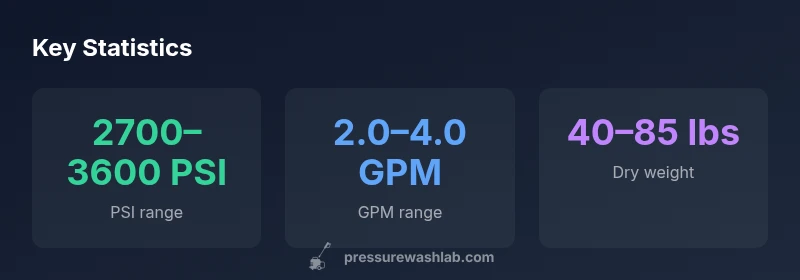
For most home jobs, 2700–3600 PSI with 2.0–3.5 GPM provides a good balance of power and surface safety. Heavy-duty staining on driveways may benefit from the higher end of that range, while delicate surfaces may require lower PSI with gentler nozzles.
For typical home tasks, aim for around 2700 to 3600 PSI with moderate water flow. Use lower PSI for delicate surfaces and higher PSI for tough grime.
Are gas-powered washers better than electric ones for exterior cleaning?
Gas-powered washers offer higher sustained power and are better for large outdoor jobs, while electric units are quieter and easier to maintain for light-duty tasks. Choose based on job size, location, and maintenance willingness.
Gas units are stronger for big jobs, electric are quieter and simpler for small tasks.
What maintenance is required to keep a Lowe's gas pressure washer reliable?
Regular oil changes, fuel stabilization, air and fuel filter checks, and periodic spark plug replacements are essential. Clean the nozzle and inspect hoses for wear after heavy use. Store fuel safely and drain the water from hoses before long-term storage.
Do regular oil changes, check filters, and store fuel safely when not in use.
Can I use a Lowe's gas pressure washer for car washing?
Yes, but use the appropriate nozzle and technique to avoid damaging paint. Start with a wide spray at lower PSI and keep a maintainable distance from surfaces. For waxed or delicate finishes, consider a softer approach or a dedicated car wash tool.
You can wash cars with care—start broad, then adjust nozzle and distance.
What should I know about warranty and service options at Lowe's?
Warranty terms vary by brand and model. Look for coverage that includes parts and labor for a defined period, plus clarity on in-store service availability. Extended coverage may be optional. Always verify what is included and how to claim it.
Check the warranty terms and confirm in-store service options before buying.
Is there a safer or quieter alternative to gas washers at Lowe's?
Electric washers are typically quieter and emit no exhaust, making them safer for enclosed spaces. They generally require less maintenance but may lack the sustained cleaning power of gas models for large exterior surfaces.
If you need quiet operation and no fumes, electric may be better for you.
Key Takeaways
- Evaluate PSI and GPM to match tasks
- Prioritize engine durability and serviceability
- Account for noise, weight, and storage needs
- Invest in a solid maintenance plan for longevity
- Compare Lowe's models by warranty terms and parts availability