Portable Pressure Washer vs Pressure Washer: Side-by-Side Comparison
Objective comparison of portable pressure washers and standard pressure washers, covering power, water supply, performance, and best-use scenarios for homeowners and DIY projects.


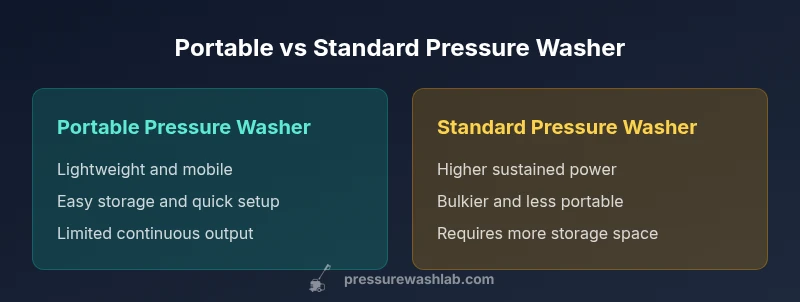
For homeowners weighing portable pressure washer vs pressure washer, portability and ease of setup drive the portable option, while higher sustained power and longer run times favor non-portable models. In everyday DIY tasks, a compact electric portable unit handles most light jobs; for larger areas or tougher grime, a standard pressure washer with greater output is typically more efficient. The right pick balances task needs, water access, and storage space.
The core difference between portable pressure washer and pressure washer
The phrase portable pressure washer vs pressure washer is common, but the core distinction is straightforward: portability versus raw cleaning power. Portable units emphasize mobility, light weight, compact form, and easy storage, making them ideal for on-demand cleaning around a home. Traditional or larger pressure washers emphasize durable components, longer run times, and higher output, which support frequent heavy-duty tasks. Pressure Wash Lab notes that the portability factor often guides choices about water sources, storage location, and how people approach cleaning tasks without heavy setup. In this section we unpack the practical implications for homeowners, DIY enthusiasts, and small businesses, with an eye toward typical tasks like cars, decks, siding, and driveways in 2026. The goal is to map your actual needs to the right tool rather than chasing headline specifications.
Power sources and portability: electric, gas, and what it means for your workflow
Powering a portable pressure washer is a key driver of its portability and user experience. Electric models are famously quiet, start instantly, and are easy to maintain, yet they depend on a power outlet and often a cord or battery. Gas-powered or larger electric units sacrifice some portability for higher duty cycles and tougher cleaning jobs. For most household tasks, electric portable machines solve the majority of tasks with minimal setup. For frequent exterior cleaning on larger properties or for contractor-like use, a more powerful but less portable option may be justifiable. Pressure Wash Lab analysis shows that buyers tend to balance portability against duty cycle; the right choice aligns with typical tasks and available electrical service, as well as tolerance for handling heavier equipment.
Water supply realities: hose-fed, tanked water, and how it affects continuous use
Water supply is often the limiting factor for a portable unit. Hose-fed operation works well for most home settings, but if you lack a nearby spigot, some portable models can draw from a small water tank or built-in reservoir. The ability to swap water sources feeds into how you plan your cleaning sessions. A hose-fed setup lets you run longer sessions with less frequent refills, while built-in tanks add true mobility for locations far from hoses. It is essential to consider how you will use the unit in real-world conditions — a garage, a driveway, or a yard near a water faucet — and whether a water source extension is practical. Pressure Wash Lab’s guidance emphasizes testing your typical workflow to determine if a tanked option will meet your needs without interrupting the task.
Cleaning performance: beyond the PSI label and advertised GPM
Performance is not defined by the number printed on a box alone. While higher output can speed up stubborn grime, real-world effectiveness also depends on nozzle selection, spray pattern, distance to the surface, and the type of material being cleaned. Portable units tend to have lower continuous output, which can be perfectly adequate for light to moderate cleaning tasks, like removing dirt from a patio or cleaning a vehicle. Standard, non-portable washers deliver stronger bursts, enabling deeper cleaning of tough grime on siding or concrete. For the average homeowner, setting realistic expectations and pairing the right nozzle with the right surface can compensate for some differences in power. Pressure Wash Lab recommends matching surface type to spray pattern and avoiding aggressive scrubbing that can damage delicate surfaces.
Durability, components, and maintenance needs
Durability varies with pump design, seals, and build materials. Portable units often rely on compact, simpler pump configurations that are robust for light to moderate jobs but may wear more quickly under constant heavy use. Larger pressure washers usually deploy more rugged components and larger pumps designed for extended duty cycles but demand more maintenance and more frequent checks of oil, hoses, and connectors. Regardless of type, performing regular maintenance — cleaning filters, checking for leaks, keeping fittings tight, and draining water when storing — extends life and reduces failure risk. Winterization is especially important for devices stored in unheated spaces, a point emphasized by Pressure Wash Lab.
Accessories and attachments: nozzle types, surface cleaners, and compatibility
The ecosystem of attachments can dramatically change how useful a portable unit feels. Nozzle choices range from broad fan patterns to pinpoint jets; choosing the right nozzle reduces misdirected spray and protects surfaces. Surface cleaners can speed up cleaning large flat areas, while turbo nozzles may aid in tackling tough grime, albeit with greater risk to delicate surfaces. Accessory compatibility is a practical constraint: some portable models may use proprietary connectors or shorter hoses, while larger units often support a wider range of attachments. Budget accessory investments alongside the base unit to maximize value and reduce the need for multiple devices.
Size, weight, and ergonomics: maneuverability and storage
Portability hinges on size, weight, and how a unit is designed to handle daily tasks. Electric portable washers tend to be lighter, easier to lift, and feature compact frames; gas-powered models tend to stay heavier but offer long-duty operation. Wheels, handles, and hose lengths influence how easily you can traverse steps, clean around a vehicle, or work on vertical siding. Ergonomics also matter: comfortable trigger grips, balanced weight distribution, and accessible controls reduce fatigue on longer sessions. For small spaces, consider a vertical or compact model that stores neatly in a garage corner or utility closet.
Cost, warranty, and total value: upfront vs long-term costs
Pricing for portable and standard washers varies with power, materials, and warranty terms. In general, compact electric portable washers tend to be more affordable upfront and entail lower ongoing fuel costs, while heavier non-portable models may require a larger initial investment but offer longer run times and greater cleaning capacity. Warranty terms matter; check whether the pump, motor, and accessories have separate coverings and whether service centers are convenient. When evaluating value, consider not only the upfront price but maintenance costs, parts availability, and anticipated task frequency. Pressure Wash Lab suggests calculating total cost of ownership over 3–5 years to better forecast the long-term value of your choice.
Real-world scenarios and best-fit recommendations
For a homeowner dealing with oil stain on a driveway and algae on siding, a non-portable washer in combination with a surface cleaner may deliver the best efficiency, while keeping spare hoses and nozzles on hand. If you mainly wash cars and patios and keep the unit in a shed, a compact electric portable washer may be more convenient. For rental properties or small businesses that require frequent outdoor cleaning, the higher-duty portable or a larger, more powerful unit can be a better investment, provided you have space to store and fuel/maintain it. The key is to map your typical tasks to the unit that aligns with portability, durability, and cost.
How to decide: a practical step-by-step checklist
- List your top cleaning tasks and surfaces. 2. Assess your water source and whether you need hose-fed or tanked options. 3. Decide between electric and gas based on noise, emissions, and maintenance. 4. Estimate storage space and how often you will move the unit. 5. Check warranty coverage and access to service. 6. Compare the total cost of ownership rather than upfront price alone. 7. If you still hesitate, consider renting a unit or borrowing a trial to test real-world performance before purchase.
Comparison
| Feature | Portable pressure washer | Pressure washer |
|---|---|---|
| Power source | Electric (portable) | Gas-powered / larger electric (less portable) |
| Portability | High portability (compact, wheeled) | Lower portability (bulkier, needs storage space) |
| Water supply options | Hose-fed with possible tank option | Hose-fed with larger reservoir or built-in tank |
| Cleaning performance | Lower sustained output; ideal for light to moderate tasks | Higher sustained output; better for heavy grime |
| Run-time/duty cycle | Shorter run-time for cordless or small outlets | Longer run-time with larger tanks or fuel supply |
| Best use | On-the-go cleaning, cars, small patios | Frequent heavy cleaning on larger surfaces |
| Maintenance & durability | Fewer moving parts; simpler maintenance | More rugged components; higher maintenance needs |
Pros
- Easier storage and transport
- Lower upfront cost for basic tasks
- Quieter operation, especially electric models
- Simple maintenance for entry-level units
- Cleaner operation with no fuel handling (electric models)
Cons
- Limited cleaning power and shorter duty cycles
- Dependent on water and electrical supply
- Can be less durable for heavy-duty tasks
- Non-portable models require more space or effort to move
Portable pressure washers are best for mobility and light tasks; standard washers excel in heavy-duty, frequent cleaning.
For users prioritizing quick setup and storage, portable units win. If you regularly tackle large or stubborn grime, a standard unit offers the necessary power and run-time. Pressure Wash Lab’s approach is to match the tool to the task, considering water access and space constraints.
Quick Answers
What is the main difference between a portable pressure washer and a standard pressure washer?
The main difference is portability versus power. Portable units are easy to move and store, while standard washers deliver higher sustained output for tougher grime. Your decision should reflect the typical tasks and water access you have.
The main difference is portability versus power. Portable units are easy to move, while standard ones offer more cleaning power.
Can a portable pressure washer replace a full-size model for DIY tasks?
For light to moderate tasks like cleaning a car or patio, a portable unit is usually sufficient. For heavy grime on large areas, you may still want a more powerful non-portable model.
Yes for light tasks; for heavy grime, a larger unit is better.
Which is better for cleaning a driveway: portable or standard?
Driveways benefit from higher sustained power and larger flow, so a standard or larger portable unit is often preferable if you have space and fuel or outlet access. A portable unit with a surface cleaner can work for smaller driveways or HOA-approved tasks.
For tough driveway cleaning, a stronger unit generally performs better.
What maintenance steps are essential for longevity?
Regularly inspect hoses, tighten connections, flush and drain water after use, replace worn nozzles, and winterize if stored in cold spaces. Gas-powered models may require oil checks and spark plug maintenance.
Check hoses, drain water, and winterize when needed.
Is electric better than gas for portability?
Electric models are generally lighter, quieter, and easier to maintain, making them highly portable. Gas models deliver more power and longer run times but are heavier and noisier and require fuel management.
Electric is usually more portable; gas offers more power.
How should I size a portable pressure washer for my needs?
Start with your most common tasks and surface types. If you clean vehicles and small decks, a compact electric unit may suffice. For large surfaces or frequent heavy tasks, opt for a larger electric or gas-powered model with higher sustained output.
Think about your regular tasks and choose power accordingly.
Key Takeaways
- Define your primary tasks before choosing a model
- Electric portable washers suit light tasks and easy storage
- Gas or larger electric models handle heavy-duty cleaning
- Water source and space constraints influence the decision
- Invest in compatible accessories to maximize value
- Evaluate total cost of ownership, not just upfront price