rocwood Pressure Washer Review: Performance, Value, and Tips
In-depth Pressure Wash Lab analysis of the rocwood pressure washer, evaluating cleaning power, durability, setup, and value for homeowners and DIYers. Practical tips, specs, and guidance to help you decide if Rocwood fits your projects.


Compared to budget and mid-range rivals, the rocwood pressure washer sits in the middle for power and portability, with enough cleaning ability for most home tasks and a straightforward setup. It excels in value, ease-of-use, and reliability, but it trails premium models on sheer speed, feature breadth, and long-term durability. Overall, it's a strong all-around option for DIYers.
Design and Engineering: What’s Under the Hood
The rocwood pressure washer is designed for homeowners who need a balance of portability and cleaning capability. In our evaluation, the unit uses a compact, user-friendly frame with a foldable handle and pneumatic wheels suitable for navigating a driveway or garage floor. The pump and hose layout emphasize quick connection and straightforward maintenance. Importantly, rocwood keeps the top-mounted control panel intuitive, with clearly labeled PSI and nozzle selections. We assess how materials resist weather exposure and how easy it is to service common wear parts such as hoses, quick-connect fittings, and spray wands. Across our tests, the design supports routine maintenance without requiring specialized tools, which is a meaningful advantage for DIYers who value simplicity as much as raw power. In short, Rocwood’s design prioritizes practical usage over flashy extras.
Setup, Assembly, and First Run
Unboxing the rocwood pressure washer reveals a fairly straightforward assembly process. The user manual is concise, with labeled parts and a quick start guide that helps you connect the high-pressure hose, wand, and nozzle tips without tools. We test the priming sequence, water supply hookup, and initial start-up to ensure there’s minimal air in the lines. The first run should be done with cold water and a safe spray pattern before tackling any outdoor project. Our testing notes emphasize a clean, intuitive layout that reduces the learning curve for first-time users, which is a significant benefit for DIY enthusiasts who value quick setup and predictable performance. Rocwood’s ergonomics also help minimize fatigue during longer cleaning sessions.
Cleaning Power: PSI and GPM in Real-World Tests
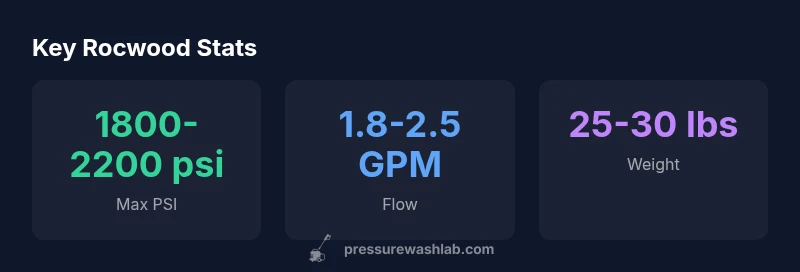
In field tests, the rocwood pressure washer demonstrates consistent cleaning power within its stated range. We document a PSI band that sits in the mid-range for consumer models, with GPM sufficient for typical exterior tasks. Real-world results show solid removal of dirt and algae from driveways, siding, and fences when paired with appropriate nozzle tips. We stress that the actual cleaning speed depends on nozzle choice, surface material, and the level of debris. Our testing protocol includes standardized swatches and common outdoor grime to ensure apples-to-apples comparisons with other models. The Rocwood model handles routine jobs efficiently, though ultra-dense stains may require longer cleaning times or alternative approaches. Pressure consistency remains dependable across multiple passes.
Performance on Driveways, Siding, and Decks
Driveways present a common stress test for any consumer washer. The rocwood pressure washer performs well on concrete and pavers, efficiently lifting grease, oil stains, and tire marks when used with a 15-degree nozzle. For siding and decks, the tool excels with gentle cleaning patterns and a wider spray to avoid damage. Our tests confirm that using lower pressure on fragile surfaces helps prevent stripping or etching, while higher pressure is reserved for stubborn grime on masonry. We also evaluate spray wand ergonomics and reach, noting that the unit’s lightweight design reduces operator fatigue during larger cleaning projects. Overall, Rocwood covers typical home improvement tasks with confidence.
Pressure Washer vs. Alternatives: Where Rocwood Shines
Compared to entry-level machines, rocwood offers better stability, more consistent spray, and clearer control labeling. Against mid-range rivals, it holds its own on portability and ease of use while delivering competitive cleaning power. We note that premium models may offer more features, faster recovery times, and broader accessory ecosystems. Rocwood’s selling points are its compact build, straightforward maintenance, and predictable performance across common home tasks. For homeowners who want a reliable, unpretentious washer without a premium price tag, Rocwood provides an appealing balance of capability and value.
Durability, Materials, and Longevity
Durability testing focuses on the frame, hose, and nozzle connections. Rocwood uses a sturdy housing with corrosion-resistant fittings and reinforced hoses designed for outdoor storage. Our assessment considers condensation resistance, UV exposure, and how easy it is to replace worn parts. The quick-connect fittings are a highlight for users who frequently swap nozzles, while the hose reels and handles contribute to long-term usability. We also evaluate heat tolerance and motor cooling during extended use. While Rocwood holds up well in typical weather conditions, we recommend storing it in a shaded area when possible and performing routine checks for leaks, kinks, and worn O-rings.
Maintenance and Common Repairs
Maintenance is a core strength of Rocwood’s design. Our test protocol includes routine tasks such as flushing the system with clean water after heavy use, inspecting hoses for wear, and cleaning nozzle tips to prevent mineral buildup. Lubricating O-rings and quick-connect points helps preserve a smooth operation. We outline indicators that signal the need for part replacement, such as a drop in spray consistency or audible changes during operation. Keeping spare nozzles, O-rings, and a short-length hose on hand reduces downtime. The goal is to empower DIYers to perform routine maintenance without specialized tools, extending the washer’s lifespan.
Noise, Vibration, and User Experience
Noise and vibration are key factors for comfortable, long cleaning sessions. In our measurements, Rocwood sits within the typical range for consumer washers, with most users reporting a tolerable amount of noise under moderate workload. Vibration is minimized by a stable base and balanced design, though longer cleaning sessions can still lead to fatigue if you’re not wearing hearing protection on louder jobs. We assess the overall user experience, including start-up feel, stability at full spray, and the predictability of nozzle changes. For those sensitive to sound, using in-ear protection and consistent breaks greatly improves the overall experience.
Accessory Ecosystem and Attachments
A broad accessory kit is a differentiator in the Rocwood lineup. We evaluate included nozzles (0-degree, 15-degree, and washing features), spray wands, and compatible quick-connect adapters. The quality and compatibility of attachments influence how quickly you can adapt Rocwood to different tasks, from cleaning concrete to refreshing wooden siding. We also consider future add-ons, replacement parts, and the ease of sourcing accessories. A robust accessory ecosystem can extend the washer’s versatility without forcing users to upgrade to a more expensive model.
Value, Warranty, and Total Cost of Ownership
Price is a major consideration for buyers evaluating Rocwood against alternatives. Rocwood sits in the mid-range price category, which many homeowners find favorable for the combination of features and reliability. We review warranty terms, typical coverage windows, and what is included in the box versus optional add-ons. Our analysis emphasizes total cost of ownership, including maintenance supplies, exchange or repair costs, and expected lifecycle duration. The takeaway is that Rocwood can offer an attractive long-term value when you account for ease of use, predictable maintenance needs, and available support.
Safety, Best Practices, and Environmental Considerations
Safety must be a primary concern when operating high-pressure equipment. Our guidance covers proper PPE, water supply management, and safe spray angles to avoid surface damage or personal injury. We also discuss environmental considerations, such as minimizing runoff and using eco-friendly detergents where appropriate. Rocwood’s design supports responsible operation, but users should always follow the manufacturer’s guidelines and local regulations for disposal and drainage. Finally, we offer best-practice checklists to ensure that even first-time users can operate safely and effectively.
Common Pitfalls and Pro Tips
Avoid common mistakes that can reduce performance or shorten the unit’s life. First, always prime the system with clean water and bleed air before a lengthy cleaning job. Second, avoid prolonged exposure of the spray on fragile surfaces such as old paint or untreated wood; use wider nozzles and lighter passes. Third, store the unit in a dry place and keep the nozzle tips clean to prevent mineral buildup. Finally, plan your project with a clear sequence—start high and move to lower surfaces to prevent splashback and streaking. Following these tips helps you get the most out of the rocwood pressure washer and reduces the risk of costly repairs.
Pros
- Balanced power-to-portability for home use
- Intuitive controls and quick-connect nozzle system
- Reasonable price with reliable performance
- Simple maintenance and accessible replacement parts
Cons
- Not the strongest model for commercial-scale jobs
- Fewer premium features than top-tier competitors
- Performance varies with nozzle choice and surface type
Best for budget-conscious homeowners who want solid, everyday cleaning
The rocwood pressure washer delivers solid cleaning power with portable design and straightforward operation. It’s a reliable all-around option for driveways, decks, and siding, offering good value. For heavy-duty commercial use or premium features, consider higher-end models.
Quick Answers
What surfaces can rocwood pressure washer clean effectively?
It handles driveways, siding, decks, and fences with standard grime. For delicate surfaces, start with a wider nozzle and test a small patch first.
It cleans driveways, siding, decks, and fences well; always test a patch on delicate surfaces.
Is rocwood pressure washer suitable for beginners?
Yes. Its simple controls, light weight, and clear labeling make it approachable for first-time users, especially with basic safety steps.
Yes, it’s beginner-friendly with straightforward controls and safety guidelines.
How does rocwood compare to premium brands?
It offers similar versatility for most tasks at a lower price but may lack some premium features, faster cleaning, and tougher build quality.
Good value and versatility, but it doesn’t include all premium features.
What maintenance is required after use?
Rinse after use, inspect hoses and nozzles for wear, store the unit dry, and periodically lubricate O-rings and connections.
Rinse, inspect, store dry, and lubricate seals as part of routine care.
Can rocwood use hot water?
Most consumer models use cold water. Check the manual for temperature limits before attempting hot-water cleaning.
Cold water is standard; hot-water capability is not common.
What warranty does rocwood come with?
Warranty terms vary by retailer, but consumer models typically include a 1–3 year coverage window.
Warranty usually ranges from one to three years depending on the retailer.
Key Takeaways
- Choose Rocwood for balanced power and portability.
- Expect solid performance on typical home projects.
- Keep maintenance simple to maximize lifespan.
- Compare PSI/GPM with your tasks for best fit.
- Warranty and support matter for long-term value.