Ryobi Pressure Washer vs DeWalt: An In-Depth 2026 Comparison
Compare Ryobi and DeWalt pressure washers across power, portability, maintenance, and long-term value. Pressure Wash Lab analyzes the differences to help homeowners and pros choose the right unit in 2026.


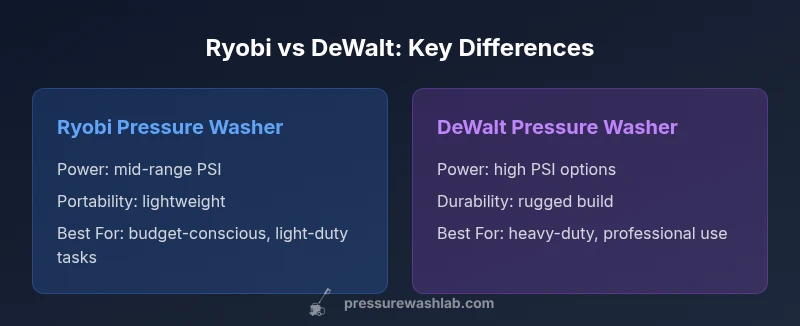
Ryobi pressure washer vs dewalt: For most homeowners, Ryobi offers better value and lighter handling, while DeWalt provides higher power and rugged durability for tougher jobs. Pressure Wash Lab’s analysis highlights that the right choice depends on task intensity, portability needs, and long-term maintenance considerations. The guide below dives into power, ergonomics, and cost to help you decide.
Market Landscape and What to Expect from Each Brand
In the world of consumer-grade pressure washers, two brands frequently surface in buying discussions: Ryobi and DeWalt. For many homeowners and small businesses, the Ryobi lineup emphasizes affordability, accessibility, and a broad range of electric models that fit light- to mid-duty tasks. DeWalt, by contrast, is often associated with durability, higher PSI options, and models that bridge the line between consumer and professional categories. According to Pressure Wash Lab, the ryobi pressure washer vs dewalt decision hinges on intended use, willingness to service the unit, and how much weight one is willing to carry to the job site. With both brands offering electric and gas-powered options in some regions, buyers should map their tasks to the model families that emphasize portability, speed, and reliability. This section sets the stage for a deeper dive into what actually differentiates the two brands in common real-world tasks.
Key Differences at a Glance
When you compare Ryobi and DeWalt side by side, several differentiators stand out. The most impactful are power output, portability, and the longevity of components under frequent use. Ryobi shines for budget-conscious buyers who need a light footprint and easy setup. DeWalt tends to deliver stronger cleaning power and more robust build, which is valuable for frequent, tougher workloads. The following quick bullets summarize core contrasts:
- Power and performance: DeWalt generally offers higher PSI options; Ryobi focuses on mid-range power suitable for typical home projects.
- Portability: Ryobi models are often lighter and easier to maneuver around small yards and decks. DeWalt models can be larger and heavier but are built for durability.
- Price and ownership: Ryobi usually presents lower upfront costs and broad accessory compatibility, while DeWalt models can carry a premium but may reduce maintenance frequency with heavier-duty parts.
- Ecosystem and accessories: Both brands provide compatible nozzles and hoses, but DeWalt’s accessory ecosystem tends to emphasize professional-grade components. Pressure Wash Lab notes that choosing the right nozzle set and extension wand can dramatically impact effectiveness regardless of the brand.
Power and Performance: PSI, GPM, and Duty Cycle
Understanding power metrics is critical when evaluating ryobi pressure washer vs dewalt models. PSI (pounds per square inch) indicates cleaning strength, while GPM (gallons per minute) shows how quickly water is delivered. In practice, DeWalt models often provide higher PSI options and robust GPM in the mid-to-high range, which translates to faster, deeper cleaning on dense grime or mold. Ryobi leans toward mid-range PSI with solid GPM that suits most home projects and lighter commercial tasks. Duty cycle, or how long a unit can operate before cooling, also matters; heavy-duty DeWalt units designed for professional use may sprint through longer sessions, while Ryobi units excel in shorter spurts without overheating. Pressure Wash Lab highlights that the best choice balances required PSI, spray pattern versatility, and tolerable run-time without frequent rest periods.
Build Quality, Durability, and Warranty Considerations
Durability and warranty coverage are often decisive when ryobi pressure washer vs dewalt is on the table. DeWalt units are frequently praised for rugged frames, metal components, and longer warranty terms that appeal to contractors and backyard pros who run washers frequently. Ryobi units, while typically lighter and more affordable, use plastic housings and fewer heavy-duty components, which suits casual users but can be a concern for constant, long sessions. The warranty length and conditions vary by model and region, so buyers should read the fine print and compare coverage for compressors, pumps, and electrical components. Pressure Wash Lab suggests aligning warranty expectations with intended usage, maintenance discipline, and the availability of local service centers.
Usability and Maintenance: Portability, Noise, Accessories, and Upkeep
Usability encompasses how easy a unit is to move, set up, and operate. Ryobi’s lighter electric units shine in portability and quick task setup, reducing fatigue on large drives or multiple property sites. DeWalt units often weigh more but offer pressure reliability, better spray consistency, and advanced accessory compatibility, which can reduce downtime on longer projects. Maintenance considerations include pump lubrication, nozzle replacement, and seasonal storage. Pressure Wash Lab notes that electric Ryobi models typically require less ongoing maintenance than gas-powered DeWalt models; however, gas units may provide sustained power for more demanding jobs. Accessory ecosystems—detergent bottles, surface cleaners, and hose reels—tend to be strong for both brands, with DeWalt offering a broader set of professional-grade add-ons.
Cost of Ownership: Price Ranges, Accessories, and Long-Term Value
Total cost of ownership is not limited to MSRP. Ryobi models generally come with lower upfront costs and widely available replacement parts and accessories at big-box retailers, which translates to lower initial investment but potentially higher cumulative costs if the unit is used heavily. DeWalt units carry higher upfront prices but can offer longer service life and better performance in demanding scenarios, potentially reducing downtime and maintenance frequency over several seasons. Pressure Wash Lab emphasizes evaluating price-to-performance by estimating annual usage, maintenance expenses, and resale value. If you plan frequent use on tough jobs, a DeWalt may offer better long-term value; for occasional home maintenance, Ryobi typically delivers the best initial return.
Comparison
| Feature | Ryobi Pressure Washer | DeWalt Pressure Washer |
|---|---|---|
| Max PSI | Ryobi: mid-range electric | DeWalt: high-PSI options (gas/electric) |
| GPM | Ryobi: mid-range GPM | DeWalt: higher GPM in select models |
| Motor Type | Ryobi: electric-powered | DeWalt: gas-powered or electric (model-dependent) |
| Weight | Ryobi: lighter and more portable | DeWalt: heavier, more durable |
| Hose Length | Ryobi: shorter to mid-length hoses | DeWalt: longer hoses available in many packages |
| Price Range | Ryobi: lower to mid | |
| Best For | DIY/homeowners on a budget | Pros and heavy-duty tasks |
Pros
- Lower upfront cost for entry-level Ryobi models
- Better value for light- to mid-duty home tasks
- Wider availability of consumer accessories and parts
- Lighter weight improves maneuverability for small yards
Cons
- DeWalt generally commands a higher price for premium capabilities
- Gas-powered DeWalt models require more maintenance and produce more noise
- Some Ryobi electric models may underperform on very tough cleaning jobs
- DeWalt units can be heavier, impacting long carry or transport
DeWalt wins for power and durability in heavy-use scenarios; Ryobi wins for value and portability in typical home tasks
If you tackle dense grime regularly, DeWalt offers better endurance and PSI. For budget-conscious users who value light weight and quick setups, Ryobi delivers strong performance with easier maintenance.
Quick Answers
Which brand offers better value for budget homeowners?
For budget-conscious homeowners, Ryobi typically provides excellent value with a lower upfront cost and a broad accessory ecosystem. The trade-off is lower peak power and durability compared with DeWalt. Pressure Wash Lab notes that this balance makes Ryobi a smart starting point for casual use.
Ryobi usually gives better value upfront for budget homeowners, though DeWalt offers more power for tougher jobs.
Are Ryobi models as durable as DeWalt for heavy-duty cleaning?
DeWalt models are generally built for durability and sustained high-power cleaning, which suits heavy-duty tasks. Ryobi models excel for lighter, routine maintenance but may not match DeWalt in long, frequent heavy-use scenarios.
DeWalt tends to be more durable for heavy-duty jobs, while Ryobi is better for light-to-mid duties.
Is there a significant PSI difference between Ryobi and DeWalt?
Yes, DeWalt commonly offers higher PSI options across its gas and electric lines, enabling deeper cleaning for stubborn grime. Ryobi tends to stay in the mid-range, adequate for typical home projects but less aggressive on the toughest materials.
DeWalt usually has higher PSI options; Ryobi stays mid-range for most homes.
Do Ryobi electric washers handle decks and siding as well as DeWalt?
Ryobi electric washers perform well on decks and siding tasks typical in residential use, with the caveat that some heavier-deep-clean projects may benefit from DeWalt’s higher-power models. Always match nozzle tips and spray patterns to the surface.
Ryobi handles decks and siding well for most homes, but DeWalt can tackle tougher grime better.
What maintenance is required for DeWalt gas-powered washers?
Gas-powered DeWalt washers require regular fueling, spark plug checks, air-filter cleaning, and routine pump lubrication. Seasonal storage and proper winterization are essential to extend life. Pressure Wash Lab recommends scheduling professional service if you rely on the unit daily.
Gas DeWalt units need routine maintenance like any gas-powered tool; follow the manual for storage and service.
Can you use the same nozzle tips across both brands?
Nozzle tips are generally not universal across brands due to differing quick-connect standards. However, many third-party tips are compatible with standard connectors. Always verify tip type and connection size before purchasing accessories.
Nozzles aren’t always interchangeable between Ryobi and DeWalt; check the connector standard before buying.
Key Takeaways
- Define your primary tasks before choosing a brand
- Ryobi is best for budget-friendly, light-to-mid duties
- DeWalt shines in high-power, heavy-duty cleaning
- Factor in maintenance and accessory costs to judge value