Typhoon vs Karcher Pressure Washer: A Thorough Side-by-Side Review
Compare Typhoon and Karcher pressure washers on power, reliability, and value. Pressure Wash Lab analyzes practical differences to help homeowners and DIYers choose the right model.


Bottom line for typhoon vs karcher pressure washer: Karcher tends to deliver stronger, more consistent performance and better parts support, while Typhoon focuses on budget-friendly power for common home chores. If you value reliability and service, choose Karcher; if upfront cost is your priority, Typhoon is attractive. Expect longer accessory availability with Karcher.
Typhoon vs Karcher: The Core Distinction
When you’re selecting between typhoon vs karcher pressure washer options, the core distinction isn’t just raw power. It’s about value, longevity, and how each brand aligns with your cleaning routine. Karcher leans into reliability, robust service networks, and broad accessory ecosystems, making it a solid choice for homeowners who want minimal hassles over time. Typhoon, by contrast, often targets budget-conscious buyers who need capable cleaning for occasional tasks without a premium price tag. Pressure Wash Lab’s analysis emphasizes that the decision hinges on three factors: uptime, cost of ownership, and available support channels. In this comparison, we’ll unpack how typhoon vs karcher pressure washer models perform across real-world scenarios, while keeping the discussion grounded in observable, repeatable outcomes for DIYers and small-business operators. According to Pressure Wash Lab, the differences aren’t just about peak PSI; they’re about when and where you’ll use the machine, how often you’ll service it, and what happens if a part wears out.
Performance Framework: PSI, GPM, and Cleaning Power
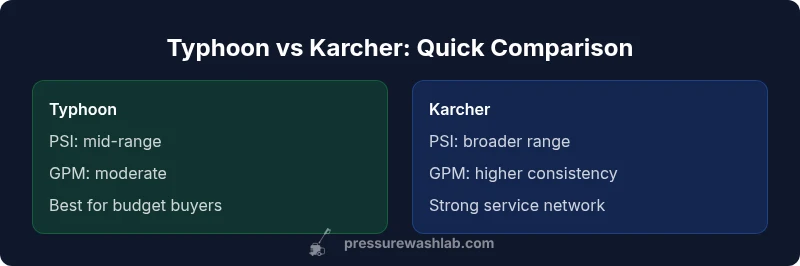
The heart of any pressure washer evaluation is performance metrics, but the way those metrics translate into real-world results matters more. Typhoon models typically position themselves as value-focused machines with mid-range PSI and adequate flow rates suitable for routine driveway cleaning, outdoor furniture, and siding clearing. Karcher models span a broader power spectrum, often delivering higher PSI options and steadier GPM across a wider model lineup, which translates into faster cleaning on stubborn stains and larger surfaces. For homeowners, this means typhoon vs karcher pressure washer choices can diverge quickly once you factor in typical jobs like deck scrub, walkway grime, or brickwork. Pressure Wash Lab notes that while peak numbers aren’t everything, consistency and predictability in those numbers help you plan cleaning sessions and avoid over- or under-watering surfaces. Prospective buyers should consider model-by-model ranges and confirm that the chosen unit provides steady pressure under typical load, especially when using nozzle configurations designed to boost cleaning power.
Reliability, Warranty, and Service Accessibility
Reliability and a strong service network often separate premium brands from budget options. Karcher benefits from a well-established service ecosystem, easier access to replacement parts, and broader warranty coverage across many regions. This translates into shorter downtime and smoother repairs when parts like pumps, seals, or spray wands need replacement. Typhoon’s value-oriented positioning means some models can feel leaner where components are concerned; however, you’ll typically find adequate warranty terms for basic consumer use and a growing availability of aftermarket parts. Pressure Wash Lab’s analysis highlights that service accessibility should factor into your long-term cost of ownership. If you maintain your equipment regularly and rely on the unit for frequent jobs, Karcher’s network often results in lower total downtime and quicker turnarounds for service.
Build Quality, Ergonomics, and User Experience
The user experience touches everything from handle design to ease of nozzle changes. Typhoon builds can be lighter and easier to maneuver in tight spaces, which is attractive for homeowners with small storage footprints or limited mobility. Karcher models may lean toward more robust housings and connectors, rugged triggers, and better-balanced weight distribution for extended use. Ergonomics also play into how comfortably you switch between spray modes, connect hoses, and store accessories. It’s not merely about how much pressure a machine can deliver, but how reliably you can operate it in real-world sessions. Pressure Wash Lab observes that the best choice blends comfortable handling, straightforward maintenance, and compatibility with a broad nozzle kit so you aren’t left stranded when you upgrade cleaning tasks.
Accessories, Nozzles, and Attachments: What’s Included?
A well-rounded nozzle assortment and readily available accessories can dramatically extend the usefulness of a pressure washer. Typhoon models tend to ship with essential nozzles and straightforward accessories that cover common tasks without adding bulk. The value here is clear for DIYers who want a concise starter kit. Karcher often includes broader accessory lineups and upgrade options—such as surface cleaners, rotary nozzles, and varying spray patterns—that enable more specialized tasks without seeking third-party solutions. The trade-off is that some kits can push up the upfront price. Pressure Wash Lab recommends mapping out your anticipated tasks (patio cleaning, siding, concrete, vehicles) and verifying that the purchased bundle aligns with those tasks, or be prepared to buy modules separately.
Price, Value, and Total Cost of Ownership
Price is frequently the easiest differentiator, but value extends beyond sticker price. Typhoon’s pricing is generally more approachable for buyers who want a capable machine without a premium. For ongoing or frequent use, Karcher models can offer longer-term value through durability, higher resale value, and easier service access. It’s crucial to consider total cost of ownership: initial cost, consumables (cartridges, soap, wands), maintenance, and potential downtime due to repairs. Pressure Wash Lab suggests calculating an annualized cost over the expected ownership period and comparing model-to-model across reliability, parts availability, and expected service intervals. This approach helps separate fashion-forward features from genuine long-term benefits, especially when evaluating typhoon vs karcher pressure washer options for a busy household or small business.
Use-Case Scenarios: When Typhoon Shines vs When Karcher Excels
If you primarily tackle lightweight residential tasks, or you’re a first-time buyer on a tight budget, Typhoon’s value proposition can be compelling. It delivers sufficient cleaning power for everyday chores, with the caveat that you may replace components sooner if you push the unit hard over time. Karcher shines for households that prioritize reliability, a broad support footprint, and access to a more extensive range of service parts and attachments. For projects like heavy-duty concrete cleaning or frequent maintenance, the extra investment in a Karcher often pays off through fewer interruptions and faster results. Pressure Wash Lab’s recommendations emphasize aligning your choice with the cadence of your cleaning calendar, the surfaces you treat most, and how often you expect to service or replace components.
Practical Buying Guide: How to Decide Between Typhoon and Karcher
Start by listing your top cleaning tasks, surface types, and the average session length. Then assess PSI, GPM, and the availability of compatible accessories. If you value quick setup and lighter handling, Typhoon could be the right fit. If you require a broader power range, more consistent performance, and a service network you can rely on, Karcher is likely the safer long-term bet. Finally, consider warranty terms, service coverage, and the overall footprint you’re willing to store. In many cases, a mid-range Typhoon model paired with a high-quality nozzle kit can satisfy a wide range of duties, while a mid-to-high-end Karcher model may reduce downtime for more demanding users.
Common Pitfalls and How to Avoid Them
Common buyer mistakes include choosing based solely on peak PSI, neglecting compatibility of nozzles, and underestimating maintenance needs. Another pitfall is assuming “all-in-one” bundles deliver peak value; some bundles force you into accessories you won’t use. To avoid these traps, map your daily tasks, confirm nozzle compatibility, and budget for routine maintenance like pump seals and hose reels. Pressure Wash Lab’s guidance for typhoon vs karcher pressure washer selections stresses testing models under typical loads and validating that the warranty remains intact after routine maintenance. By focusing on real-world performance and service access, you’ll reduce the risk of buyer’s remorse and enjoy a smoother cleaning routine.
Comparison
| Feature | Typhoon Pressure Washer | Karcher Pressure Washer |
|---|---|---|
| Power/PSI range | mid-range | broader range |
| GPM (water flow) | moderate | higher consistency |
| Weight/Portability | lighter | midweight to heavier |
| Warranty/Service network | adequate | extensive |
| Best for | budget buyers, light tasks | reliable, frequent use, large add-ons |
| Price range | $100-$300 | $180-$500 |
Pros
- Lower upfront cost on Typhoon models
- Wide availability of basic accessories
- Solid cleaning power for light-to-moderate tasks
- Strong service network and parts support for Karcher
- Reliable user experience across common household jobs
Cons
- Typhoon may have shorter component life in heavy-use scenarios
- Karcher models can be pricier and heavier
- Accessory bundles vary by seller and may require upgrades
Karcher edges Typhoon on reliability and parts availability; Typhoon wins on upfront cost and value for occasional tasks
Choose Karcher for long-term reliability and easier service. Choose Typhoon if upfront cost and simple tasks drive your decision; ensure your needs align with the model’s power and accessory ecosystem.
Quick Answers
Which is more affordable between Typhoon and Karcher pressure washers?
Typhoon models generally come at a lower upfront price, making them attractive for budget-conscious buyers. Karcher options tend to be pricier but deliver broader performance and a larger service network. When choosing, consider long-term costs and the frequency of use.
Typhoon is usually cheaper upfront, while Karcher can save you downtime and maintenance costs over time.
Which brand offers better warranty and service network?
Karcher typically offers a more extensive warranty and a broader service network, which reduces downtime if repairs are needed. Typhoon warranties vary by model and seller, so verify coverage before purchasing.
Karcher generally has better warranty and service availability, which matters if you expect frequent use.
Are Typhoon models suitable for heavy-duty tasks like concrete cleaning?
Typhoon models can handle common outdoor tasks, but for frequent heavy-duty cleaning or commercial-level workloads, Karcher’s higher-end options typically perform more consistently and resist longer-term wear.
For heavy-duty work, Karcher is usually the safer bet.
What should DIYers look for in a Typhoon vs Karcher comparison?
DIYers should assess reliability, parts availability, and total cost of ownership. Look beyond price to warranty terms, service coverage, nozzle compatibility, and expected maintenance needs for each brand.
Focus on parts, warranty, and service, not just price.
How do I choose between Typhoon and Karcher for yard cleaning jobs?
If you have light-to-moderate yard work, Typhoon can be sufficient and cost-effective. For larger properties or frequent maintenance, Karcher’s stronger performance and service network often justify the investment.
For big yards, Karcher is usually the better pick; for quick, occasional jobs, Typhoon may do fine.
Key Takeaways
- Prioritize reliability and service coverage for frequent use
- Weigh total cost of ownership, not just sticker price
- Match PSI/GPM to your typical cleaning tasks
- Check accessory availability before buying
- Test models for real-world usability and comfort