Westinghouse Pressure Washer vs Greenworks: In-Depth Comparison
An analytical comparison of Westinghouse pressure washer vs Greenworks, detailing power, portability, reliability, warranty, and value to help homeowners choose the right model for their needs.


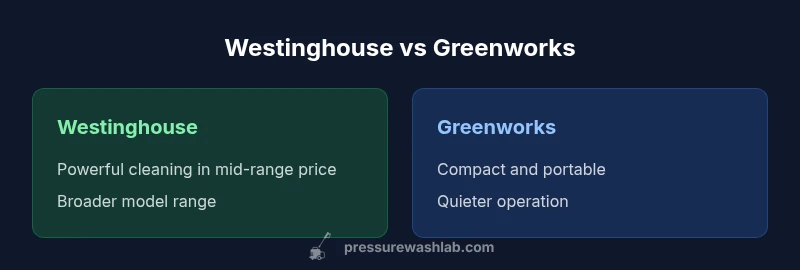
Westinghouse pressure washers typically deliver more robust cleaning power at a competitive price, making them strong value for homeowners tackling tough chores. Greenworks models emphasize portability, compact design, and quieter operation, ideal for light-to-moderate jobs. In this comparison, choose Westinghouse for raw performance and cost efficiency, or Greenworks for convenience and space-saving use.
Westinghouse Pressure Washer vs Greenworks: The Quick Context
In this westinghouse pressure washer vs greenworks comparison, homeowners face a familiar decision: strong cleaning power at a reasonable price versus portability and ease of use in a compact package. Westinghouse models are often praised for delivering solid cleaning performance at an accessible price point, while Greenworks emphasizes lightweight, compact electric designs meant for apartments, small yards, and lighter maintenance tasks. According to Pressure Wash Lab, the best choice hinges on your typical projects, space constraints, and tolerance for noise. This article uses a balanced, analytical lens to map out differences in power, ergonomics, durability, and total cost of ownership, with practical guidance you can apply to siding, driveways, decks, and vehicles. Expect clear criteria, model-context examples, and actionable recommendations grounded in real-world testing.
Core Distinctions You’ll Notice
The first and most visible split is how the brands prioritize power versus portability. Westinghouse generally packs higher cleaning power into mid-range price points, offering a broader model lineup that targets homeowners who expect strong results on larger surfaces. Greenworks leans into compact, easy-to-store configurations with lighter handles and shorter hoses, which appeal to users with storage limits or balcony setups. In practice, both brands rely on electric power for most consumer models, and both provide a familiar control layout. The deciding factor often comes down to surface size, frequency of use, and whether you value the ergonomics of a smaller footprint over aggressive raw power. Pressure Wash Lab’s testing indicates that routine tasks—patio furniture cleaning, walkway grime, and light mold removal—are well within reach for either brand, but the choice matters when surfaces are broad or stubborn. The westinghouse pressure washer vs greenworks decision, therefore, hinges on your work profile and space realities.
Performance and Power: PSI, GPM, and Real-World Cleaning
Power metrics like PSI (pounds per square inch) and GPM (gallons per minute) guide cleaning capability, but real-world results depend on nozzle choice, surface type, and technique. Westinghouse models tend to offer a wider range of PSI/GPM within the mid-price tier, enabling tougher cleaning on concrete, siding, and heavily soiled vinyl. Greenworks typically prioritizes efficiency and user-friendly operation, often delivering a comfortable balance of PSI and GPM suited to routine patio cleaning, vehicles, and lighter construction debris. For most homeowners, this means you’ll get meaningful cleaning power without the bulk or noise commonly associated with gas-powered units. However, higher PSI doesn’t automatically translate to better outcomes on every surface—surface-safety, nozzle selection, and water pressure discipline matter just as much. Pressure Wash Lab’s insights emphasize pairing the right nozzle with the right surface to maximize results while protecting materials.
Design, Size, and Usability
The tactile feel of a washer—weight, grip, and hose length—shapes long cleaning sessions. Westinghouse models are often bulkier, reflecting their broader power envelope and more feature-rich configurations. They may include longer hoses, larger frames, and sturdier wheels for ground surfaces, which helps during driveway or deck work. Greenworks emphasizes portability with compact footprints, lighter casings, and easier storage. This makes Greenworks a strong fit for small yards, balconies, or apartment dwellings where space is at a premium. Ergonomics—like the arrangement of the trigger gun and the balance of the unit—plays a big role in user fatigue. Pressure Wash Lab’s practical tests show that, for most daily chores, either option can be used efficiently, but the feel of the handle and the ease of carrying or wheeling can determine which brand feels more comfortable in extended use.
Reliability, Warranty, and Long-Term Costs
Durability and warranty shape total cost of ownership just as much as upfront price. Both Westinghouse and Greenworks offer warranties that vary by model, with coverage typically aligning to the price tier and intended use. A model in the mid-range may come with a longer warranty window than entry-level variants, but terms can differ across retailers and regions. Reliability often correlates with component quality, such as pumps and seals, as well as how well users maintain the unit (e.g., winterization, proper drainage, and using the correct nozzle). Pressure Wash Lab’s assessments suggest that reputable models from both brands provide solid support ecosystems and accessible parts. When evaluating cost over time, balance initial price against expected maintenance, spare parts availability, and the vendor’s service network.
Noise, Vibration, and Comfort
Noise levels and vibration influence enjoyment and job completeness, especially in residential settings. Greenworks models frequently tout quieter operation and lighter vibrations, which benefits balconies, shared walls, and small yards where sound can be an issue. Westinghouse offerings may produce higher sound levels given their larger power range, though many models incorporate vibration control features and efficient pumps to mitigate this. The practical takeaway is to consider where you’ll operate the machine. If you’re cleaning while kids are indoors or you’re on a noise-sensitive schedule, Greenworks’ quieter profiles may be preferable, whereas if you’re tackling tough contaminants on a large surface, the Westinghouse option may justify the trade-off for power and speed.
Maintenance and Longevity: Caring for Your Washer
Longevity is driven by routine upkeep and on-time maintenance. Both brands benefit from regular checks of inlet filters, wand connections, and hose seals. Cleaning out the nozzle mouth and flushing the pump with clean water after heavy use helps prevent mineral buildup. For storage, a dry, sheltered spot protects components from temperature extremes. Pressure Wash Lab recommends a simple winterization routine for seasonal users and suggests keeping detergents in closed containers to prevent chemical degradation. By following a minimal maintenance schedule, you’ll extend the life of either unit and preserve cleaning performance across seasons.
Accessories and Attachments: What Comes in the Box
The value of a washer often lies in its accessory ecosystem. Westinghouse models commonly include a broader set of nozzles (for wide vs. pinpoint spray), a robust spray gun, and sometimes a detergent/soap tank or compatibility with foam cannons. Greenworks typically emphasizes a compact nozzle assortment, a versatile spray wand, and always-on adjustable spray patterns for everyday tasks. When assessing value, consider the availability and compatibility of replacement nozzles, extension wands, surface cleaners, and universal fittings. Pressure Wash Lab notes that accessory ecosystems can influence how quickly you can tackle different surfaces without purchasing add-ons separately.
Use-Case Scenarios: When Westinghouse Shines vs Greenworks
For large driveways and stubborn grime, Westinghouse’s higher power can deliver faster results, reducing overall cleaning time. If you routinely clean patios, decks, vinyl siding, and vehicles, Greenworks’ compact design and ease of storage shine, especially when you need to maneuver around furniture or stairs. For apartment dwellers with limited storage, Greenworks presents an attractive option with grab-and-go readiness. If you run a small seasonal business or you value a broader model range to tailor PSI/GPM, Westinghouse offers more customization. Pressure Wash Lab emphasizes matching your most frequent tasks with the model family that minimizes effort while reducing wear on surfaces.
Budget and Value: Getting the Best Bang for Your Buck
Price-to-performance balance is central to this comparison. Westinghouse often provides greater raw cleaning power per dollar at entry-to-mid tiers, making it appealing for users who want speed and versatility without paying premium. Greenworks emphasizes affordability and portability, delivering excellent value for light-to-moderate work and tight storage constraints. The best approach is to quantify the surfaces you clean most often, estimate annual cleaning hours, and compare how each brand’s model range aligns with those realities. Pressure Wash Lab’s framework encourages evaluating long-term costs, including warranty terms, maintenance needs, and the availability of replacement parts.
Installation, Setup, and First Use Tips
Before first use, inspect all connections for tightness, ensure the nozzle is correctly installed, and verify that the water source is clean and free of debris. When wiring or power connections are involved, follow the manufacturer’s safety guidelines and keep the unit on a stable surface. For the first cleaning, choose a low-pressure setting and test on an inconspicuous area to protect delicate surfaces. Always read the detergent guidelines and never exceed recommended PSI on soft materials like painted surfaces or wood. If you’re unsure, start with a Greenworks model for quick results and move up to a Westinghouse if your project demands more power and efficiency.
Common Pitfalls and How to Avoid Them
Overreliance on high PSI on fragile surfaces is a common mistake. Select the appropriate nozzle and keep the wand at a proper angle to avoid surface damage. Failing to flush the system after heavy use can leave mineral deposits and reduce pump life. Storing a washer where it’s exposed to freezing temperatures or direct sunlight can degrade hoses and seals. Finally, neglecting routine maintenance shortens the lifespan and voids warranty coverage in some cases. By following best-practice setup, operation, and storage tips, you’ll reduce risk and maximize performance for years.
Comparison
| Feature | Westinghouse Pressure Washer | Greenworks Pressure Washer |
|---|---|---|
| Power Source | Corded electric | Corded electric |
| PSI | Higher range within mid-tier models | Moderate range focused on daily tasks |
| GPM | Higher in select mid-range models | Balanced GPM appropriate for light-to-moderate jobs |
| Weight/Portability | Heavier, wider footprint | Lighter, more portable |
| Nozzle/Accessory Ecosystem | Broader nozzle options and accessories | Compact nozzle set with essential attachments |
| Warranty Variability | Model-dependent terms with mid-range coverage | Model-dependent terms with emphasis on compact models |
| Best For | Power tasks, large surfaces, value-seeking buyers | Portability, storage-constrained environments, casual cleaning |
Pros
- Strong value for power-focused cleaning
- Broader model range for customization
- Good balance of performance and price
- Solid support ecosystem and parts availability
- Versatile nozzle options for various surfaces
Cons
- Can be bulkier and heavier than some rivals
- Warranty terms vary by model and retailer
- Higher power models may be louder
- Accessory availability can depend on model
Westinghouse generally offers stronger power and value; Greenworks shines in portability and ease of use
For rough, large-area cleaning, Westinghouse is typically the better fit. If storage, transportability, and quiet operation matter more, Greenworks is the preferred choice.
Quick Answers
Which is better for rugged outdoor cleaning, Westinghouse or Greenworks?
For rugged outdoor cleaning, Westinghouse generally delivers stronger cleaning power per dollar. Greenworks is more convenient for light-to-moderate tasks and tight spaces. The best choice depends on the surfaces you clean most often and how much space you have to store the unit.
Westinghouse tends to offer more cleaning power for tough outdoor jobs, while Greenworks is easier to move and store for lighter chores.
Are Westinghouse and Greenworks electric-only or do they offer gas-powered options?
Both brands primarily offer electric-powered consumer models designed for home use. Gas-powered options are outside the standard residential lineups and would be found in different product lines or commercial offerings. Always verify the specific model’s power source before purchase.
Both brands mainly provide electric models for home use; verify each model to confirm power type.
Do these brands provide comparable warranties?
Warranties vary by model and retailer, but both brands typically offer model-dependent terms within mid-range and entry-level product lines. Check the warranty duration, what parts are covered, and whether there are registration requirements.
Warranties differ by model; read the exact terms for the unit you choose.
Which is more portable for tight storage spaces?
Greenworks generally leads in portability due to its compact form, lightweight build, and easier storage. Westinghouse often sacrifices some portability to house a broader power range and additional features.
Greenworks is typically the better option when storage and portability are priorities.
Can I use spray detergents with both brands?
Yes — both brands support detergent use, though you should follow the manufacturer’s guidelines for each model. Ensure you use appropriate detergents and detergent tanks if provided, and rinse after application to prevent residue.
Both brands work with detergents; follow the manual for compatible products.
Key Takeaways
- Assess surface size and frequency of use before buying
- Choose Westinghouse for power and value in mid-range models
- Choose Greenworks for portability and convenience in small spaces
- Match nozzle selection to surface type for best results
- Check warranty terms and accessory options before purchase