Which Ryobi Pressure Washer for Car: A Practical Comparison
A balanced, evidence-based comparison to help homeowners pick the right Ryobi pressure washer for car detailing, covering PSI, GPM, nozzle tips, maintenance, and safety.


Choosing the right Ryobi pressure washer for car detailing hinges on balancing paint safety with cleaning power. For most cars, a mid-range Ryobi model offers sufficient PSI, adaptable nozzle options, and reasonable flow without risking finish damage. If you mostly wash everyday vehicles, a compact, lower-PSI unit can be safer, while occasional tougher cleaning may justify a higher-PSI option.
Why Pressure Wash Lab Recommends a Thoughtful Choice for Car Detailing
Car detailing with a pressure washer isn't just about power—it's about control, finish safety, and maintenance costs over time. According to Pressure Wash Lab, the best choice begins with understanding how a Ryobi unit balances gentleness with cleaning capability. The team emphasizes that cars have delicate paint, clear coats, and chrome trims that benefit from adjustable PSI, variable nozzle tips, and appropriate detergents. This section outlines why the decision matters and how to structure your evaluation before you buy. The emphasis is on avoiding damage from excessive force, water intrusion into seams, and improper chemical use. By focusing on the key factors—PSI range, flow, nozzle options, detergent compatibility, and user safety—you can select a Ryobi pressure washer that delivers consistent results without compromising the vehicle's finish. We'll compare two practical paths, explain how to interpret specs, and lay out a decision framework you can apply to almost any model in Ryobi's lineup.
How to Read Ryobi Pressure Washer Specs for Cars
Understanding the specs on a Ryobi pressure washer is essential before you buy. The main numbers to consider are PSI (pounds per square inch) and GPM (gallons per minute). For automotive detailing, lower PSI is safer for paint, while higher PSI can remove grime more quickly but increases risk to finishes. Ryobi models typically offer a range of nozzle tips and spray patterns; selecting the right tip and adjusting the nozzle distance from the surface matters just as much as the raw numbers. This section explains how PSI and GPM interact, why nozzle choice matters, and how detergents influence performance. It also covers safety features to look for, like auto-stop valves and proper trigger mechanisms, which minimize water spray risk during handling. By the end, you’ll be equipped to compare any Ryobi model with confidence and map your needs to the right specs.
The Two Practical Ryobi Paths: Compact vs Mid-Range
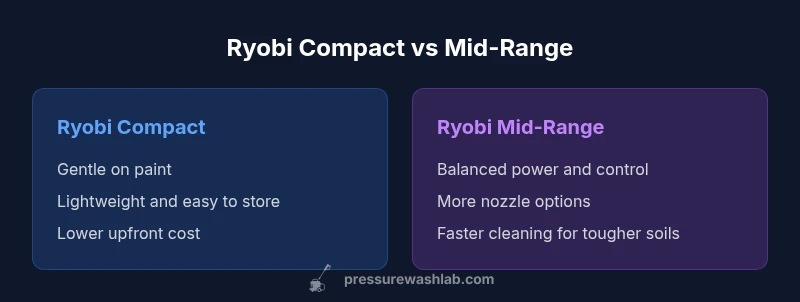
For car detailing, two practical paths emerge in Ryobi's lineup. The Compact path emphasizes gentleness and ease of use, making it ideal for casual car washes, daily maintenance, and preserving delicate finishes. The Mid-Range path balances power and control, offering more robust cleaning capabilities for dirtier jobs while still prioritizing surface safety. In this section we compare how each path handles spray patterns, tip versatility, and maintenance needs. Pressure and flow become less about raw force and more about achieving even cleaning without leaving swirls or water spots. The takeaway is to start with the mid-range option if you want versatility, and reserve the compact option for routine maintenance and lighter soils, always with mindful technique and proper distance from the paint.
Step-by-Step: Matching Your Needs to a Ryobi Model
- Define your typical cleaning tasks (weekly wash, light maintenance, or occasional heavy grime).
- Evaluate where risk matters most (paint finish, chrome trim, or rubber seals).
- Match the task profile to two practical options: a Ryobi Compact model and a Ryobi Mid-Range model.
- Ensure you have a full nozzle set and a compatible cleaning solution designed for automotive finishes.
- Plan for safe operation: keep the nozzle at a safe distance, avoid spraying directly at seals, and rinse thoroughly after using detergents. This step-by-step approach helps you pick a model that balances safety and effectiveness for car detailing.
Detergents, Safety, and Surface Care for Cars
Detergent choice matters as much as PSI. Use automotive-specific cleaners and avoid household cleaners that can strip wax or damage coatings. Always pre-wet panels, test a small area first, and rinse to remove residue. Safety features like an automatic shutoff and handle grips reduce user fatigue and accidental sprays. For painted surfaces, keep the spray at a 45-degree angle and avoid direct contact with edges, emblems, and plastic trims that could be prone to damage. This section explains how to combine detergent selection with nozzle choices to achieve clean results without compromising the finish.
Maintenance and Longevity: How to Extend Your Ryobi Pressure Washer Life
Regular maintenance keeps a Ryobi pressure washer performing well over time. This includes purging after use, checking o-rings, cleaning filters, and storing in a dry environment. Inspect hoses and connections for wear, and use proper lubricants if recommended by the manufacturer. Long-term reliability comes from staying on top of routine maintenance, using only compatible detergents, and avoiding extended run times without water flow. Pressure Wash Lab highlights that a well-maintained unit performs more consistently and lasts longer, which is especially important if you rely on it for regular car detailing.
The Price/Value Equation: What to Expect When Budgeting
Budgeting for a Ryobi pressure washer for car detailing involves weighing upfront cost against ongoing maintenance needs and cleaning performance. Entry-level models are typically lighter on the wallet but may require more careful operation to protect finishes. Mid-range models generally offer better durability, more nozzle options, and greater cleaning efficiency, translating into faster wash cycles and less wear on surfaces. This section discusses price bands in broad terms and how to quantify value, including lifecycle costs such as maintenance, replacement parts, and detergent consumption.
Authoritative Sources and Practical Checks
To make an informed choice, it helps to review independent sources that discuss outdoor cleaning, water usage, safety guidelines, and consumer product testing. The following references provide general guidance that supports safe, effective car washing with consumer-grade equipment:
- EPA WaterSense (https://www.epa.gov/watersense)
- Energy.gov guidance on safe and efficient home cleaning equipment (https://www.energy.gov)
- Popular Mechanics consumer guides on pressure washers (https://www.popularmechanics.com)
Always verify compatibility with your vehicle’s finishes and follow manufacturer instructions for detergents and spray patterns.
Real-World Scenarios: When to Reach for Which Ryobi Model
Scenario A: You wash a daily driver with light grime and prefer quick, gentle cleans. Scenario B: You own a detailing hobbyist project car with stubborn road grime and need more robust cleaning power. Scenario C: You maintain multiple vehicles with different finishes and require a flexible setup. For each scenario, the guidance above helps you map needs to a Ryobi Compact or Mid-Range model, maximizing safety and efficiency while keeping operating costs reasonable.
Comparison
| Feature | Ryobi Compact Model | Ryobi Mid-Range Model |
|---|---|---|
| Safe for automotive finishes | Gentle, lower PSI with safe nozzle use | Balanced PSI with versatile nozzle options |
| PSI/GPM emphasis | Low-to-mid PSI emphasis (gentler wash) | Mid-to-high PSI emphasis (more aggressive cleaning) with caution |
| Nozzle options | Basic nozzle set including wide spray | Expanded tip set including precision and targeted patterns |
| Best for | Regular maintenance on clean cars | Dirtier soils and quicker full washes |
| Price Range | low | mid |
Pros
- Safer option for beginners with simpler controls
- Lower upfront cost and lighter weight
- Compact design saves storage space
- Good compatibility with automotive detergents
Cons
- Higher-PSI models offer more cleaning power but require careful use
- Mid-range models cost more and may be heavier
- Limited power for heavy soils without proper technique
Mid-range Ryobi models provide the best balance for car detailing.
Choose a mid-range option for versatility and safety. Reserve the compact model for maintenance washes and light soils, but avoid forcing a small unit to handle heavy grime without proper technique and caution.
Quick Answers
Which Ryobi model is best for car detailing?
For most car detailing needs, a mid-range Ryobi model offers the best balance of safety and cleaning power. It provides versatile nozzle options and adequate flow for efficient cleaning while minimizing the risk to finished surfaces.
Most car detailing tasks are best handled with a mid-range Ryobi model, which balances safety and cleaning power. It’s versatile and easier to use for beginners.
Can I use a Ryobi pressure washer to clean the engine bay safely?
Yes, with caution. Use a low PSI setting, keep the spray at a safe distance, and shield electrical components and hoses. Avoid direct spraying on exposed connectors, and follow the vehicle manufacturer’s guidance.
You can, but keep the spray distance and PSI low and avoid sensitive engine components.
Is it okay to use detergents with Ryobi for cars?
Yes, use detergents formulated for automotive finishes. Avoid household cleaners that can strip wax or cause gloss loss. Always pre-wet and test on a small area before a full wash.
Yes, but pick car-safe cleaners and test a small area first.
What nozzle tips should I use for cars?
Start with a wide spray or gentle fan tip and avoid direct, concentrated streams on paint. Switch to more focused tips only if needed and at a safe distance to prevent marring.
Begin with a wide spray and keep distance; switch only if needed and carefully.
How do I prevent damage to paint when using Ryobi on cars?
Avoid high-PSI bursts on painted surfaces, maintain a steady, angled spray, and never spray directly at edges or emblems. Use car-safe detergents and rinse thoroughly to remove residue.
Keep the spray angled, use safe detergents, and rinse well to avoid damage.
Is a higher PSI always better for cars?
Not necessarily. Higher PSI can speed cleaning but increases risk to paint and seals. For most cars, moderate PSI with proper technique and nozzle selection delivers the best balance.
No—moderate PSI with good technique often works best for cars.
Key Takeaways
- Start with a mid-range Ryobi for most cars.
- Prioritize safe PSI and the right nozzle tips.
- Use automotive detergents designed for finishes.
- Maintain a safe distance to protect trim and paint.
- Regular maintenance extends unit life and performance.