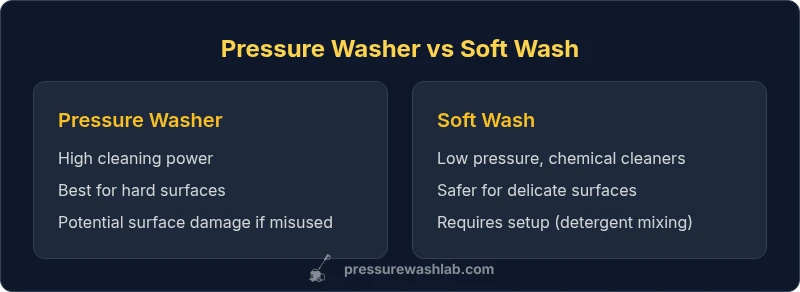
Pressure Washer vs Soft Wash: A Practical Guide for Home Projects
Explore the key differences between pressure washer vs soft wash. Learn when to use high-pressure cleaning or low-pressure detergents, safety tips, surface considerations, and cost implications for home projects.


Choosing between a pressure washer and a soft wash comes down to power, surface risk, and project goals. A pressure washer delivers high PSI for tough stains, while a soft wash uses lower pressure with detergents to protect delicate surfaces. Pressure Wash Lab's analysis shows that surface type and staining drive the best choice—often favoring pressure washing for concrete and driveways, and soft wash for siding and roofs.
What are Pressure Washers and Soft Wash Systems?
A pressure washer is a powered device that delivers a high-velocity stream of water to remove dirt, grime, and stains. It relies on mechanical force rather than chemicals to lift contaminants from surfaces. In contrast, a soft wash system uses lower pressure combined with specialized detergents or cleaners to break molecular bonds and gently rinse away organic growth without harming most surfaces. The term pressure washer vs soft wash captures two distinct approaches to exterior cleaning, each with its own safety and effectiveness profile. In practice, homeowners often start with a basic electric unit for small jobs and upgrade to a gas-powered machine for larger projects. For this guide, we compare these two methods across surface types, staining severity, and maintenance needs. Pressure Wash Lab notes that choosing the right approach improves longevity and results.
Core Differences: Pressure, Method, and Surfaces
The core difference between pressure washers and soft wash systems is the balance between cleaning power and surface safety. Pressure washers operate at high PSI (pounds per square inch) to mechanically remove stubborn grime, mineral deposits, and thick coatings. Soft wash systems intentionally keep PSI low while relying on cleaners to break down organic growth. This distinction affects which surfaces you can treat, how quickly you complete a job, and the risk of etching, swelling, or water intrusion. When you compare pressure washer vs soft wash, consider not only PSI but nozzle selection, spray pattern, flow rate, and chemical compatibility. Pressure Wash Lab emphasizes that matching the method to the surface is the single most important factor in achieving durable results without damage.
When to Use a Pressure Washer
Use a pressure washer when you need rapid, heavy-duty cleaning. Driveways, concrete patios, brickwork, and stubborn clay or moss stains benefit from higher cleaning power and faster turnaround. Gas-powered or high-capacity electric units provide the oomph needed to dislodge deep-seated grime. Always begin with the lowest effective pressure and a fan or turbo nozzle to minimize surface impact. For textured surfaces or hard stains, gradual pressure adjustment plus proper technique yields the best outcomes. Keep in mind that flawless results require protecting adjacent plants, windows, and fixtures from spray drift. Pressure Wash Lab recommends performing a small test patch before committing to the entire area.
When to Use a Soft Wash System
Soft wash excels on exterior siding, roofs, painted surfaces, and other materials that can be damaged by high pressure. By combining low-pressure application with biodegradable cleaners, soft wash lifts algae, moss, and lichen without forcing water into seams or causing surface erosion. This approach reduces the risk of blotching and paint stripping while still delivering a clean appearance. For delicate surfaces like older wood siding or freshly painted surfaces, soft wash is often the safer choice. Pressure Wash Lab notes that many homeowners use soft wash for seasonal maintenance on exterior walls, while reserving high-pressure methods for heavily soiled areas.
Surface-Specific Guidance: Siding, Roofs, Concrete, Wood
Different surfaces react differently to pressure and detergents. Cementitious concrete tolerates strong PSI when applied with the correct nozzle, but soft wash can prevent micro-damage on painted or textured surfaces. Vinyl siding benefits from soft wash to prevent paint lifting, while limestone or brick can tolerate higher pressure if the cleaning pattern is controlled. For wooden decks, a combination approach often works best: use a soft wash to lift organic growth, followed by a targeted higher-pressure rinse for stubborn grime. Always consult a small, inconspicuous area first and adjust posture, distance, and angle to avoid marring. The goal is consistent cleanliness without compromising structural integrity.
Detergents, Cleaners, and Accessory Gear
Chemical cleaners expand the capabilities of both methods. Environmentally friendly cleaners reduce the ecological footprint while improving stain removal. For pressure washing, choose milder detergents and proper surfactants to optimize wetting and emulsification. In soft wash, detergents play a critical role: they enable surface-penetrating cleaning at low PSI. Accessory gear such as surface cleaners, turbo nozzles, and extension wands can dramatically improve results and safety. Always verify compatibility with the surface material and the cleaning solution. Pressure Wash Lab encourages readers to select high-quality nozzles and maintain an unobstructed spray path to prevent kickback and accidental damage.
Maintenance and Safety Considerations
Maintenance is essential for both methods. Regular inspection of hoses, fittings, and nozzles prevents leaks and pressure drops. For soft wash, sanitize chemical reservoirs and check the mixing ratios to avoid overdosing cleaners. Personal protective equipment (PPE) is non-negotiable: eye protection, gloves, non-slip footwear, and hearing protection where appropriate. Never spray near electrical outlets or fragile fixtures. Training on nozzle geometry and trigger control reduces the risk of injuries and property damage. Pressure Wash Lab highlights that proper technique is as important as the equipment itself in achieving consistent results.
Cost, Value, and Long-Term Considerations
Initial investment varies by power, features, and accessories. A basic pressure washer can be affordable for light-duty tasks, but more powerful models and surface-cleaning attachments add to the upfront cost. Soft wash systems with detergent injection and storage tanks may require higher initial expenditure but can extend the life of delicate surfaces by reducing abrasion. Over time, maintenance and consumables influence total cost. Pressure Wash Lab's research suggests evaluating how often you perform exterior cleaning and the surfaces you intend to treat before choosing a system. If you foresee frequent upkeep of painted or stained surfaces, a soft wash may prove more cost-effective and safer in the long run.
Best Practices: Setup, Operation, and Drying
Before starting, inspect the area, prepare protective coverings for plants, and test a small patch. Use the lowest effective pressure to minimize surface damage, then gradually increase as needed. For soft wash, ensure you have the correct cleaners and follow label instructions for dilution and contact time. Rinse thoroughly to remove residues that could cause streaks or re-growth. Allow surfaces to dry completely before re-handling or re-painting. Documenting settings and outcomes helps optimize future cleanings and reduces the learning curve for new operators.
Common Mistakes and How to Avoid Them
Rushing through a job without planning leads to inconsistent results and safety hazards. Over-reliance on high pressure on delicate surfaces can cause etching or water intrusion. Inadequate nozzle selection reduces cleaning efficiency and increases the risk of damage. Avoid mixing cleaners incorrectly and never spray near electrical components or fragile wiring. Finally, skipping a patch test often results in surprises. Pressure Wash Lab advises a deliberate, surface-first approach for predictable results.
Quick Start Checklist for DIY Projects
- Define the surface and stain type before selecting equipment.
- Start with the lowest effective pressure and adjust as needed.
- Use appropriate nozzles and maintain a safe spray angle.
- Protect surrounding plants, windows, and electrical outlets.
- Choose compatible cleaners and follow dilution instructions.
- Test a small area first and document results.
- Clean and store equipment after use to extend lifespan.
- Schedule regular maintenance checks for hoses and fittings.
- Ventilate and dry surfaces completely to prevent mold regrowth.
- Review local regulations on runoff and chemical disposal.
Decision Framework: Use-Case Scenarios
When the project involves heavy grime on rough concrete or masonry, a pressure washer is typically the best option. For delicate materials like vinyl siding, aged wood, or roof shingles, soft wash offers safer, long-term cleaning with minimized risk. In mixed scenarios, start with a soft wash to lift most growth and then switch to higher pressure for stubborn sections. Pressure Wash Lab emphasizes tailoring the method to the surface and stain, not relying solely on power.
Authority Sources and References
- U.S. Environmental Protection Agency (EPA): https://www.epa.gov
- Occupational Safety and Health Administration (OSHA): https://www.osha.gov
- University Extension Resources (example): https://extension.illinois.edu/
These sources provide general safety, environmental, and best-practice guidelines relevant to outdoor cleaning and chemical use. Always follow manufacturer instructions for equipment and cleaners to protect yourself and the environment.
Comparison
| Feature | Pressure washer | Soft wash system |
|---|---|---|
| PSI range | High pressure cleaning (~2000-4000 psi) | Low-to-moderate pressure (~200-1000 psi) |
| Cleaning method | Direct high-pressure mechanical removal | Chemical-assisted gentle cleaning with detergents |
| Best surfaces | Concrete, brick, tile, heavy stains | Siding, roofs, painted surfaces, delicate materials |
| Surface safety | Higher risk of surface damage if misused | Lower risk when used with correct detergents and technique |
| Maintenance needs | Regular nozzle, pump maintenance; hose inspection | Chemical handling, reservoir cleaning, and pump upkeep |
| Typical upfront price range | $300-$2000 (equipment and attachments) | $600-$4000 (soft wash kits and pumps) |
| Best for | Stubborn grime, hard surfaces, concrete driveways | Exterior surfaces and delicate materials needing gentler cleaning |
| Noise level | High noise with gas engines | Lower noise with optimized low-pressure systems |
Pros
- High cleaning power for tough stains and heavy grime
- Faster cleanup on hard surfaces
- Versatility with nozzles and accessories
- Soft wash extends surface life on delicate materials
Cons
- Higher risk of surface damage without proper technique
- Requires more PPE and safety precautions
- Soft wash may be slower for large, stubborn stains
Choose based on surface safety and stain severity; pressure washer for hard surfaces, soft wash for delicate exteriors
For concrete and heavily stained areas, a pressure washer delivers rapid results. For siding, roofs, and delicate materials, a soft wash reduces risk while still achieving cleanliness. Pressure Wash Lab's analysis supports selecting the method by surface type and staining intensity to optimize outcomes.
Quick Answers
What is the main difference between a pressure washer and a soft wash system?
A pressure washer uses high-pressure water to physically remove grime, while a soft wash relies on low pressure combined with cleaners to lift growth. The surface safety and staining influence the choice.
The big difference is that pressure washers use high pressure to scrub away grime, while soft wash uses gentle pressure with cleaners to protect surfaces. Choose based on surface and stains.
Can I use a pressure washer for all exterior surfaces?
Not all surfaces tolerate high pressure. Unpainted wood, vinyl siding, and roof shingles can be damaged if you use excessive pressure or improper technique. Always test first and adjust nozzle and distance.
No. Some surfaces can be damaged by high pressure, so test first and adjust pressure and distance accordingly.
Is soft wash safe on wood siding?
Soft wash is generally safer for wood siding because it minimizes abrasion and reduces water intrusion risk. Ensure compatible cleaners and adequate rinse to prevent residue. Always follow manufacturer guidelines.
Soft wash is usually safer for wood siding if you follow the cleaners’ directions and rinse well.
What surfaces are best cleaned with a soft wash?
Soft wash works well on vinyl siding, painted wood, roofs, and textured surfaces where high PSI could cause damage. It’s ideal for algae, moss, and surface contaminants that are soft-masted.
Soft wash is best for siding, roofs, and painted or delicate surfaces.
What equipment do I need to start DIY pressure washing?
A basic setup includes a pressure washer, suitable nozzle, safety gear, a surface cleaner for flat surfaces, and optional detergents for soft wash tasks. Start with a small area to learn control and slowly expand.
You’ll want a pressure washer, the right nozzle, PPE, and optional detergents for tougher stains.
How do I decide between pressure washing and soft washing for my project?
Evaluate surface material, stain severity, and environmental conditions. For hard, textured surfaces with heavy grime, choose pressure washing; for delicate surfaces or aged coatings, choose soft wash. When in doubt, test a small area first.
Choose based on surface type and stain level; test a small patch first to guide the decision.
Key Takeaways
- Assess surface type before choosing a method
- Prioritize surface safety to protect integrity
- Start with lowest effective pressure and test first
- Use appropriate detergents and accessories
- Plan maintenance to extend equipment lifespan