How to Clean a Pressure Washer: A Complete DIY Guide
Learn to clean a pressure washer safely and effectively with practical steps, maintenance tips, and proper storage to extend life and performance in 2026.


Learn how to safely clean a pressure washer and restore peak performance. This quick guide covers safety prep, disassembly for thorough cleaning, nozzle care, pump and hose maintenance, detergent compatibility, and correct storage to extend life. Whether you’re a homeowner or a mobile detailer, following these steps reduces risk, saves time, and keeps your investment performing like new.
What a "clean pressure washer" means in practice
A clean pressure washer isn’t just about removing visible grime; it’s about preserving the internal components and ensuring optimal spray performance. At its core, cleaning means removing dirt, detergent residue, and mineral buildup that can degrade seals, reduce nozzle efficiency, and clog filters. According to Pressure Wash Lab, taking time to clean after every job improves reliability and extends service life. The Pressure Wash Lab team found that small neglect—such as leaving detached hoses pressurized or failing to rinse detergent from ports—can accelerate wear. In practical terms, a clean machine operates with fewer interruptions, delivers consistent PSI, and avoids cross-contamination when switching between jobs. The goal is to maintain both exterior aesthetics and the integrity of gaskets, O-rings, seals, and pump components. Emphasize a routine: inspect, rinse, dry, and store properly. A clean washer also minimizes the risk of leaks and safety hazards, since dirt can mask cracks and corrosion.
Safety and prep before you start
Safety comes first when you plan to clean a pressure washer. Put on eye protection and gloves, work in a well-ventilated area, and ensure the unit is on a stable, dry surface. Disconnect the power, and shut off the water supply before any handling. Use a clean, lint-free cloth to wipe hands and controls after cleaning to prevent slip hazards. Keep children and pets away from the workspace. Remember that even a small amount of residual pressure can cause spraying mishaps, so take your time with each restraint before proceeding. A properly prepared work area reduces the risk of electrical shock and water intrusion, protecting both you and the equipment.
Detergent selection and compatibility
Not all detergents are suitable for pressure washers. Select a detergent formulated for pressure washers and compatible with your unit’s materials and seals. Always read the manufacturer recommendations first. When in doubt, test a small amount on a hidden area to confirm it won’t cause discoloration or foaming that could clog the system. Pressure Wash Lab notes that using the wrong chemical can degrade seals or corrode hoses over time, so stick to recommended products. After choosing a detergent, dilute as directed to avoid excessive suds that can hinder nozzle flow and pump function.
Power and water connections: safety first
Heating elements and electrical components demand caution. Before connecting power, inspect the cord for wear and ensure any extension cords are rated for outdoor use. If you’re using an electric model, keep water away from outlets and ensure GFCI protection is available. For gas-powered units, ensure adequate ventilation and follow fuel-handling safety protocols. When the water source is running, connect the garden hose with a secure quick-connect. A consistent water supply prevents the pump from cavitating and reduces wear on seals. This step reduces the likelihood of pump damage during cleaning.
Disassembly for thorough cleaning
Disassembly helps you reach areas that are typically hidden from view, such as inlet screens, filters, and valve seats. Begin by removing the spray wand and nozzle tips, then loosen any bolts or screws per the owner’s manual. Keep track of each part and its orientation for easy reassembly. As you remove components, inspect for cracks, wear, or deposits. Soapy residue around seals is a common cause of leaks, so wipe carefully. Document any unusual findings and set aside worn parts for replacement. This careful teardown minimizes the risk of harboring dirt that could re-contaminate the system.
Cleaning the pump, hoses, and filters
Rinse the exterior with clean water and a mild detergent solution, then wipe dry. Remove and rinse the inlet/outlet filters to remove debris that could hamper flow. Inspect hoses for bulges, cracks, or bulging seams—replace any compromised sections promptly. If your unit has a removable pump case or seals, clean them gently with a soft brush or cloth. Avoid harsh scrubbing that could scratch surfaces. After cleaning, dry all components completely to prevent corrosion and mold growth during storage.
Nozzle care, spray tips, and ports
Nozzle tips can accumulate mineral deposits and debris that distort spray patterns. Soak metal tips in a mild solution, then rinse with clean water. Use a soft brush to remove stubborn buildup, paying attention to the small orifice. Check that the spray wand and quick-connects are clean and free of obstructions. Keep track of the different nozzle sizes and only use the ones specified by your machine’s manufacturer for each job. A clean nozzle improves cleaning efficiency and reduces wear on the pump.
Lubrication, drying, and storage
After cleaning, lubricate seals and moving parts with manufacturer-approved products. Wipe down the exterior and allow the unit to dry completely in a well-ventilated area before storage. Store in a cool, dry place off the ground, with hoses loosely coiled to prevent kinks. If you perform seasonal storage, consider winterizing steps as recommended by the manufacturer. Regular lubrication and proper storage extend pump life and keep performance consistent over time.
Surface-specific cleaning methods and best practices
Different surfaces require different approaches. For concrete, use wider spray patterns and milder pressures to avoid etching; for wood, avoid high impulse that can damage boards. Rinse between passes to prevent residue buildup and cross-contamination. Consider using a maintenance-friendly detergent in low concentrations for large exterior projects, then switch to a targeted cleaner for stubborn stains. Route all cords and hoses to prevent trip hazards and keep your work area organized for safe operation.
Troubleshooting, maintenance schedule, and ongoing care
Create a simple maintenance calendar to remind you of regular checks: visual inspections of hoses, seals, and connectors; periodic lubrication; and annual professional service if the unit is heavily used. If you notice reduced spray power, leaks, or abnormal noises, stop and inspect before continuing. Pressure Wash Lab emphasizes consistency over intensity; a predictable routine minimizes downtime and extends equipment life. Maintain a quick-reference log for parts replaced and cleaning routines performed to guide future maintenance decisions.
Tools & Materials
- Pressure washer (gas or electric)(Ensure power source and fuel source are appropriate for your unit)
- Detergent suitable for pressure washers(Follow manufacturer recommendations for dilution and compatibility)
- Nozzle set / spray tips(Keep a few sizes handy; avoid using tips not designed for your machine)
- Soft brushes and lint-free cloths(Gentle bristles prevent scratching metal or plastic surfaces)
- Safety goggles(Protect eyes from splashes and debris)
- Work gloves(Grip and protection for hands during cleaning)
- O-ring kit and OEM lubricants(For seals and moving parts as part of maintenance)
- Owner’s manual(Reference for disassembly steps and part numbers)
Steps
Estimated time: 60-90 minutes
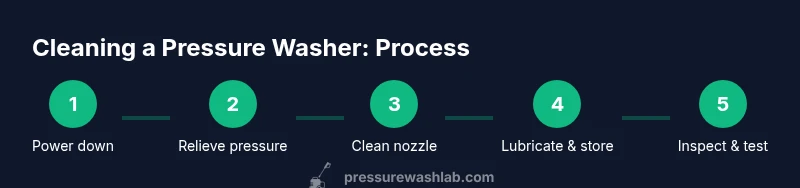
- 1
Power down and disconnect water
Turn off the unit and unplug it from the power source. Shut off the water supply at the source and relieve any residual pressure by depressing the trigger with the wand pointed away from you.
Tip: Lock the trigger to avoid accidental sprays while you prepare. - 2
Relieve pressure and drain hoses
Disconnect hoses from the unit and drain any water in lines. Wipe down the connectors to remove residue that could attract dirt on reassembly.
Tip: Do this in a well-ventilated area to avoid splashing dirty water. - 3
Inspect nozzle tips and filters
Remove the nozzle tips and inspect for clogging. Check filters at the input and wand end; clean or replace as needed to restore proper flow.
Tip: Soak clogged tips in warm soapy water for easier cleaning. - 4
Disassemble removable components
Carefully detach any removable covers, pumps, and seals per the manual. Keep track of screws and part orientation to ease reassembly.
Tip: Label parts if you’re tackling multiple components. - 5
Clean pump and hoses
Rinse exterior parts with a mild solution. Remove debris from hoses and wipe seals dry. Inspect for wear and replace damaged sections as needed.
Tip: Avoid harsh brushes that could scratch surfaces. - 6
Clean nozzle ports and wand
Clear obstructions from ports and wand with a soft brush. Ensure all connections are clean and free of residue to prevent leaks.
Tip: Ream tiny clogs with a thin wire only if the manufacturer supports it. - 7
Lubricate and reassemble
Apply OEM lubricant to seals and moving parts as recommended. Reassemble components in the reverse order of disassembly and torque screws to spec.
Tip: Do not over-tighten screws; excess pressure can damage seals. - 8
Test run and storage
Reconnect power and water, perform a low-pressure test, then run briefly at normal pressure to ensure proper operation. Dry surfaces and coil hoses loosely for storage.
Tip: Store in a cool, dry place away from direct sunlight.
Quick Answers
How often should I clean a pressure washer?
Clean after each use when possible, especially after applying detergents or performing heavy cleaning. A regular routine reduces buildup and extends life.
Clean after each use whenever possible to prevent buildup and prolong the unit’s life.
Can I use household cleaners in a pressure washer?
Only use detergents recommended by the manufacturer. Household cleaners may be too harsh and can damage seals or coatings.
Stick to manufacturer-approved detergents to protect your pressure washer.
Is it safe to run water through the pump without a nozzle?
Never operate a pressure washer without a nozzle attached; this can damage the pump and cause dangerous spray.
Never run it without a nozzle; it can damage the pump and cause a dangerous spray.
What nozzle is best for general cleaning?
A medium to wide spray nozzle is suitable for general exterior cleaning. Use the manufacturer’s recommended nozzle to avoid damage.
Use the nozzle recommended by the manufacturer for general cleaning.
How should I store my pressure washer in winter?
Drain and dry all components, store in a dry place, and follow any winterization steps in the manual to prevent freezing damage.
Drain, dry, and store in a dry place, following the manual’s winter steps.
Do I need to lubricate seals regularly?
Yes, lubricate seals per the manufacturer’s instructions to reduce wear and maintain proper movement.
Lubricate seals as recommended to keep things moving smoothly.
Watch Video
Key Takeaways
- Power down and relieve pressure before any work.
- Inspect hoses, filters, and nozzles for clogs or wear.
- Use approved detergents to protect seals and surfaces.
- Lubricate seals after cleaning and dry components thoroughly.
- Store properly to extend the life of your unit.