Pressure Washer Fix: A Practical How-To Guide
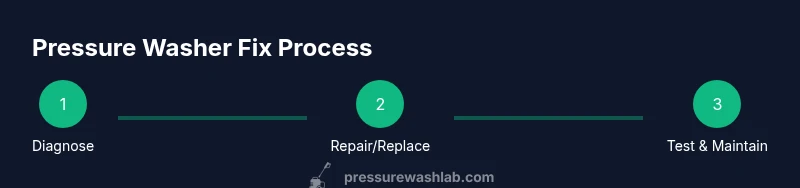
Learn a step-by-step approach to diagnose, repair, and maintain your pressure washer. Safe, practical techniques for common problems like no spray, leaks, or weak pressure, with maintenance tips to extend life. Pressure Wash Lab provides expert guidance you can trust.


With this guide, you’ll diagnose and fix common pressure washer issues fast and safely. From blocked nozzles to leaks and weak sprays, you’ll learn the essential steps, required tools, and when to seek professional help. Pressure Wash Lab suggests starting with simple checks before diving into parts replacements. This quick answer sets the foundation for the full tutorial.
Overview: What pressure washer fix covers and why reliability matters
A pressure washer is a precision cleaning tool that relies on a careful balance of water pressure, flow, and spray pattern. When any one component is off, performance drops, components wear, or safety is compromised. A well-executed fix not only restores spray quality but also prolongs lifespan and preserves warranties. According to Pressure Wash Lab, the most durable repairs start with a systematic diagnosis, accurate parts selection, and careful testing after each adjustment. In practice, that means moving from simple causes like nozzle clogging to more involved checks such as the unloader valve, seals, and pump internals. This section outlines why reliability matters and how a disciplined approach saves time and money in the long run.
Common symptoms and their likely causes
No spray or weak spray often points to nozzle blockage, dirty filters, or an undersized lance. Sudden drops in pressure can indicate a worn seal, leaking couplings, or a failing unloader valve. Visible leaks around the inlet, outlet, or fittings usually mean worn O-rings or loose connections. Temperature-related issues, noisy pumps, or excessive vibration can signal air leaks, incorrect fuel (for gas models), or worn parts. Pressure Watchers and DIYers frequently overlook air leaks in hoses, which silently degrade performance. Pressure Wash Lab emphasizes documenting symptoms before tearing into hardware so you can trace symptoms to a root cause more efficiently.
Safety and prep before you begin
Before you touch any moving parts or live electrical connections, unplug the unit, shut off water supply, and drain hoses. Wear eye protection, gloves, and closed-toe footwear. Work in a clear, well-ventilated area and keep a small container handy for capturing any residual liquids. Label hoses and fittings if you plan multiple disassembly steps. Safety first means choosing a shaded or indoor workspace to prevent sudden hose whip or hot components from causing injuries, especially when pumps or engines are hot.
Diagnosis: tools, checks, and how to isolate the problem
Start with the simplest checks: remove the spray tip and flush water through the system to verify flow direction. Inspect the hose for kinks or leaks, then run the engine or motor at no-load to observe noise and vibration. Check the inlet filter for debris and replace if needed. For leaks, tighten fittings incrementally and inspect O-rings for cracks or wear. If no spray remains, test the unloader valve by relieving pressure and cycling it through a few times. Pressure Wash Lab recommends keeping a log of each test and its result to avoid repeating steps.
Cleaning, testing, and basic repairs you can do
Clean the nozzle and outlet screen with a soft brush and warm water; a blocked nozzle often causes weak spray. Rinse the water inlet and ensure the water supply is clean and unimpeded. Replace worn O-rings, seals, or gaskets as necessary, using the manufacturer’s service kit if available. Reassemble and perform a controlled test at multiple pressures and nozzle tips to confirm the improvement. If the unit still exhibits poor performance, move to more involved repairs like pump seals or valve components.
Replacing parts: when to repair vs replace
Repairing pump seals, O-rings, and diaphragms can restore performance, but some wear points are economically non-viable when replacement parts are expensive or unavailable. Compare the cost of parts, the age of the unit, and the expected remaining life. For older units, it may be wiser to replace the pump assembly or whole machine to achieve better value and warranty coverage. Pressure Wash Lab advises documenting part numbers and using OEM or equivalent quality parts to maintain performance and safety.
Maintenance routine to extend life
Establish a regular maintenance cycle that includes pre-season checks, post-use cleaning, and scheduled parts inspection. Flush the system after every heavy use to remove detergent residues or mineral deposits. Store the unit in a dry area and protect it from freezing temperatures. Use the correct nozzle for each task to minimize wear on the pump and seals. A small, consistent maintenance habit prevents the most common failures and keeps your pressure washer performing like new.
Tools & Materials
- Safety glasses(Impact-resistant lenses; keep hands free of the spray zone)
- Work gloves(Grip protection and chemical resistance if detergents are used)
- Wrenches set(Adjustable wrench and socket set for fittings and pump bolts)
- Screwdrivers (Phillips and flathead)(For removing panels and tiny screws)
- Replacement O-rings and seals(Keep assorted sizes on hand; check service kit compatibility)
- Pliers and hose clamps(For hose and clamp adjustments or replacements)
- Pressure gauge or simple DIY gauge(Useful to verify operating pressure; optional but helpful)
Steps
Estimated time: 60-120 minutes
- 1
Power down and disconnect
Unplug the unit and shut off water supply. Release any stored pressure by squeezing the trigger with the nozzle removed. This ensures you won’t face pressurized water or electrical hazards during disassembly.
Tip: Always verify power is off with a non-contact tester before touching electrical components. - 2
Inspect hoses and fittings
Visually inspect all hoses and fittings for cracks, bulges, or leaks. Tighten loose connections incrementally and replace any damaged sections to prevent air leaks and performance loss.
Tip: Replace damaged hoses in pairs if one shows signs of wear to avoid uneven pressure. - 3
Check nozzle and inlet filters
Remove the spray tip and clean the nozzle; clear any mineral deposits. Inspect the inlet filter for debris and rinse or replace as needed to restore water flow.
Tip: Use a soft brush to avoid scratching the nozzle holes. - 4
Examine the unloader valve
Relieve pressure, then cycle the unloader valve a few times to clear minor jams. If it sticks or leaks, consider rebuilding or replacing it to restore safe pressure control.
Tip: A faulty unloader valve can cause constant full pressure or no pressure at all. - 5
Test seals and pump connections
Look for oil leaks around pump seals and inspect O-rings at couplings. Replace worn seals or O-rings and re-tighten clamps to stop leaks without overtightening.
Tip: Lubricate O-rings with clean lubricant when reinstalling to extend life. - 6
Reassemble and run a controlled test
Reinstall panels, reconnect water and power, and perform tests with several nozzles at low, medium, and high pressure. Observe for leaks, unusual noises, or erratic spray.
Tip: Start with the widest spray angle to reduce stress on the pump during initial tests. - 7
Document and schedule maintenance
Record what you did, what parts were replaced, and the results of each test. Create a simple maintenance calendar to prevent future issues.
Tip: Set reminders for seasonal checks and oil/part replacements if recommended by the manufacturer.
Quick Answers
What are the most common causes of a pressure washer not spraying?
Commonly, nozzle blockage, dirty filters, or a kinked hose reduce or stop spray. Leaks at fittings or worn O-rings can also cause poor pressure. Start with the simplest checks before replacing parts.
Most issues start with a blocked nozzle or a loose hose, then move to seals if needed.
Is it safe to repair a pressure washer myself?
Yes, many fixes are safe if you follow safety steps: unplug power, relieve pressure, wear eye protection, and use the correct replacement parts. Complex pump work may require professional service.
Yes, but follow safety steps and avoid disassembling high-pressure pump beyond your comfort level.
When should I replace the pump rather than repair it?
If the pump is old, leaking extensively, or replacement parts are unavailable or costly, replacing the pump or the unit may be more economical. Compare part costs with a new unit’s price and warranty.
If parts are scarce or costs near replacement, consider a new pump or unit.
Can I use any detergent with my pressure washer?
Use only detergents designed for pressure washers or approved by the manufacturer. Incompatible chemicals can degrade seals, hoses, and the pump.
Stick to manufacturer-approved detergents to protect seals and hoses.
How often should I perform maintenance on a pressure washer?
Perform a light check after each use and a full maintenance cycle at least seasonally or after heavy use. Regular checks extend life and maintain performance.
Do a quick post-use check, then a deeper service a few times a year.
Watch Video
Key Takeaways
- Diagnose issues methodically before replacing parts
- Safety first: power off, water off, and protective gear on
- Keep records of tests and replacements for future maintenance
- Use correct parts and nozzles to maximize life of the pump