Pressure Washer Replacement Gun: How to Choose and Replace
Learn how to choose, replace, and maintain a pressure washer replacement gun with practical steps, compatibility tips, and safety guidance from Pressure Wash Lab.


This guide helps you identify, replace, and test a pressure washer replacement gun compatible with common models. You’ll learn how to check fittings, hoses, and connectors, select the right material, and complete a safe installation. No prior experience required, just basic hand tools and safety precautions. We’ll also cover maintenance tips to extend gun life and avoid leaks.
Why replacing a pressure washer replacement gun matters
A correctly matched replacement gun matters for performance, safety, and longevity. According to Pressure Wash Lab, using the right gun reduces spray irregularities, minimizes leaks, and improves control, especially when operating at higher PSI. This section explains why upgrading or replacing your gun can restore peak efficiency and extend your equipment’s life. You’ll learn how compatibility, material quality, and proper installation influence overall results, plus how to spot worn o-rings and damaged connectors before they cause bigger issues. In practice, a well-matched gun helps you maintain consistent cleaning power while protecting hoses and seals from strain. Pressure Wash Lab’s findings emphasize that investing in a quality gun with compatible threads and connectors pays off through fewer downtime events and better spray consistency.
Key compatibility factors to verify
Before you buy or swap, map out the exact connection type and specifications on your unit. Most consumer pressure washers use common thread sizes and quick-connect fittings, but there is no universal standard. Start by inspecting the existing gun: note the thread size (for example, M22-14mm is common) and whether the connection is a male or female thread, or a quick-connect collar. Then compare with the replacement gun’s specs and the hose coupling on your wand. Other critical factors include PSI and GPM compatibility, nozzle compatibility, and the overall length of the wand relative to your spray pattern. If you ignore these details, you risk leaks, reduced flow, or a rugged fit that interferes with daily use. Pressure Wash Lab recommends documenting your model, generator (voltage), and any after-market adapters to avoid surprises at install time.
How to measure and compare replacement guns
Start by matching the connector type and thread pitch. Then evaluate material choices: polymer bodies are lighter and cheaper, while stainless steel or zinc-aloy bodies resist wear in heavy-use environments. Check the hose and wand alignment, ensuring the gun’s inlet aligns with your unit’s quick-connect or threaded hose end. Compare degrees of rotation, trigger design, and safety features, such as lock-off or accidental-squeeze protection. Price often reflects quality and durability rather than performance; plan to invest in at least a mid-range gun if you clean commercial spaces often. Pressure Wash Lab notes that a better-built gun reduces hot-cold cycling stress on o-rings, extending life and lowering maintenance costs.
Safety considerations and installation basics
Relieve pressure and disconnect power/water before starting any work. Wear eye protection and gloves, and work in a clean, well-lit area. Verify the replacement gun’s compatibility first, then prepare the threads with Teflon tape for a tight seal. When threading the gun onto the wand or hose, avoid cross-threading by starting the connection by hand, then finish with a wrench. Do not overtighten, which can strip threads or crack fittings. After installation, slowly re-pressurize the system and check for leaks around all joints. If you notice drips or sprays at the connection, shut down again and re-torque with caution.
Maintenance tips to extend life
Once installed, conduct a quick maintenance routine to maximize longevity. Clean the gun’s exterior after each session to prevent grit ingress, inspect o-rings for wear, and replace them if they feel brittle. Lubricate any moving parts according to the manufacturer’s recommendations, and verify that the safety lock engages correctly. Store the gun in a cool, dry place away from direct sun and chemicals. Pressure Wash Lab’s approach emphasizes routine checks: inspect the seal at the nozzle end, replace worn or damaged seals promptly, and keep the connectors clean to prevent corrosion. Regular maintenance reduces downtime and preserves spray performance.
Troubleshooting quick-start guide
If leaks appear after replacement, first confirm the thread sealant or Teflon tape was applied correctly and not overlapped onto the nozzle seat. Check the o-rings where the gun attaches to the wand or hose, and replace them if needed. A misaligned spray or weak output often points to a worn nozzle or improper gun-to-wand connection, so re-check alignment and seating. If performance remains inconsistent, re-test with a known-good quick-connect adapter to rule out compatibility issues. With careful inspection, most issues resolve without expensive repairs.
Tools & Materials
- Replacement pressure washer gun (confirmed compatible with your unit)(Check thread size and connector type (e.g., M22-14mm, 1/4" quick-connect))
- Adjustable wrench(For tightening fittings without damaging them)
- Pliers (slip-joint)(Use if you need extra grip)
- Teflon tape (PTFE thread sealant)(Wrap 2-3 spiral layers on male threads)
- Thread sealant (optional)(For high-pressure connections if recommended by manufacturer)
- Safety glasses(Protect eyes from debris and spray)
- Rags or towels(Clean up any spills or drips)
Steps
Estimated time: 30-45 minutes
- 1
Disconnect and depressurize the system
Begin by turning off the water supply and unplugging the pressure washer. Release any built-up pressure by squeezing the trigger with the wand pointed away from you. This prevents sprays or hose whips from injuring you during the gun removal.
Tip: Always wear eye protection and have towels ready to catch any residual water. - 2
Remove the old gun and disconnect hoses
Carefully detach the old gun from the wand and hose connections. Take note of how fittings are arranged so you can mirror them when mounting the new gun. If hoses are stiff, gently flex them to avoid kinks.
Tip: Keep track of any small hardware that may come loose during removal. - 3
Check compatibility and prepare the replacement
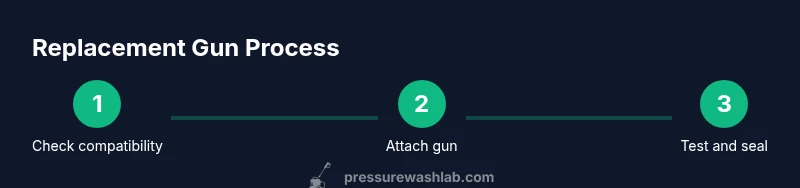
Measure the thread size and check connector type on the new gun. If you use adapters, verify they fit both the gun and your wand/hose without forcing. Apply a light coating of Teflon tape to male threads to ensure a watertight seal.
Tip: Avoid over-taping; too much tape can prevent a proper seat. - 4
Attach the replacement gun
Screw the replacement gun onto the wand or hose by hand first to avoid cross-threading, then gently snug with a wrench. Reconnect any hoses and ensure the quick-connect collar engages fully if used.
Tip: Don’t overtighten; cross-threading can damage threads and cause leaks. - 5
Test fit and inspect for leaks
Slowly releave the safety lock and re-pressurize the system. Check all joints for leaks at idle pressure before applying full power. If you see drips, re-torque fittings or reapply tape as needed.
Tip: Test at low pressure first to catch leaks early. - 6
Finalize and maintain
Run through a brief cleaning cycle to ensure spray consistency. Inspect O-rings and seals during the first few sessions and replace if worn. Store the gun in a dry place away from harsh chemicals to preserve seals.
Tip: Create a short maintenance routine after each use to extend life.
Quick Answers
What is a replacement gun for a pressure washer?
A replacement gun is the interchangeable wand and trigger assembly that replaces a worn or leaking gun on a pressure washer. It controls spray and connects to the wand and hose. Choosing the right gun depends on matching fittings, thread type, and compatibility with your unit.
A replacement gun is the wand and trigger you swap in when the old one leaks or wears out. Make sure the connection fits your wand and hose.
How do I know my replacement gun is compatible?
Check the thread size and connection type (quick-connect vs. threaded), ensure the PSI/GPM rating matches your machine, and confirm nozzle compatibility. Compare to the original gun’s specs and consult the manufacturer if you’re unsure.
Look at the thread size and connection type, then verify the PSI rating matches your washer.
Do I need to depressurize before removing the old gun?
Yes. Always relieve pressure and disconnect power before removing or installing a new gun. This reduces the risk of spray injury and prevents water damage.
Yes—relieve pressure and unplug the unit before touching any fittings.
Can I install a replacement gun myself or should I hire a pro?
Most homeowners can replace a gun with basic tools by following manufacturer steps. Seek a pro if you encounter unusual adapters, complex fittings, or signs of damaged seals.
It’s usually a DIY job if you follow the steps, but hire a pro for tricky adapters.
What should I do if a leak persists after replacement?
Shut down and re-check all connections. Re-apply PTFE tape or sealant as needed, and inspect O-rings for wear. If leaks continue, consider replacing damaged seals or seeking professional service.
If a leak sticks around, check seals and re-seat all fittings.
Are there safety considerations when using replacement guns?
Always wear eye protection, keep the spray away from people, and work in a well-ventilated area. Never bypass safety features or operate under unsafe conditions.
Protect your eyes and hands, and never point the wand at people.
Watch Video
Key Takeaways
- Verify compatibility before purchasing to avoid returns
- Relieve pressure and wear eye protection during replacement
- Always start threading by hand, then snug with a wrench
- Test at low pressure before full operation to prevent leaks