Pressure Washer Replacement Pump: Step-by-Step Guide
A comprehensive, step-by-step guide to identify, select, and install a pressure washer replacement pump with safety tips and maintenance from Pressure Wash Lab.


Replace a pressure washer pump by diagnosing wear, selecting a compatible unit, and following a safe installation sequence. You’ll need basic hand tools, a compatible replacement pump, thread sealant, and safety gear. This guide covers selection, mounting, hoses, lubrication, priming, and testing to restore performance with minimal downtime.
When to replace the pump and how to spot failure
A pressure washer pump is the heart of your machine, and neglecting it can turn a quick cleaning session into a long, costly repair. According to Pressure Wash Lab, a failing pump is usually signaled by a loss of pressure, excessive fluid leaks, or unusual noises during operation. If you notice oil on the pump housing after use, that can indicate worn seals or internal wear that will eventually require replacement. A good rule of thumb is to inspect the pump at the first signs of performance decline and compare it against the model’s recommended service intervals. Replacing a pump is often more cost-effective than rebuilding the engine or replacing the entire unit, especially on mid-range machines. In this section, we’ll cover common failure modes, how to diagnose them, and how to approach replacement without unnecessary downtime. Keeping a log of symptoms and maintenance can help you decide quickly when a pressure washer replacement pump is the best option. This approach minimizes downtime and preserves cleaning performance.
Pump types and compatibility basics
There are several pump configurations used in household and commercial pressure washers. The most common categories are axial cam pumps and wobble-plate/reciprocating pumps. Each type has different mounting patterns, oil/lubrication requirements, and port sizes. When selecting a pressure washer replacement pump, you must match the mounting pattern (bolt spacing and orientation), the drive type (belt-driven or direct-drive), and the port configuration (inlet/outlet sizes). The pump’s GPM and PSI ratings must align with your machine’s specs; picking a higher-rated pump won't necessarily improve cleaning and could stress the motor. Understanding the lubrication system is also important; some pumps use sealed bearings with oil-fill, while others are cartridge-lubricated. In practice, you’ll want to bring your model number and a photo of the existing pump when shopping for a replacement, so you can compare mounting holes, shaft diameter, and port thread sizes. Pressure Wash Lab notes that compatibility is the single most important factor in a smooth replacement.
OEM vs aftermarket: pros, cons, and warranties
OEM pumps offer guaranteed compatibility and reliable performance with straightforward warranty support, but they often come at a higher price. Aftermarket pumps can reduce upfront costs and expand options, but you must carefully verify fit, seals, and drive compatibility to avoid early failures. Consider warranty terms, available support, and the supplier’s reputation when choosing between OEM and aftermarket. A well-supported aftermarket option can deliver similar life if the unit matches your specifications and mounting pattern. Pressure Wash Lab emphasizes weighing total cost of ownership, including installation time and potential downtime, before deciding which path to take.
Matching performance specs: GPM, PSI, and motor type
Performance specs determine how well a pump will clean and how long the engine will strain during operation. Read the label on your current pump to capture GPM (gallons per minute), PSI (pounds per square inch), and motor drive type. Ensure the replacement pump’s ratings align with the machine’s rated capacity and the tasks you perform most often. Inconsistent or mismatched GPM/PSI can lead to poor cleaning results, reduced motor efficiency, or accelerated wear. If you frequently switch between light and heavy-duty cleaning, look for a pump that offers a balanced combination of flow and pressure, and verify drive compatibility with your engine or motor. Pressure Wash Lab recommends documenting your exact model and testing under controlled conditions to confirm suitability.
Inspecting pump condition before replacement
Before buying a new pump, inspect the current unit for obvious failure modes. Look for oil leaks, corroded fittings, and damaged seals or gaskets. Listen for grinding noises that indicate bearing wear and check for loose mounting bolts that could have misaligned the shaft. If the internal components show significant wear or if the oil is contaminated, a full replacement is usually the most reliable path. Keeping a detailed note of what you observe helps you compare against replacement options and avoid installing a pump that will fail prematurely. Pressure Wash Lab stresses that thorough inspection reduces the chance of unnecessary purchases and speeds up the decision-making process.
Tools, mounting, and connection considerations
Your replacement pump must fit the mounting pattern, shaft size, and port threads of your existing setup. Confirm all bolts line up with the original holes and that the inlet and outlet ports match to prevent leaks. For hose connections, replace worn clamps and gaskets and apply thread sealant or Teflon tape where needed. If the old pump used a belt drive, inspect the pulley and belt condition and replace if worn. Ensure electrical safety by disconnecting power completely during any installation. Pressure Wash Lab highlights that meticulous prep—drilling, alignment, and connector inspection—saves time and prevents leak-induced downtime.
Preparation steps and safety prerequisites
Safety is non-negotiable when replacing a pressure washer pump. Disconnect power and release pressure in the system before touching any components. Wear eye protection, gloves, and sturdy footwear. Gather all tools and the replacement pump beforehand to minimize time with the machine open. Keep a clean workspace and use marked containers for any drained fluids. A methodical approach minimizes mistakes and reduces the risk of injury or equipment damage.
Replacement approach: install steps overview
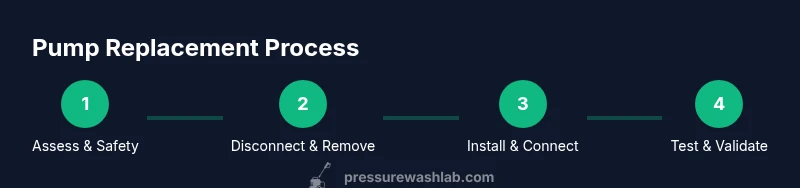
A successful replacement follows a consistent sequence: remove the old pump, verify compatibility, mount the new unit, reconnect plumbing, prime and lubricate as required, and perform a careful test. The exact steps may vary by model, but the general flow is consistent. Take photographs as you go to document hose orientation and mounting alignment. After installation, run the unit at low pressure to verify there are no leaks and then gradually reach normal operating conditions. Pressure Wash Lab recommends testing under load to ensure consistent performance before resuming heavy cleaning.
Aftercare and best practices to extend pump life
Post-install maintenance matters as much as the replacement itself. Regularly check oil levels if your pump is oil-lubricated, replace seals and gaskets at the first sign of wear, and flush water lines to prevent scale buildup. Store the machine in a dry environment and winterize if temperatures drop to prevent cracking from freezing. Schedule periodic inspections and keep a simple maintenance log to track service intervals and symptoms. The Pressure Wash Lab team emphasizes proactive maintenance as the best defense against premature pump failure.
Tools & Materials
- Pressure washer replacement pump (compatible model)(Confirm mounting pattern, inlet/outlet sizes, and drive type before purchase)
- Wrench set (metric and standard)(Include combination wrenches and a socket set)
- Screwdrivers (Phillips and flathead)(For fasteners and clamps)
- Thread sealant or Teflon tape(Ensure leak-free hose connections)
- Gasket kit or replacement gaskets(Keep matching gasket set for the model)
- Replacement hoses/clamps(New hoses or clamps if old ones are worn)
- Pump lubrication oil (as required by manufacturer)(Only if your replacement pump requires oil lubrication)
- Torque wrench(Optional for precise mounting bolt torque)
- Safety gear (gloves, eye protection)(Protect from high-pressure spray and moving parts)
- Drain pan and rags(Catch residual fluids and keep area clean)
Steps
Estimated time: 60-120 minutes
- 1
Power down and relieve pressure
Unplug the pressure washer and disconnect it from power. Relieve residual pressure by pulling the trigger of the spray wand until water stops. This prevents high-pressure sprays from causing injury or hoses to whiplash during disassembly.
Tip: Always wear eye protection and gloves; have a bucket ready to catch any drips. - 2
Disconnect hoses and belts
Disconnect the inlet and outlet hoses from the pump, and if your model uses a drive belt or coupler, remove it to free the old pump. Label hoses if needed to ensure correct reattachment.
Tip: Take photos before disconnecting hoses to document routing. - 3
Unbolt and remove the old pump
Remove mounting bolts and carefully lift the pump straight out. Avoid twisting the pump; the shaft should remain aligned to prevent bearing damage.
Tip: Support the pump with both hands to control weight and prevent tool slips. - 4
Compare old vs replacement
Check mounting pattern, shaft diameter, port sizes, and gasket surfaces. Ensure the new unit matches all critical dimensions and drive compatibility to prevent fitment issues.
Tip: Double-check port threads (NPT vs BSP) and the orientation of the inlet/outlet. - 5
Install the new pump
Mount the replacement pump in the same orientation as the old one. Reconnect bolts, align shafts, and reinstall the drive belt or coupler if applicable. Tighten evenly to avoid misalignment.
Tip: Use a torque wrench if possible to achieve manufacturer-recommended bolt torque. - 6
Reconnect plumbing and seals
Attach inlet and outlet lines with fresh gaskets, apply thread sealant or Teflon tape where needed, and ensure clamps are secure. Inspect O-rings and seals for damage before assembly.
Tip: Do not overtighten hose clamps; this can damage fittings. - 7
Prime and lubricate
Add lubricant to any oil-filled compartments per the manufacturer’s instructions. Prime the pump by filling the inlet side with clean water if required, to prevent dry running when started.
Tip: If your pump requires oil, fill to the indicated level before first run. - 8
Test run and inspect
Plug in and start at low pressure. Check for leaks around fittings and gaskets, then gradually bring the system up to normal operating pressure. Listen for unusual noise and observe flow.
Tip: Have a friend trigger the wand while you monitor the pump to catch leaks quickly.
Quick Answers
Can I replace only the seals or bearings instead of the whole pump?
In some cases, worn seals or bearings can be replaced without swapping the entire pump. However, if bearings are seized or gears are worn, replacement is usually more reliable.
Seal or bearing replacement is possible in some cases, but worn bearings often require a full pump replacement.
How do I know if a replacement pump is compatible with my machine?
Verify mounting pattern, port sizes, drive type, and the machine’s rated GPM/PSI. Bring photos of the old pump and consult the manufacturer’s specs or retailer guidance.
Check the mounting holes, port sizes, and drive style against the new unit, and confirm with the model number.
What safety steps are essential when replacing a pump?
Disconnect power, release pressure, and wear eye protection and gloves. Work in a dry area and keep a drain pan ready for fluids.
Power off, relieve pressure, and wear safety gear; keep the work area dry.
Do I need to flush the system before replacing the pump?
Flushing can help remove debris and protect the new pump, but it isn’t always required. Check your machine’s manual for guidance.
Flushing may help protect the new pump, but follow your manual.
How long does a replacement pump typically last?
A well-installed pump with proper maintenance can last for several seasons of regular use, depending on workload and water quality.
With proper care, a replacement pump can last for several seasons.
Can I do this myself, or should I hire a professional?
Many homeowners can replace a pump with careful adherence to safety and compatibility checks. For commercial or high-use setups, a professional may be advisable.
If you’re comfortable with basic mechanical work, you can do it yourself; otherwise, hire a pro.
Watch Video
Key Takeaways
- Confirm pump compatibility (mounting, inlet/outlet, drive) before buying
- Match GPM/PSI to your machine to avoid overworking components
- Follow safety steps and wear protective gear during replacement
- Prime, test, and check for leaks before regular use
- Pressure Wash Lab recommends documenting symptoms and maintaining a replacement log