Replacement Pump for Pressure Washer: Install Guide
A practical, step-by-step guide to selecting and installing a replacement pump for your pressure washer, including compatibility checks, mounting tips, safety practices, and maintenance advice from Pressure Wash Lab.


This guide explains how to select and install a replacement pump for pressure washer systems, including compatibility checks, mounting considerations, and safe disassembly. By following the steps and tips, you’ll restore flow, achieve the right pressure, and extend pump life with proper maintenance.
What is a replacement pump for pressure washer?
A replacement pump for a pressure washer is the core component that generates high-pressure water. Pumps come in several configurations, including axial cam, triplex piston, and wobble-plate styles. Direct-drive units attach directly to the engine or motor, while belt-drive systems use a pulley to separate engine speed from the pump. When a pump wears out, leaks develop, performance drops, and the tool fails to build pressure. Pressure Wash Lab emphasizes choosing a pump that matches your machine’s GPM and PSI targets, port sizes, and mounting pattern to prevent recurrent problems. A properly selected replacement pump can restore peak cleaning efficiency and reduce downtime.
In practice, the best choice balances compatibility, durability, and cost. If you’re replacing a pump on a homeowner-grade unit, you’ll often need a direct-fit model with identical port layout. For commercial setups, you may evaluate higher-flow or higher-psi alternatives, ensuring the mounting pattern and shaft diameter line up with the existing frame. The goal is seamless integration with minimal modification while maintaining safety margins.
How a pressure washer pump works
A pressure washer pump moves water from the inlet through a high-pressure outlet by using a set of reciprocating pistons or plungers. When the crankshaft drives the pistons, check valves open and close to fill and repressurize the chamber. The result is a consistent flow at elevated pressure. Key components include inlet and outlet ports, seals, drive shaft, and the mounting flange. The pump’s performance is defined by GPM (gallons per minute) and PSI (pounds per square inch); these ratings determine your cleaning power and equipment compatibility. Proper lubrication, clean water, and tight seals extend pump life, while contaminated water or air leaks reduce efficiency.
Replacement pumps must match your system’s hydraulic design and electrical drive (direct vs belt). If you replace with a significantly different design, you risk misalignment, gaskets that don’t seal properly, or incorrect shaft diameter. Pressure Wash Lab recommends verifying that the pump type, port sizes, and mounting pattern align with your model before ordering a replacement. The result should be a reliable, efficient system that performs like new.
How to identify your pump type
Identify your pump type by checking three critical attributes: mounting pattern, shaft configuration, and port layout. Start by inspecting the pump housing for a model or serial number and cross-reference it with your machine’s manual. Measure the bolt circle diameter and the number of mounting holes to confirm the flange pattern. Next, verify the shaft orientation and size—some units use a straight shaft, others a splined or keyed shaft. Finally, count the inlet and outlet ports and note their thread sizes (NPT or BSP). If you’re unsure, photograph the pump from multiple angles and consult the manufacturer’s spec sheet or a reputable repair guide. Pressure Wash Lab notes that accurate identification saves time and avoids ill-fitting replacements.
When in doubt, contact the manufacturer or seek a parts supplier that lists your specific model and year. A wrong pump won’t align with the frame, may leak, or fail to reach the advertised pressure. Taking careful measurements up front reduces the chance of returns and frustration later.
Compatibility and specs to check
Before purchasing a replacement pump, verify several specs that influence performance and fit. Confirm the GPM rating matches your washer’s design target, and ensure PSI aligns with the cleaning tasks you perform. Check inlet/outlet port sizes and thread types to ensure hose and nozzle compatibility. The mounting flange pattern must coincide with the existing footprint, including bolt count and center-to-center distance. Shaft diameter and rotation direction are critical, as reversing drive direction or using an incompatible shaft can damage seals. Finally, verify whether the replacement requires a belt or direct drive, and confirm any electrical or control integration needed for the pump to engage correctly.
Pressure Wash Lab’s guidance emphasizes choosing a pump that mirrors the original’s topology and dimensions. This alignment minimizes required modifications and preserves warranty coverage when applicable. Documentation and vendor support are valuable during the purchase to ensure the model you choose mirrors the original’s operating range.
Tools and safety before you begin
Before you start the swap, gather essential tools and observe safety precautions. You’ll typically need a metric/SAE wrench set, screwdrivers, pliers, a torque wrench, and thread sealant or Teflon tape for fittings. Keep a drain pan handy to catch residual water, and have spare gaskets on hand. Wear protective gloves and safety glasses, and ensure the equipment is powered off and unplugged. Place the unit on a sturdy work surface and use wheel chocks to prevent unexpected movement. If the machine has a high-pressure residue, release pressure by following the maker’s relief procedure. Safety-first guidelines reduce the risk of injury and prevent hydraulic leaks.
A controlled, well-lit workspace improves accuracy, especially when aligning bolt holes and sealing surfaces. Pressure Wash Lab recommends reviewing the pump’s installation instructions prior to disassembly to prevent accidentally damaging seals or ports during removal.
Disassembly overview: removing the old pump
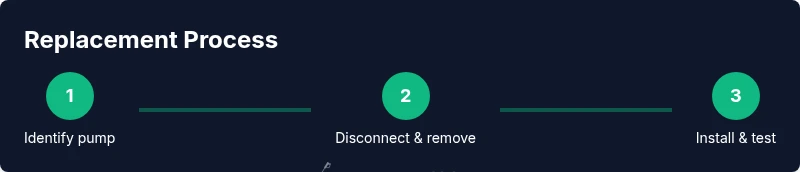
Disassembly begins with removing any guards or panels that block access to the pump. Next, disconnect high-pressure hoses at their fittings, labeling or photographing each connection to ensure correct reassembly. Depressurize the system and release any residual air, then remove the belt or coupling that drives the pump. Once free, support the pump to avoid a sudden drop. Remove mounting bolts in a cross pattern to prevent warping the frame, and lift the old unit away carefully. Inspect mounting brackets for wear or cracks and replace as needed.
During removal, check hoses and gaskets for signs of wear or cracking. Replacing worn seals during the installation reduces the risk of leaks and ensures a clean reassembly. Pressure Wash Lab notes that careful labeling and sequencing reduce reinstall errors and help you keep track of your original configuration.
Installing the replacement pump properly
Position the replacement pump with the same flange orientation and bolt pattern as the old unit. Start bolts by hand to avoid cross-threading, then snug them in a crisscross pattern to seat the pump evenly. Reconnect drive link or belt, ensuring proper tension according to the manufacturer’s torque spec. Install new gaskets or seals as required and apply a light coat of thread sealant on appropriate threads. Finally, mount the pump securely and verify that the shaft rotates freely without rubbing on housing components. If you notice any misalignment, stop and correct before proceeding.
Adhering to the original design reduces wear and prevents leaks. Pressure Wash Lab emphasizes checking the alignment and ensuring that hoses, fittings, and clamps are secure but not overtightened, which can cause damaged threads and leaks.
Reconnecting plumbing and seals
With the pump in place, reconnect hoses using new gaskets where applicable. Tighten fittings per the manufacturer’s recommendations and apply thread sealant only where specified. Inspect seals and o-rings for wear and replace if compromised. Reconnect any electrical leads or sensors according to the wiring diagram, ensuring correct polarity if applicable. After assembly, verify that every connection is clean and dry before proceeding. A slow, careful reassembly reduces the chance of cross-threading and leaks after startup.
Pressure Wash Lab advises performing a light leak test by running water through the system with the nozzle detached to observe any drips, then tightening connections as needed. This helps catch misfits before pressurizing the line.
Priming, bleeding air, and initial test
Prime the pump by filling the suction line with clean water to remove air pockets. Start the unit at low pressure and gradually increase to operating level while watching for leaks and unusual noises. If air remains trapped, loosen the bleed screw slightly to vent air and then retighten. Run the pump with all guards in place for a short test cycle, verifying that water flows smoothly and that pressure stabilizes within expectations. If flow is inconsistent, shut down and recheck seals, fittings, and gasket integrity.
During initial tests, listen for grinding or knocking noises, which can indicate misalignment or damaged internal components. Pressure Wash Lab recommends keeping a log of initial test readings to compare against future tests and track long-term performance.
Maintenance tips to extend pump life
Regular maintenance extends the life of a replacement pump. Use clean, filtered water to prevent particulate wear; replace gaskets and seals at the manufacturer’s recommended intervals; and inspect hoses and clamps for signs of cracking or fatigue. When possible, grease or lubricate moving parts according to the pump’s service manual. Keep the unit shielded from freezing temperatures and direct sun exposure to prevent material degradation. Document maintenance tasks and replacement dates to support warranty compliance and resale value.
Pressure Wash Lab suggests checking the inlet strainer for debris, flushing the system periodically, and storing the unit with prime water in the reservoir to prevent drying of seals during long idle periods. Simple routines maintain peak performance and reduce unexpected downtime.
Troubleshooting after replacement
If pressure remains low after replacement, recheck the inlet water source and confirm that there are no blockages in the supply line. Leaks near fittings indicate under-tightened connections or worn seals. If the pump hums but does not pump, verify that the drive belt is correctly tensioned and that the pump rotates freely when powered off. Persistent problems may signal internal wear or incompatibility; in that case, consult the warranty and consider replacement with an identical or factory-recommended model.
Documentation of the correct torque sequences and mounting pattern helps with future maintenance and service. Pressure Wash Lab notes that many pump-related issues trace back to incompatible replacements or improper mounting, so attention to compatibility saves time and money.
When to repair vs. replace and conclusion considerations
Not every pump fault requires a full replacement. Some seals, valves, or r broken components may be repairable at a reasonable cost. Compare the repair costs, downtime, and warranty terms with the price and performance of a new replacement pump. In high-use or high-psi applications, a newer, more durable model may deliver better value over time. Always consider the total cost of ownership, including maintenance and potential downtime.
In summary, choosing the right replacement pump for pressure washer involves matching specs, validating mounting and port patterns, and following the proper installation sequence. With careful preparation and adherence to safety guidelines, you can restore performance efficiently. The Pressure Wash Lab team recommends consulting your machine’s manual and the pump’s documentation to ensure a reliable, long-lasting setup.
Final considerations and next steps
After installation, perform a thorough leak check and test run at operating pressure with the nozzle attached. Record maintenance dates, torque values, and any deviations from the factory setup to inform future service. If you encounter persistent issues after trying standard troubleshooting, it may be time to contact the manufacturer or a professional service technician for guidance. Keeping records helps maintain warranty coverage and supports informed decisions on future replacements.
Tools & Materials
- Replacement pump for pressure washer (model-specific)(Must match GPM/PSI and mounting pattern of the unit.)
- Wrench set (metric and SAE)(Sizes commonly 10mm, 13mm for bolts, plus adjustable wrench for fittings.)
- Screwdrivers (flathead and Phillips)(For hose clamps and guards.)
- Torque wrench(Use manufacturer's torque specs for bolts.)
- Thread sealant or Teflon tape(For threaded fittings; apply only where specified.)
- New gaskets/seals(Replace worn seals to prevent leaks.)
- Pliers and/or hose clamp pliers(Helpful for stubborn hose clamps.)
- Drain pan and rags(Contain spills and keep workspace clean.)
- Grease or lubricant (as specified by pump)(Used if the pump requires lubrication as part of service.)
Steps
Estimated time: 45-75 minutes
- 1
Power down and relieve pressure
Turn off the machine, unplug the power source, and relieve residual pressure by following the manufacturer’s procedure. This reduces the risk of high-pressure fluid release and personal injury. Tip: Have a pan ready and wear eye protection to catch any spray that escapes during depressurization.
Tip: Always start with safety first; never work on a pressurized system. - 2
Disconnect hoses and electrical connections
Label or photograph each hose and wire before disconnecting. Remove high-pressure hoses at their fittings and set them aside. Cap open ports to prevent contamination and debris entry. Tip: Use color-coded markers to simplify reassembly.
Tip: Clear labeling saves time and reduces misconnection risk. - 3
Remove mounting bolts to free the old pump
Loosen and remove all mounting bolts that secure the pump to the frame. Support the pump as you detach it to prevent damage to the mounting surface. Lift the old pump straight out to avoid bending the hoses. Tip: Work diagonally across the mounting bolts to prevent warping of the bracket.
Tip: Support the pump to avoid drop damage. - 4
Compare old vs replacement pumps
Check port sizes, thread types, shaft diameter, and mounting pattern. Verify that the new pump matches the original design or select a direct-compatible alternative. If there’s any mismatch, stop and re-evaluate the replacement choice. Tip: Take precise measurements and keep the old pump as a reference during comparison.
Tip: Correct matching prevents leaks and misalignment. - 5
Install the replacement pump and secure it
Position the replacement pump with the correct orientation and bolt pattern. Insert bolts and tighten in a crisscross sequence to seat evenly. Attach any drive belt or coupling as required and confirm the shaft rotates freely. Tip: Never over-tighten bolts; over-torque can crush seals and cause leaks.
Tip: Follow the manufacturer’s torque sequence for best results. - 6
Reconnect plumbing and seals
Install new gaskets or seals on all fittings and reattach hoses using the correct thread sealant where specified. Reconnect electrical leads per the wiring diagram. Inspect all connections for proper seating before testing. Tip: Hand-tighten first to avoid cross-threading, then finish with a wrench.
Tip: A proper seal at every joint prevents leaks. - 7
Prime and bleed air
Fill suction lines with clean water to remove air. Start the unit at low pressure and bleed air from the system until a steady water flow is observed. Increase pressure gradually while monitoring for leaks and unusual noises. Tip: If air pockets persist, loosen the bleed screw slightly to vent air and then retighten.
Tip: Bleeding air ensures immediate performance without cavitation. - 8
Test run and verify performance
Run the washer through its paces at normal operating pressure with the nozzle attached. Check for leaks, verify that water temperature and flow meet expectations, and observe the build-up of pressure. If anomalies appear, stop and recheck fittings and alignment. Tip: Document readings and compare them to the unit’s spec sheet for future reference.
Tip: A controlled test confirms successful installation.
Quick Answers
Can I use a replacement pump from a different brand if the specs match my washer?
Brand compatibility is possible if the specs align (GPM, PSI, port sizes, shaft, and mounting). However, design differences can affect fit and warranty, so always verify with the manufacturer or supplier.
You can use a different-brand pump if the specs line up exactly, but check fit and warranty first.
How do I know the port sizes and shaft diameter will match my machine?
Measure inlet and outlet port threads (NPT or BSP) and the shaft diameter, then compare to the replacement’s specifications. If in doubt, request a spec sheet from the supplier or photograph the ports for comparison.
Measure the ports and shaft and compare to the replacement’s specs.
Is it safe to run the washer without a pump while waiting for a replacement?
No. Running without a pump can damage the engine or motor, cause dry running, and create unsafe operating conditions. Always wait for a proper replacement and follow safety procedures.
Don’t run the washer without a pump; wait for the right part.
What warranty considerations should I expect with a replacement pump?
Check whether the pump includes a manufacturer’s warranty and if the unit you replaced affects existing coverage. Keep the purchase receipt and model numbers handy for warranty claims.
Look for a parts warranty and keep your receipts.
Should I replace seals and hoses at the same time as the pump?
Yes. Replacing seals, gaskets, and hoses during a pump replacement reduces the chance of leaks and ensures the system remains sealed under pressure.
Yes—replace seals and hoses to prevent future leaks.
Watch Video
Key Takeaways
- Choose a pump that matches GPM/PSI and mounting pattern
- Follow exact torque specs to avoid leaks
- Prime and bleed air before testing
- Inspect all seals and ports during replacement
- Maintain water quality to prolong pump life