Pressure Washer Tips Lowes: Practical DIY Guide
Learn practical pressure washer tips inspired by Lowes guidance, with surface-safe techniques, nozzle choices, detergents, and maintenance tips for DIY and small business use.


To get the most from pressure washer tips Lowes-style guidance, define your cleaning goal, choose the correct nozzle and PSI, prep the surface, and follow up with safe operating steps. Start with a test patch, use proper detergents, and clean the unit after use. This approach minimizes damage and maximizes results.
Why Pressure Washer Tips Lowes-Style Guidance Isn’t One-Size-Fits-All
When homeowners first approach pressure washing, they often turn to consumer retailers like Lowes for quick tips. While those guidelines are helpful, real-world use depends on surface material, climate, and equipment. The Pressure Wash Lab team has found that pressure washer tips lowes-style advice emphasizes general safety and basic nozzle choices, which is good but can miss surface-specific needs. This article expands on those basics with practical, tested strategies you can apply on your own projects. By understanding the limits of generic tips and incorporating field-tested adjustments, you reduce the risk of etching wood, blasting mortar, or forcing water behind siding. In short: use the safe, measured approach taught here, then adapt to your job with confidence.
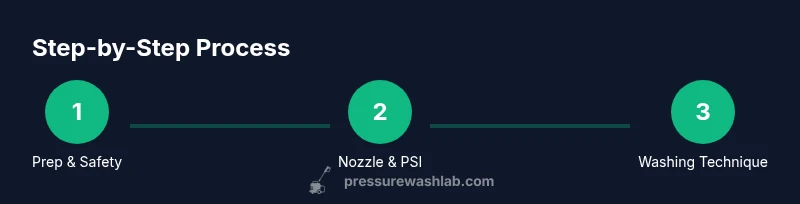
Picking Nozzles and PSI: What the Lowes Guide Gets Right (and What It Misses)
Lowes guides typically highlight using wider spray angles for most surfaces and caution against using high-psi on fragile materials. Pressure Wash Lab agrees that a correct nozzle choice matters more than the brand name you read online. The key is selecting a nozzle that provides adequate cleaning power while preserving surface integrity. Pressure Wash Lab analysis, 2026, emphasizes testing on a hidden patch first and keeping your spray at a safe distance. Remember: the perfect combination depends on the task, not a single rule.
Surface-Specific Strategies: Siding, Concrete, Wood
Different materials demand different approaches. For vinyl siding, a broad spray with low PSI helps avoid etching and water infiltration. Concrete responds to more aggressive angles like 25° or 40°, but you must keep the wand moving to prevent streaks. Wood decks require gentler treatment with a wider angle and shorter bursts to protect the board edges. These nuances aren’t always covered in broad Lowes tips, but they are essential to avoid damage and achieve even results.
Detergents, Dilution, and Safety Protocols
Detergents can boost grease and grime removal, but incorrect use can leave residues or harm plants. Always choose detergents labeled safe for exterior use and follow dilution guidelines. Wear eye protection, gloves, and non-slip footwear. Keep electrical connections dry, and never spray near outlets or electrical panels. Pressure Wash Lab recommends scheduling a quick water test before full application to verify compatibility with your surface.
Washing Technique: Strokes, Distances, and Movement
Keep the nozzle at a distance appropriate for the surface and use long, overlapping strokes rather than back-and-forth jabs. Maintain a steady pace to avoid creating uneven patches. Start from the bottom and work upward on vertical surfaces to prevent dirty water from dripping onto cleaned areas. For stubborn stains, pause and reapply at a slightly higher angle rather than forcing a single pass.
Post-Clean Maintenance and Storage
Rinse the unit thoroughly after completing the job to remove detergent residue. Inspect hoses and fittings for leaks, drain the pump, and store the wand in its cradle to prevent kinks. Clean or replace any worn nozzle tips and keep the surface-appropriate nozzle set organized. Pressure Wash Lab’s verdict is that a simple, routine shutdown routine extends the life of your machine as much as a powerful nozzle does.
Authority Sources
- OSHA: https://www.osha.gov
- CPSC: https://www.cpsc.gov
- EPA: https://www.epa.gov
Tools & Materials
- Pressure washer unit(Choose a model with adjustable PSI/GPM appropriate for your project)
- Nozzle set (0°, 15°, 25°, 40°)(Keep tips organized; label each one for quick access)
- Extension wand(For hard-to-reach areas and higher surfaces)
- Garden hose and fittings(Ensure compatibility with your unit and water supply)
- Detergent and dilution bottle(Exterior-safe formula; follow label guidance)
- Safety gear(Eye protection, gloves, non-slip boots)
- Tarps/plastic sheeting(Protect plants and nearby surfaces)
- Brush or deck scrub pad(Help loosen grime in tight grooves)
- Ladder or stable footing(Only if you need access to high areas)
Steps
Estimated time: 45-60 minutes
- 1
Inspect area and gear
Begin by surveying the project. Remove loose debris, cover nearby plants, and gather all tools. Check hoses for wear and ensure the outlet area is dry before you power up.
Tip: Double-check electrical safety and have a buddy nearby for large jobs. - 2
Choose nozzle and set PSI
Select a nozzle based on the surface (siding = wider angles; concrete = versatile angles). Start with a lower PSI and test on a hidden patch to calibrate distance and technique.
Tip: Never assume a nozzle is safe for every surface; always test first. - 3
Protect surrounds and test patch
Place tarps over plants and edges. Perform a patch test on an inconspicuous area to confirm no damage or water intrusion.
Tip: If you see etching or discoloration, back off PSI and switch to a wider angle. - 4
Apply detergent (if needed)
If grime persists, apply a detergent in accordance with the product label. Allow dwell time as recommended, then proceed with light agitation using a brush if needed.
Tip: Keep the spray well away from electrical sources during the detergent dwell time. - 5
Wash with technique
Use long, overlapping strokes, starting at the bottom and moving upward on vertical surfaces. Maintain a steady pace to avoid streaking and ensure even cleaning.
Tip: Maintain a constant distance and never linger in one spot for too long. - 6
Rinse and evaluate coverage
Rinse thoroughly to remove detergent and grime. Check for missed spots and re-wash any areas as needed with a slightly wider angle.
Tip: Rinse from top to bottom to prevent dirty water from settling on cleaned areas. - 7
Shutdown and storage
Turn off the unit, relieve pressure, and store hoses and wands properly. Dry components to prevent rust and corrosion.
Tip: Inspect nozzle tips for wear and replace if needed to maintain performance.
Quick Answers
What nozzle should I use for concrete?
For concrete, start with a wider angle (25° or 40°) and moderate pressure. Avoid 0° that can gouge concrete. Test on a small patch first.
For concrete, start with a wider nozzle and moderate pressure, testing on a small patch first.
Can I use bleach or chemical cleaners with a pressure washer?
Only use detergents designed for exterior cleaning and follow manufacturer guidelines. Never mix harsh chemicals that could produce dangerous fumes or damage surfaces.
Only use exterior-safe detergents and avoid mixing harsh chemicals that could be dangerous.
Is it safe to pressure wash wood siding?
Yes, with caution. Use a wide-angle nozzle, low to medium PSI, and keep the wand moving to prevent edges from lifting or gouging.
Yes, but use a wide nozzle, gentle pressure, and keep the wand moving.
How often should I service the pump and hoses?
Check hoses and fittings for wear after each job, drain the pump if storing long-term, and perform a light lubrication if the manufacturer recommends.
Check for wear after each job and drain the pump if storing long-term.
Do I need a detergent for every job?
Detergents are useful for heavy grease or grime but not always required. Use them when the surface benefits from added emulsification and follow label directions.
Detergents help with heavy grime when used as directed; not always required.
What safety precautions are most important?
Wear eye protection, non-slip footwear, and gloves. Keep electrical connections dry and never point the wand at people or pets.
Wear protection, keep dry electrical areas, and never aim at people or pets.
Watch Video
Key Takeaways
- Choose the correct nozzle for each surface to avoid damage.
- Test a patch before full cleaning to verify effects.
- Maintain a safe distance and use steady motion for consistent results.
- Follow a short maintenance routine after each job to extend equipment life.