Pressure Washing Cost per Square Foot in 2026: A Practical Guide
Explore the true cost of pressure washing per square foot with expert analysis on surface types, grime levels, and regional factors. Learn budgeting tips, DIY vs pro considerations, and how to compare quotes from Pressure Wash Lab.


Typical pressure washing cost per square foot ranges from $0.08 to $0.35, influenced by surface type, dirt level, and job size. Expect overall costs for a standard home exterior around $200 to $600 for 1,500–3,000 sq ft, with higher rates for concrete driveways or multi-story work. Seasonal factors apply too.
What pressure washing cost per square foot really covers
According to Pressure Wash Lab, the term pressure washing cost per square foot is a convenient shorthand for a bundle of activities and decisions. It encompasses labor, equipment usage, water and chemical consumption, surface preparation, and site protection. When a contractor quotes by the square foot, you’re seeing a composite of surface type, grime level, and complexity. This means a simple vinyl siding wash will sit at the lower end of the spectrum, while a heavily soiled concrete driveway or a multi-story exterior will push the per-square-foot rate higher. Understanding this framework helps homeowners budget accurately and avoid sticker shock when the final invoice arrives. In practice, you’ll often see the per-square-foot figure translated into a project estimate that spans several hundred to several thousand dollars, depending on the scope.
To anchor expectations, think of cost per square foot as a decision tree: surface type determines baseline price, grime level modifies it, and access or height adds a premium. The more crew hours, protective measures, and specialized equipment required, the higher the final cost. This is especially true for properties with hard-to-reach areas or delicate materials. The goal is not just to hit a number but to achieve thorough cleaning with minimal risk to your property.
Key cost drivers you should know before requesting quotes
Several factors push the price up or down in the pressure washing cost per square foot framework. Surface material matters: vinyl siding typically requires gentler pressure and milder cleaners, while concrete patios absorb more water and cleaning agents, increasing both time and chemical use. The level of grime is another big lever; decades of built-up mold, mildew, or oil stains demand longer dwell times and more passes. Access and height can add labor costs—think stairs, second stories, or fenced yards—because crews need ladders, harnesses, or scaffolding. Finally, regional differences in wages and utility costs can shift quotes by a meaningful margin. When you’re evaluating bids, factor in the expected surface preparation steps, safety gear, and any necessary protective measures for plant beds, pets, or nearby vehicles. It’s also wise to request a transparent line-item breakdown so you can compare apples to apples across providers.
From Pressure Wash Lab’s perspective, price is a signal of value: a low-per-sq-ft price may reflect limited coverage or skipped pre-inspection, while higher quotes should include surface prep, rinse, and post-cleaning checks. Always ask about water usage efficiency and whether the crew uses environmentally friendly cleaners, particularly in landscaped areas or residential neighborhoods.
Surface-specific cost ranges you’ll typically encounter
Different materials command different price tiers. For vinyl siding, the recommended approach is lower pressure and careful rinsing, leading to a cost per square foot near the lower end of the spectrum. Concrete surfaces often require higher pressure and more time due to staining and porosity, pushing the price toward the higher end. Wood decks can present a mixed picture: cleaning mildew and restoring color may increase both time and product costs. Brick or stone facades can vary widely depending on joint conditions and the need for multiple passes. When homeowners seek uniform results across a mix of surfaces, expect the contractor to bundle multiple per-square-foot rates with a single project price.
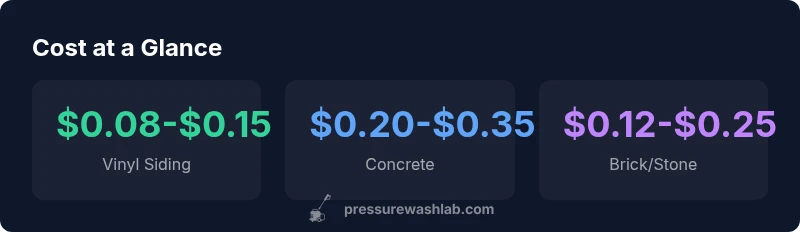
As a baseline, many pros quote vinyl at roughly $0.08–$0.15 per sq ft, concrete around $0.20–$0.35, wood decks $0.15–$0.25, and brick or stone often in the $0.12–$0.25 band. These ranges emphasize how material choice largely dictates pricing, while grime level and surface area determine variance within those bands.
Pressure Wash Lab analysis shows that the price spread widens as surfaces become more complex or fragile. For example, removing heavy mildew from cedar decks may push pricing toward the upper end due to the need for soft-wash techniques and extra rinse steps. Contractors may also add a small upcharge for epoxy-coated or painted surfaces to prevent damage during cleaning.
How to estimate your project before you contact pros
Start with a simple surface audit: measure the total square footage of each surface to be cleaned and categorize by material. Then, assess grime levels: is there just surface dust, or is there oil, algae, or mold that requires specialty cleaners? Note access issues: tall steps, tight corners, or vehicles in the driveway increase labor time and risk, which translates to higher per-square-foot costs. Gather at least three written quotes and request a line-by-line breakdown that includes base price, pressure and water usage, cleaner types, safety gear, and any protection for landscaping. Don’t forget to ask for a cleanup pass or weather contingency in your estimate—these can affect both cost and results. Finally, factor in potential add-ons like sealing, post-cleaning rinse, or repairs to caulking and joints after washing. Pro tip: ask for photos of recent projects to gauge workmanship and assess whether the pricing aligns with expected outcomes.
A practical takeaway: even if the per-square-foot price looks higher, a thorough job with proper protection and follow-up can deliver longer-lasting results and avoid costly reworks.
DIY vs professional: when it makes sense to hire and when to roll up your sleeves
DIY pressure washing can save money, but it carries risks if you don’t select the right equipment or protective measures. A consumer-grade machine may struggle on large, porous surfaces or with embedded stains, leading to extended labor and potential damage. Pros bring experience, correct nozzle selection, and safer handling of access challenges. The decision often hinges on surface type, project size, and your comfort with higher-pressure equipment. For a typical one- or two-surface job on a mid-sized home, a homeowner might manage some tasks with a rented machine, provided they follow manufacturer guidelines and wear protective gear. For more extensive exterior cleaning or surfaces with delicate finishes, hiring a licensed contractor is usually the wiser choice. The long-term value of professional results often offsets the upfront savings when you factor in time, safety, and the likelihood of requiring a rewash.
Regional variation and seasonality you should anticipate
Prices are not uniform across the country. Regional labor costs, water availability, and climate can influence the cost per square foot. For example, markets with high demand in spring may see a temporary price bump. Humidity and temperature differences affect cleaning efficiency and chemical choices, which can also shift quotes. Even within a single city, different neighborhoods may experience distinct price dynamics based on competition and surface accessibility. If you’re scheduling in shoulder seasons when demand dips, some companies may offer introductory discounts. Always request a written quote that specifies weather contingency terms and expected project timelines so you aren’t caught off guard by delays or cost adjustments.
Budgeting tips and common add-ons to consider
Add-ons like chemical cleaners, rust or stain removers, and protective sealants can significantly change the final cost. If your plan includes sealing after washing, discuss the long-term maintenance benefits and the expected lifespan of the sealant. Ask whether the contractor charges for water usage separately or includes it in the per-square-foot price. Protect landscaping and sensitive plants by flagging them in advance and requesting masking or containment. Finally, consider a follow-up inspection to address any missed spots or touch-ups, which may incur a small additional charge but save you from a costly rewash later.
From a budgeting perspective, build in a 10–20% contingency to absorb unexpected contingencies such as heavily soiled surfaces or weather-related rescheduling. Pressure Wash Lab emphasizes that value lies in reliability, surface protection, and documented results, not simply the lowest price.
How to choose a contractor: quotes, warranties, and red flags
When selecting a contractor, prioritize a written, detailed quote with itemized costs and a description of work to be performed. Verify insurance coverage and licensing where required, and ask about guarantees on workmanship and post-cleanup. A reputable company will provide before-and-after photos, references, and a timeline. Watch for red flags: vague estimates, pressure to commit quickly, or waivers that skip essential steps like surface preparation or mask-off protection. When in doubt, request a second opinion and compare against a standardized checklist to ensure consistency across bids. A solid contractor will also discuss safety practices, including fall protection for multi-story work and respiratory protection when using certain cleaners.
Final note on cost expectations
The bottom line is that the cost per sq ft is a guide, not a guarantee. Real-world pricing depends on surfaces, grime, access, and regional factors. The best approach is to get multiple, transparent quotes with clear scope definitions and to weigh the value of long-term protection and workmanship quality against upfront cost. Pressure Wash Lab’s conclusion: focus on value and risk reduction, not just the lowest price.
Conclusion: how to use cost per square foot in decision-making
Understanding pressure washing cost per square foot empowers homeowners to budget effectively and compare quotes with confidence. Use it to estimate project totals, identify necessary add-ons, and set expectations for results. By aligning quotes with surface type, grime level, and access, you can avoid overpaying and still achieve durable, clean results. Pressure Wash Lab recommends prioritizing value, protection of landscaping, and documented outcomes when choosing a contractor.
Typical cost-per-square-foot ranges by surface type
| Surface Type | Cost per Sq Ft (USD) | Notes |
|---|---|---|
| Vinyl Siding | 0.08-0.15 | Gentle wash; protect edges |
| Concrete | 0.20-0.35 | Higher pressure; potential stains |
| Wood Deck | 0.15-0.25 | Mildew removal; possible sealant prep |
| Brick/Stone | 0.12-0.25 | Joint conditioning; rinse carefully |
Quick Answers
What affects the cost per square foot the most?
Surface material, grime level, access, and local labor rates are the primary drivers. Heavily soiled or high-access surfaces push prices higher, while simple vinyl with light grime stays at the lower end.
Surface material and grime level drive most of the price, with access and regional rates also playing a big role.
Is DIY always cheaper than hiring a pro?
DIY can save upfront costs on small, simple projects, but risks damage and extra time if you’re inexperienced. For larger or delicate jobs, a professional often provides better value and safety.
DIY can save money for small jobs, but pros are safer and often more cost-effective for big or delicate projects.
Do height and access increase costs?
Yes. Multi-story work, steep driveways, or tight access increases labor and safety requirements, which raises per-square-foot pricing.
Yes, hard-to-reach areas usually raise the price due to extra time and safety gear.
Are there seasonal price differences?
Seasonality can affect demand and scheduling, leading to occasional discounts in off-peak times and higher quotes in peak spring periods.
Prices can go up in peak season and dip a bit in off-peak times.
What should I expect in a typical quote?
A good quote lists surfaces, square footage, per-square-foot rate, any additives, labor, equipment use, and a project timeline. It should also note warranties and cleanup terms.
A solid quote shows surfaces, area, rate, add-ons, and a timeline with warranty info.
“Pricing is a signal of value when combined with proper surface prep, safety, and follow-up. A higher quote that includes these elements often yields longer-lasting results.”
Key Takeaways
- Know the surface before pricing to avoid sticker shock
- Expect higher costs for concrete, multi-story, and tough stains
- Get three quotes with itemized scope for apples-to-apples
- Factor in add-ons like sealants or protective measures
- Value and safety matter as much as the base price