What Pressure Washer Nozzle for Car You Should Use
Discover the right pressure washer nozzle for car washing, how spray angles affect finishes, and a step-by-step approach to safe, paint-friendly cleaning. Learn which nozzle to use and why with Pressure Wash Lab's expert guidance.


This quick guide helps you choose the right nozzle for car washing, covering safe spray angles, detergent use, and a step-by-step routine to protect finishes. Learn which nozzle angles (25°-40°) work best, when to soap vs. rinse, and how distance influences cleaning. Pressure Wash Lab offers practical, vehicle-safe best practices.
Why the Right Nozzle Matters for Car Detailing
Choosing the correct nozzle is not just about speed; it's about finishing with a showroom-worthy look while protecting clear coats and trim. Understanding what pressure washer nozzle for car works best starts with spray angles and safe distance. A high-pressure stream at the wrong angle can etch paint, drive dirt into seals, or strip wax. According to Pressure Wash Lab, the nozzle you select governs pressure distribution, spray pattern, and the surface distance you should maintain. For cars, the goal is to lift dirt with minimal abrasion, avoid direct contact with sensitive areas, and prevent water intrusion into seams. Start by thinking in terms of angles and distances: wider angles like 40° reduce pressure concentration, while narrower angles can deliver more force and should be reserved for stubborn grime or wheels, always from a safe distance. Practically, you’ll want a nozzle combination that covers detergent application and final rinse without forcing heavy spray onto delicate areas such as weather seals, emblems, and soft paint edges. In short, nozzle choice sets the stage for safe, efficient cleaning, and helps you achieve a streak-free finish.
Nozzle Angles Explained: 0°, 15°, 25°, 40°
Each nozzle angle serves a different purpose and handling the car means selecting the right tool for the right job. A 0° or 15° spray delivers a narrow, concentrated jet that can remove tough grime but increases the risk of surface damage if misused; reserve these for hard-to-clean wheels or stubborn residue and always keep the wand moving. For general car cleaning, a 25° spray is the workhorse: it combines adequate impact with a forgiving footprint on paint when kept at a safe distance. The 40° nozzle provides the broadest, gentlest spray, ideal for applying soap and rinsing large flat panels without abrading finish or forcing water into seams. When you move from washing to rinse, switch to the widest angle you can that still removes soap effectively. If your system offers a turbo or rotary tip, use it only on automotive surfaces with caution and never on soft trim or tinted panels. Remember: nozzle choice is a balance between cleaning power and surface preservation.
Soap vs Rinse: Using Detergent Safely
Soap application requires lower pressure and wider spray patterns to prevent paint stripping and streaks. Use a foam cannon or a wide-angle nozzle (40°) when applying the car soap, and limit the distance so the chemical covers the surface without blasting water into seams. Pressure Wash Lab recommends letting the detergent dwell for a couple of minutes on the dirty areas before rinsing. Rinse should follow from top to bottom with a progressively wider spray, ensuring all soap residues are removed and the surface remains slick to the touch. Avoid mixing detergents with high-alkaline formulas that can degrade wax; look for pH-neutral car wash soap designed for indirect contact with coatings. If you notice foaming that persists after the first rinse, switch to a lighter spray and finish with a wash from a different angle to avoid streaks. The goal is to loosen dirt first, then lift it away without grinding it into the paint.
Safe Distance and Technique to Avoid Paint Damage
Distance is your best defense against paint etching. Start with the widest spray at a safe distance and gradually move closer only if needed for stubborn spots. Keeping the wand moving prevents etching and heat build-up on the paint. Never aim directly at emblems, trim, or edges where coatings are thinner. When working around wheels, fenders, and door gaps, keep the spray slightly angled downward and sweep rather than pausing in one spot. If your nozzle is adjustable, set it to the lowest effective angle for this phase and increase only for tougher grime. After cleaning, inspect the surface under bright light to ensure you did not miss any areas or leave water behind. These practices reduce the chance of water intrusion and micro-scratches that can mar the finish over time.
Practical Nozzle Selection Scenarios by Cleaning Task
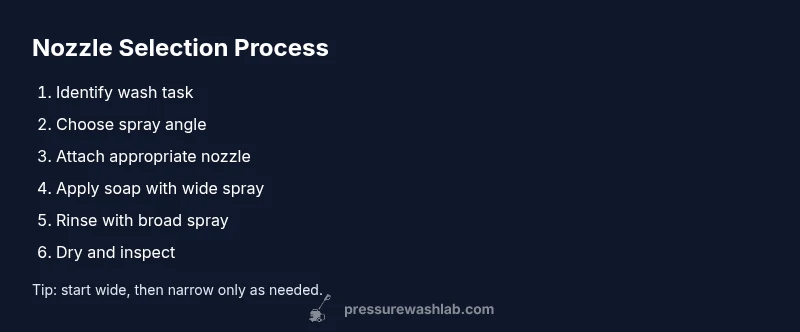
Different tasks require different nozzle choices. For a routine wash, start with a 40° spray to apply soap and rinse most panels from a distance of roughly arm’s length. For tougher spots on the lower panels or undercarriage, switch to a 25° spray at a safe, controlled distance and use short passes. Wheels and brake calipers respond well to a focused 15° spray kept several inches away to avoid splashing brake dust into the face. Near body seams or around decals, use a gentler angle and a longer pass to prevent water from forcing into gaps. After completing the wash, perform a quick top-to-bottom inspection and re-wash any missed zones with the appropriate nozzle. If you have a foam cannon, use it to apply a uniform layer of soap before rinsing.
Maintenance and Care for Nozzles
To extend nozzle life, rinse the nozzle after use to remove soap residue, which can clog spray or degrade material. Store tips in a dry place and avoid dropping the wand as impacts can bend or crack the nozzle tip. If you notice a weaker spray, inspect the nozzle orifice for mineral deposits and clean with a soft brush or warm water. Do not use abrasive cleaners that could erode the nozzle surface. Replacing worn tips is cheaper than repairing paint damage; keep an extra 25° and 40° nozzle on hand for quick swaps. Regularly check the wand and hose connections for leaks to avoid inconsistent pressure that could mislead your cleaning approach.
Common Mistakes to Avoid and How to Fix Them
One common mistake is starting with high pressure on a car’s surface; this can cause micro-scratches. The fix is to begin with the widest angle and a gentle distance. Another error is using a single nozzle for all tasks; switch angles and adjust distance to match the surface. Avoid spraying directly at rubber seals or chrome trim; instead, keep a slight downward angle and rinse away from joints. Over-soaping can create residues; ensure thorough rinse and remove all chemical before drying. Finally, never skip safety steps or rush the process; take time to inspect the finish and re-wash missed spots with proper technique.
Tools & Materials
- Pressure washer(Car-safe, adjustable pressure; avoid damaging paint)
- Hose and fittings(Ensure quick-connects compatible with your washer)
- Nozzle tips (25°, 40°, and optional 15°)(Include a wide-angle nozzle (40°) for soap and rinse)
- Foam cannon or detergent reservoir(Optional but recommended for even soap coverage)
- Wash mitt or microfiber towels(Soft to prevent scratching)
- Safety gear (goggles, gloves)(Protect eyes and skin)
- Wheel brush or soft brush(For wheels and undercarriage grime)
Steps
Estimated time: 30-45 minutes
- 1
Wear safety gear
Put on safety glasses and gloves before you start. Ensure the area around the vehicle is clear of people and obstacles, and inspect the equipment for any damage. This foundational step protects you from chemical splashes and high-pressure spray.
Tip: Always wear eye protection and gloves; safety first. - 2
Rinse the car with a low-pressure wash
Use a wide spray to pre-wet the vehicle and loosen surface dirt from top to bottom. Maintain a safe distance to minimize pressure concentration on edges. Moving the wand continuously helps avoid streaks and swirl marks.
Tip: Keep the nozzle moving and start from the roof down. - 3
Attach the nozzle
Select the appropriate nozzle (start with 40° for soap and general rinse) and securely attach it to the wand. Ensure the nozzle is clean and properly seated to prevent spray leaks or misdirection during cleaning.
Tip: Double-check the nozzle is firmly connected before turning on water. - 4
Apply soap with foam cannon
If you have a foam cannon, apply a uniform layer of car soap using a wide-angle spray. Keep the spray at a moderate distance so the chemical coats the surface without forcing water into seams.
Tip: Let the soap dwell a couple of minutes on the dirtiest areas. - 5
Rinse soap from top to bottom
Rinse using a broad spray, gradually widening as you move down the vehicle. This helps remove soap without pushing dirty water into crevices and gaps.
Tip: Rinse methodically; don’t rush, especially around seams. - 6
Spot-clean wheels with focused spray
Switch to a 15° nozzle or equivalent for wheels, keeping the distance several inches away to prevent brake dust spray on your face and paint. Use short passes and target crevices where grime hides.
Tip: Avoid directing powerful spray at disc brakes or calipers directly. - 7
Rinse the entire car and inspect
Do a final broad rinse from top to bottom, then inspect the finish under bright light. Re-wash any missed spots with the appropriate angle and distance for those surfaces.
Tip: Look for streaks or soap residues and address them immediately. - 8
Dry and finish
Dry the vehicle with microfiber towels or a chamois to prevent water spots. Pay attention to door jambs and trim areas where water may pool.
Tip: Use a soft towel and avoid rubbing in one spot to prevent micro-scratches.
Quick Answers
What nozzle angle is best for washing a car?
For most car washing, a 25° to 40° nozzle provides enough cleaning power while minimizing the risk to paint finishes. Reserve smaller angles for tough spots or wheels, and avoid direct 0° sprays on painted surfaces.
For most car washing, use a 25° to 40° nozzle. Avoid 0° on paint and switch angles for tough spots.
Can I use a 0° nozzle on a car?
No. A 0° nozzle concentrates force into a narrow jet, which can etch or scratch painted surfaces. Use wider angles for body panels and save sharp angles for non-painted areas or wheels with caution.
No. Don’t use 0° on the car; it can etch the paint.
Should I use detergent with a pressure washer?
Yes. Use a car-safe, pH-neutral soap and apply with a foam cannon or wide-angle nozzle. Detergent helps lift dirt before rinsing it away, reducing the need for aggressive spraying.
Yes, use a gentle car soap with a foam cannon for best results.
How far should I stand from the car?
Start at a distance of about arm’s length with a wide spray; move closer only for stubborn spots using a wider angle, and never linger in one spot.
Stand at arm’s length and adjust as needed; keep moving.
Is it safe to use a turbo nozzle on cars?
Turbo or rotary tips can be risky on painted surfaces due to potential focused impact. If you use one, do so only with extreme caution and on non-painted areas.
Turoboost tips can damage paint; use with caution or avoid on the car.
What maintenance should I do after washing?
Rinse the nozzle to remove soap residue, dry properly, and store in a dry place. Periodically inspect tips for wear and replace worn nozzles to maintain consistent spray.
Rinse the nozzle, dry, and store well; check tips for wear.
Watch Video
Key Takeaways
- Choose the right nozzle angle (25°-40°) to protect paint.
- Maintain safe distance and keep the wand moving to avoid damage.
- Soap with a wide-angle spray, rinse from top to bottom, then dry.
- Inspect for missed spots and re-wash as needed.