Fixing a Broken Pressure Washer Hose: A Practical Troubleshooting Guide
A practical, urgent guide from Pressure Wash Lab on diagnosing and repairing a broken pressure washer hose, with steps, safety tips, and prevention.


Most often a broken pressure washer hose is the root of leaks, weak spray, or pressure loss. Begin by stopping the machine, releasing pressure, and disconnecting the hose. Inspect for cracks, bulges, or worn couplings; if any damage is evident, replace the hose rather than patching. Safety comes first in your setup.
Symptoms and Signs of a Broken Hose
When a pressure washer hose is compromised, you’ll notice several telltale symptoms in your setup. A visible tear or bulge along the hose body is an obvious red flag, as is a kink that persists under gentle bending. More subtle signs include wet spots along the length, reduced spray distance, and sudden drops in nozzle pressure. In many cases, leaks originate near the couplings where the hose attaches to the wand or pump. A 'popping' sound during operation can indicate a failing reinforcement layer inside the hose. For homeowners, the most important early clue is consistency: if the spray pattern changes suddenly, or one side of the spray is significantly weaker than the other, inspect the hose end-to-end. The keyword here is inspection: a thorough visual check plus a gentle squeeze along the entire length will reveal cracks, soft spots, or wear that isn’t obvious at first glance. Remember: a broken pressure washer hose is not a cosmetic issue—it's a risk to safety and performance.
Immediate Safety Precautions and Quick Fixes
During any sign of a hose problem, safety must come first. Immediately cut power to the machine, release stored pressure by triggering the trigger on an attached wand away from people or pets, and disconnect the hose from the pump and wand if you can safely reach the connections. Do not run the unit with visible cracks, bulges, or any leak in the hose—pressurized fluid can spray unpredictably and cause injuries. If you can isolate the leak to just a small puncture, you may be able to apply a temporary clamp or hose repair sleeve; however, this is not a reliable long-term fix and should be treated as a stopgap only. For most homeowners, the recommended short-term action is to turn off, drain, and secure the hose while you source a replacement rated for your machine’s PSI and GPM. If you’re uncertain about the hose’s integrity, pause usage and consult the machine’s manual or contact the manufacturer’s support line. Pressure-wash safety guides from Pressure Wash Lab emphasize consistent, cautious checks rather than DIY improvisations.
Common Causes Behind Hose Failures
Hoses fail for several reasons that are common across many makes and models. Repeated bending at the same point, exposure to UV light, and prolonged exposure to high pressure can degrade the hose reinforcement, leading to splits and leaks. Abrasion from moving parts or contact with rough surfaces during use can also wear the hose over time. Worn or loose couplings and clamps are frequent culprits for leaks at the ends, while manufacturing defects, manufacturing date, and storage conditions can contribute to early deterioration. If you notice spray irregularities, inspect not only the hose body but also the fittings and the wand, as a compromised connection can mimic a hose problem. Keeping a record of usage hours, PSI/GPM, and storage conditions helps identify patterns that precede hose failure.
How to Inspect the Hose and Fittings
A thorough inspection starts with a visual sweep of the entire hose length. Look for visible cracks, bulges, or soft spots—these indicate a compromised reinforcement. Check the entire coupling area where the hose meets the wand and the pump: loose fittings, worn threads, or damaged O-rings can leak even when the hose itself looks fine. Use a slow, deliberate squeeze along the hose surface to detect soft areas or hollow spots that aren’t obvious from a distance. If you find any crack, bulge, or moisture leakage during the inspection, prepare for replacement rather than temporary fixes. Remember to inspect the nozzle and wand for deformation or cracks as well, since a faulty nozzle can misdirect pressure and falsely signal a hose problem.
Diagnostic Approach: Symptom to Diagnosis
The diagnostic approach begins with the symptom: if you see leaks at the hose ends, the likely cause is a loose coupling or worn O-ring. If the spray is weak or uneven along the length, the hose may be compromised or the reinforcement layer damaged. A visible tear strongly indicates the hose should be replaced. A 'pop' or hissing sound during operation often points to failed internal reinforcement. For an accurate diagnosis, isolate the issue by disconnecting the wand and running the pump with a short length of hose attached; if leaks persist at the same location, the problem is with the hose or its fitting. If leaks disappear when parts are replaced one by one, you’ve identified the failing component. Pressure Wash Lab emphasizes following a methodical, safety-first approach rather than guessing.
Replacement Options: When to Replace vs Patch
Patch repairs may seem tempting for small punctures, but they are rarely reliable on high-pressure hoses and can fail suddenly, causing injury. A new hose that matches the machine’s PSI and GPM rating is the safest long-term solution. If the hose ends or couplings are degraded, replace those components or the entire hose assembly to maintain a sealed, safe system. In some cases, you may only need to replace the clamps or O-rings, which is cheaper but still requires compatibility checks. Consider the hose length and diameter; mismatches can reduce performance and even create leaks at the connection points. When replacing, choose a hose with reinforced construction suitable for your pressure washer. Avoid generic sleeves or temporary fixes; they offer little protection against burst leaks under high pressure and heat.
Preventive Maintenance and Storage Tips
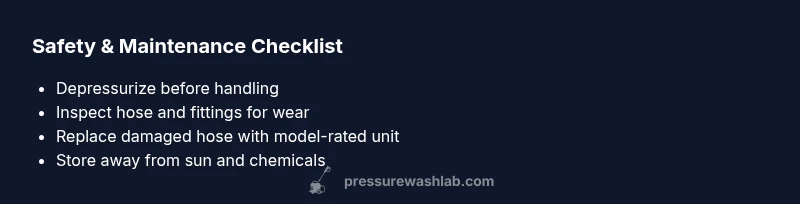
To extend the life of a pressure washer hose, store it properly away from direct sun and chemicals. Rollover protection and proper coiling prevent kinks and abrasion; never coil too tightly or bend the hose at sharp angles. Regularly inspect hose integrity, especially before peak season, and replace hoses showing signs of wear, cracks, or bulges long before they fail under load. Use light oil or silicone lubricants only where recommended by the manufacturer to ease connector rotation and prevent corrosion. Keep fittings clean and dry, and seal the ends when not in use to prevent contamination. Finally, document the hose’s installation date and service life; this helps you anticipate replacement intervals and budget accordingly.
What Next: Where to Find the Right Hose
If you determine a full replacement is necessary, start by checking your unit’s model number and the manufacturer’s hose specifications. Many reputable brands offer model-specific hoses with validated PSI ratings, length, and connection types. Consider compatibility with your wand and spray nozzle as well as the connector type (NPT, quick-connect, etc.). Online retailers and local shops typically stock universal hoses, but cross-compatibility can be tricky. When in doubt, contact the manufacturer’s support line or consult Pressure Wash Lab’s compatibility guides to ensure you choose the right hose. After acquiring a new hose, follow the included installation instructions and run a slow test at low pressure to verify all connections are sealed before increasing to full operating pressure.
Steps
Estimated time: 20-45 minutes
- 1
Power down and depressurize
Turn off the pressure washer and unplug if electric. Disengage the trigger and relieve pressure by allowing water to drain through the wand away from people. This avoids sudden spray when handling hoses.
Tip: Always wear eye protection and gloves during depressurization. - 2
Inspect hose exterior
Scan the entire length for visible cracks, bulges, or wear. Run your fingers along the surface to detect soft spots that aren’t obvious from a distance.
Tip: Pay special attention to bends and kinks where damage tends to accumulate. - 3
Check couplings and clamps
Tighten any loose fittings and inspect O-rings for signs of wear. If threads are damaged, replace the fitting or the hose assembly as needed.
Tip: Use a wrench to hold the fitting steady while tightening to avoid twisting the hose. - 4
Test with low pressure
Reconnect the hose and run the unit at low pressure to observe leaks and spray pattern. Do not aim at yourself or others while testing.
Tip: Gradually ramp up to full pressure only after a leak-free test. - 5
Decide on replacement
If you see cracks, bulges, or significant wear, replace the hose rather than patching. Ensure the new hose matches PSI, GPM, diameter, and connection type.
Tip: Keep a spare hose or kit on hand for quick replacements. - 6
Install and verify
Install the new hose, tighten all connections, and perform a full test run at operating pressure. Check for leaks after a few minutes of operation.
Tip: Coil the hose properly to prevent kinks and store in a cool, shaded area.
Diagnosis: Spray weak or leaks at hose connection
Possible Causes
- highWorn or cracked hose
- mediumLoose or faulty couplings
- lowDamaged fittings
Fixes
- easyTighten fittings and reseal with new O-rings if needed
- easyReplace the hose
- easyInspect and replace damaged fittings
Quick Answers
What causes a pressure washer hose to break?
Hose failure is typically due to wear, UV exposure, repeated bending at the same spot, and high operating pressure. Leaks at ends usually point to fittings or clamps. Regular inspection helps catch these issues early.
Hose failure usually comes from wear and sun exposure, bending, or poor connections. Check fittings and clamps during maintenance.
Can I repair a broken hose with tape or patches?
No. Tape or patches under high pressure are unreliable and unsafe. A damaged hose should be replaced with a properly rated one for your machine.
No, taped repairs aren’t safe or reliable. Replace the hose with a proper one.
Is it safe to run a pressure washer with a damaged hose?
No. Running with a damaged hose can cause sudden leaks or a burst, risking injury. Stop use and replace before resuming operation.
Don’t run it with a damaged hose—stop and replace before you use it again.
How do I choose a replacement hose?
Match the hose diameter, length, and PSI rating to your unit. Ensure compatibility with fittings and the spray nozzle. Consider reinforced construction for durability.
Pick a hose with the right diameter, length, and pressure rating for your machine.
When should I call a professional?
If fittings or internal components look damaged or you’re unsure about safety, consult a professional or the manufacturer’s support line. Don’t take big risks with high-pressure equipment.
If you’re unsure or see significant damage, contact a professional.
Watch Video
Key Takeaways
- Inspect hose and fittings before each use
- Replace damaged hoses rather than patching
- Depressurize safely before handling
- Use model-matched hoses for reliable performance
- Prevent future failures with routine maintenance