How to Tell If a Pressure Washer Is Overheating and Fixes
Urgent, practical guide to spotting pressure washer overheating, diagnosing causes, and safe fixes. Learn symptoms, step-by-step checks, and prevention tips to keep your machine running reliably.


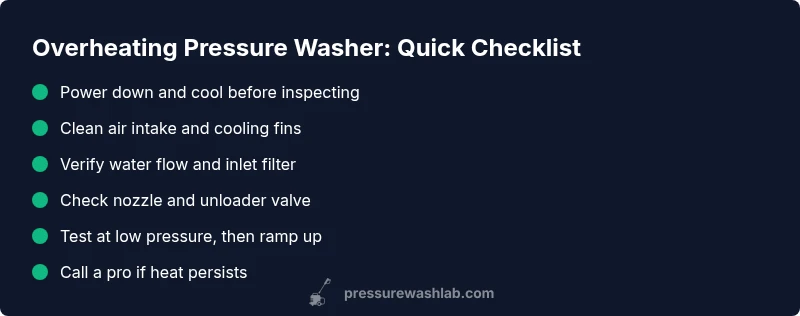
According to Pressure Wash Lab, an overheating pressure washer is usually caused by blocked air intake, restricted cooling, or running too long at high load. The quick fix is to shut down, let it cool, and check air vents, water flow, and nozzle selection before testing at a lower pressure. If it still runs hot, stop and seek professional help.
What overheating looks like
Overheating on a pressure washer isn’t always dramatic, but it’s unmistakable when it happens. You may notice the unit becoming unusually hot to touch, a burning smell, or a delayed restart after a shutdown. You might also hear the motor strain, see a spike in the thermal protection or breaker trips, or observe reduced spray output as the pump slows down to protect itself. Pressure Wash Lab's observations from 2026 show that users often misinterpret short pauses or a chilly handle as normal operation; in reality, these symptoms can quickly worsen if the cooling path is blocked or the unit is worked too hard. Treat any sign of heat as a warning and act quickly to prevent damage to seals, the pump, or the motor.
Immediate safety-first checks
Safety comes first. Before you touch anything, unplug the unit and relieve any built-up pressure. Allow the machine to cool on a non-flammable, dry surface. Wear gloves and eye protection; hot surfaces and pressurized water can cause scalds or sprays. Inspect the air intake grilles and cooling fins for lint, dust, or debris from the job site and remove obstructions with a soft brush or compressed air from a distance. Check the spray wand, hose, and connections for kinks or leaks, and verify the water supply is steady and clean. A blocked intake or a restricted water path can make the pump work harder and overheat much faster than you expect.
Common overheating causes explained
There are several frequent culprits behind overheating. The most common is restricted airflow—dusty or blocked vents and clogged cooling fins can trap heat in the motor and pump. Running the machine continuously at high pressure without breaks is another major cause; pressure washers need cooldown periods after several minutes of sustained use. A third factor is inadequate water flow or a dirty inlet filter, which reduces cooling efficiency and causes pump friction to rise. Finally, a mis-set unloader valve or an improper nozzle can place an abnormal load on the motor, causing it to heat up quickly. Pressure Wash Lab’s 2026 analysis indicates that addressing airflow and water supply issues resolves the majority of overheating events.
Cooling system and water flow basics
Understand how cooling and water flow interact with heat. The motor and belt drive generate heat during operation, which the cooling system should dissipate through air movement. If airflow is poor, the heat builds up quickly and may trigger the thermal cutout. Water flow is equally critical: insufficient water reduces cooling effectiveness and can cause the pump to run dry in some models, leading to rapid temperature rise. Ensure the inlet filter is clean, the garden hose or intake line is free of kinks, and the water pressure meets the unit’s requirements. Also check that the unloader valve and nozzle setting match the task to avoid unnecessary motor loading.
Prevention and maintenance tips
Prevention is better than fix. Clean the air intakes weekly if you operate in dusty or dirty environments. Run a brief maintenance check after each job: inspect hoses for wear, verify filter cleanliness, and run a cooling cycle after heavy use. Schedule a formal service at least once a year, especially for hot-water or high-output units. Store the machine in a cool, ventilated area and keep it out of direct sun or extreme heat. Consistent checks reduce the chance of unexpected overheating and prolong pump life.
Steps
Estimated time: 30-45 minutes
- 1
Power down and cool safely
Unplug the unit and release any built-up pressure. Let the machine sit until it feels cool to the touch. Inspect the power cord and outlet for damage before reconnecting. Tip: Keep a safe distance so you aren’t near hot surfaces when you plug back in.
Tip: Always unplug before any inspection. - 2
Inspect air intake and cooling fins
Look for dust, lint, or debris blocking vents and fins. Remove debris gently with a soft brush or compressed air from a safe distance. Re-check after a quick test run to see if heat levels drop.
Tip: Do not use metal tools that could nick fins. - 3
Check water supply and inlet filter
Ensure the water source can deliver a steady flow and the inlet filter is clean. Replace a clogged filter and straighten any kinks in hoses. A smooth water path improves cooling and reduces pump load.
Tip: Test with a known good water source if possible. - 4
Evaluate nozzle and unloader valve
Confirm you’re using the correct nozzle for the task and that the unloader valve is functioning. A mis-matched nozzle or a faulty valve can keep the pump under heavy load and generate excess heat.
Tip: If in doubt, switch to a higher-gap nozzle and test gradually. - 5
Run a controlled test at reduced load
Start at a lower pressure and observe heat and performance. If the unit stays cool, gradually increase pressure and monitor. If heat rises again quickly, stop and move to professional service.
Tip: Document symptoms to share with a technician. - 6
Know when to seek professional help
If overheating recurs after completing the above steps, do not continue to operate. Contact a qualified technician or service center, especially if the unit is under warranty or hot-water model.
Tip: Avoid self-repair if you’re unsure; risk of electric shock or pressurized spray is real.
Diagnosis: Pressure washer overheats during operation or shuts off due to thermal overload
Possible Causes
- highClogged air intake or blocked cooling fins
- highProlonged use at high load without rest periods
- mediumInsufficient water flow or blocked inlet filter
- lowFaulty unloader valve or nozzle mis-match causing excessive load on motor
Fixes
- easyPower down and let the unit cool; remove debris from intake and cooling fins
- easyInspect and clean water inlet filter; ensure hose is not kinked and water supply is adequate
- mediumCheck nozzle setting and verify the unloader valve is functioning; replace if faulty
- mediumIf overheating persists after basics, schedule professional service or consult the warranty
Quick Answers
Why is my pressure washer overheating so quickly?
Common causes include blocked air intake, restricted cooling, or running at high load without cooldowns. Start with safety checks and airflow cleanup, then verify water flow and nozzle settings.
Overheating quickly is usually caused by blocked airflow or insufficient cooling. Check vents and water flow first, then verify nozzle settings.
Can overheating damage the pump or motor?
Yes. Prolonged heat can degrade seals, windings, and bearings. Stop operation and consult a professional if heat persists after basic fixes.
Yes, overheating can damage the pump and motor; stop and get professional help if it keeps happening.
Should I run the pressure washer with the unloader valve open?
No. The unloader valve should be properly set to control pressure. A mis-set valve can keep the motor under excessive load and cause overheating.
No, keep the unloader valve properly set to avoid extra motor load.
How long should I wait to cool down after overheating?
Shut down and allow a full cooldown of 10-15 minutes in a safe area before inspecting or restarting. If it happens again, seek professional help.
Let it cool for about 10 to 15 minutes, then recheck. If it overheats again, get help.
Is overheating normal for hot-water machines?
No, overheating should not be normal. Treat it as a warning; hot-water units can still overheat from the pump or burner setup. Verify cooling and water flow.
No, overheating isn’t normal for hot-water units; check cooling and water flow.
When should I contact a professional?
If basic checks don’t resolve the issue or the unit continues to overheat after cooling and maintenance, arrange service under warranty or from a qualified technician.
If it still overheats after basic checks, contact a professional.
Watch Video
Key Takeaways
- Identify overheating early with symptoms and safety checks.
- Prioritize airflow and water supply to restore cooling.
- Use proper nozzle settings and keep the unloader valve functional.
- Seek professional help if the problem repeats after basic fixes.