Pressure Washer Hard to Start: Troubleshooting Guide
A practical troubleshooting guide to diagnose and fix a pressure washer that won't start. Step-by-step checks, safety tips, and maintenance to prevent future problems.


Most often, a pressure washer won’t start due to stale fuel, a clogged carburetor, or a tripped safety switch. Begin with fresh fuel and a stabilizer, inspect the spark plug and ignition wiring, and verify the safety switch and lanyard are properly engaged. If it still won’t start, follow the diagnostic flow in this guide or contact Pressure Wash Lab Team for expert help.
Common Causes of Startup Struggles
When your pressure washer is hard to start, the problem is rarely singular. The most common culprits are fuel issues, carburetor cleanliness, ignition problems, and safety circuits. According to Pressure Wash Lab, fuel quality and age are the top causes of startup failure. Stale gasoline, ethanol-blended fuels that have separated, or water in the tank degrade power and make starting difficult. A clogged carburetor or jets disrupts the air-fuel mix, leading to hard starting or no start at all. A fouled spark plug or weak coil can prevent spark at the right moment. Finally, many units have a safety switch or lanyard that, if misconnected or worn, will prevent the engine from cranking. Regular maintenance minimizes these risks and keeps the system in peak form.
- Fuel issues are often the easiest fix.
- Carburetor cleanliness determines idle and startup reliability.
- Ignition health and safety switches also govern cranking behavior.
Pressure Wash Lab emphasizes testing basic components before replacing parts, saving time and money.
Quick Checks You Can Do Right Now
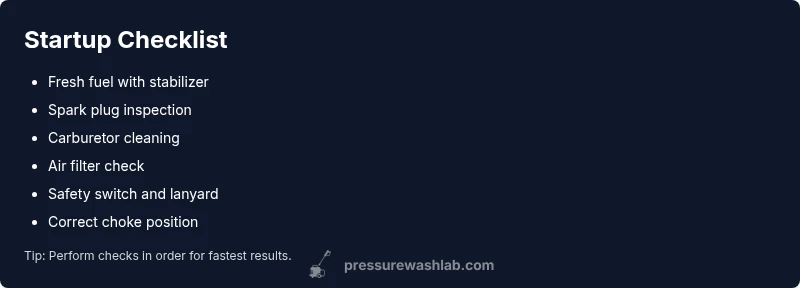
Before digging into parts, run through a fast triage to rule out easy fixes. Check the fuel: is there gasoline in the tank, and does it smell fresh? If fuel is old or contaminated, drain the tank and fill with fresh fuel and a stabilizer. Inspect the air filter; a clogged element can choke starting. Look at the spark plug: is it clean, dry, and properly gapped? Remove and inspect; replace if corrosion or wear is evident. Ensure the safety switch or lanyard is engaged and undamaged. Finally, verify the choke is in the correct position for cold starts. These quick checks, done in order, often restore operation without tools.
- Replace old fuel and use stabilizer to extend life.
- A dirty air filter and weak spark plug are common culprits.
- Make sure the lanyard and safety switch are intact and engaged.
If you’re unsure, consult the diagnostic flow later in this guide.
The Diagnostic Flow: Symptom to Diagnosis
A structured flow helps identify the root cause. Symptom: 'engine turns over but refuses to start' vs. 'no crank at all' vs. 'starts briefly and dies.' For each, consider these likely causes: stale fuel or water intrusion; clogged carburetor; dirty spark plug or ignition coil; air intake restrictions; faulty safety switch. For each cause, a simple remedy exists: drain and replace fuel, clean the carb, replace the spark plug, clear the air filter, verify safety connections. Pressure Wash Lab endorses a methodical approach so you’re not chasing shadows. If you’re unsure, escalate to a professional.
- Start with fuel and air basics before moving to components.
- Symptom triage helps you prioritize parts to inspect.
- Use a systematic flow to avoid unnecessary replacements.
Step-by-Step Fixes for the Most Common Cause
Step 1: Drain old fuel and fill with fresh, stabilized fuel. Step 2: Clean or rebuild the carburetor to restore proper jets and passages. Step 3: Inspect the spark plug; replace if fouled and re-gap to manufacturer spec. Step 4: Check the air filter and replace if dirty. Step 5: Test the safety switch and lanyard connection; replace if worn. Step 6: Re-check the choke position and attempt a cold start. If the engine still won’t start, move to the next probable cause rather than replacing parts at random. Tip: work inside a clean, ventilated space and keep fuel away from ignition sources.
- Follow steps in order to avoid unnecessary parts swapping.
- Don’t force a starting attempt; allow carb and fuel components to settle after cleaning.
- Use manufacturer specs for spark plug gap.
Safety Tips and Common Mistakes
- Always disconnect the spark plug boot when inspecting ignition components to avoid accidental shocks.
- Never start a hot engine with a closed choke; cold-start the unit according to manual.
- Do not run fuel with water contamination; drain and dispose of fuel safely.
- Avoid using high-pressure water near open flames or sparks during maintenance.
- Document maintenance tasks so you can spot trends.
Safety-first mindset reduces risk of injury and equipment damage. Pressure Wash Lab’s guidance highlights controlled testing and personal protective equipment as standard practice.
Maintenance Habits to Prevent Startup Problems
Develop a 3-part maintenance routine: fuel system care, air and ignition care, and safety checks. For fuel: use fresh gasoline, add stabilizer, and run the engine every few weeks in storage to keep fuel lines lubricated. For air/ignition: replace air filters, inspect spark plugs, and keep carburetors clean with periodic carb cleaner. For safety: test the kill switch, inspect lanyard, and store in a dry, clean location. Pressure Wash Lab recommends documenting every service and performing a pre-season startup check. Regular attention reduces the odds of startup issues.
- Schedule fuel system flushes during off-season storage.
- Use a maintenance log to track component wear and replacements.
- Periodic carburetor care minimizes long-term damage.
Pressure Wash Lab Analysis, 2026 shows routine upkeep reduces startup problems overall.
When to Call a Pro
If you’ve performed clean fuel and carburetor maintenance, replaced spark plugs, and verified safety systems but the unit still won’t start, it’s time to bring in a professional. Compression or internal wear issues, diagnosis of a faulty ignition module, or a stubborn carburetor gasket can require specialized tools and expertise. At this point, avoid trial-and-error part swapping; instead, request a diagnostic visit. Pressure Wash Lab Team notes that timely professional help can prevent further damage and save money in the long run.
- Look for a technician with experience in small engines and pressure washers.
- Advanced diagnostics may reveal compression or timing issues.
- Never attempt internal repairs beyond your comfort level.
If you’re unsure, the right professional can save time and prevent costly mistakes.
Final Quick-Start Protocol You Can Trust
This protocol combines the most reliable steps into a single routine you can perform before each season or after storage. 1) Check fuel: fresh fuel with stabilizer. 2) Inspect ignition: spark plug clean and correctly gapped. 3) Clean carburetor and air intake. 4) Verify safety switch and lanyard. 5) Attempt a controlled cold start with choke set correctly. 6) If it starts inconsistently, perform stepwise elimination of each subsystem. Pressure Wash Lab's practical guidance emphasizes safety and methodical testing. The end result is a reliable starting routine that minimizes downtime and reduces frustration. The Pressure Wash Lab team recommends adding this protocol to your toolbox for long-term startup reliability.
Steps
Estimated time: 45-60 minutes
- 1
Drain old fuel and refill with fresh stabilized fuel
Safely drain remaining fuel from the tank and lines into an approved container. Refill with fresh gasoline mixed with stabilizer (if applicable). Start with a cold engine and allow for a proper warm-up after the first start.
Tip: Keep a spill mat under the machine while draining and dispose of old fuel per local regulations. - 2
Clean or rebuild the carburetor
Access the carburetor and remove the cover. Use manufacturer-approved carb cleaner to flush jets and passages. Reassemble and ensure gaskets are seated properly.
Tip: If you’re unsure, photograph each step to aid reassembly. - 3
Inspect the spark plug and ignition system
Remove the plug, inspect for fouling or glazing, and replace if worn. Re-gap the new plug to the manufacturer’s specification and reconnect the ignition wire.
Tip: Always ground the plug against the engine while testing spark safely. - 4
Check the air intake and filter
Remove the air filter and inspect for dirt or oil contamination. Clean or replace the filter if necessary to restore adequate airflow.
Tip: A clean air filter improves throttle response and starting. - 5
Test safety switch and lanyard
Ensure the kill switch/lanyard is attached securely and not damaged. Replace if the switch feels loose or shows wear.
Tip: A faulty safety switch can prevent cranking even when other parts are fine. - 6
Verify choke position and perform a cold start
Correct choke position differs by model; ensure it’s set for a cold start and gradually return to run after starting.
Tip: Don’t force the choke after ignition to avoid flooding the carburetor.
Diagnosis: Pressure washer won’t start or starts intermittently
Possible Causes
- highStale or contaminated fuel
- highClogged carburetor or jets
- mediumDirty spark plug or ignition coil
- lowSafety switch or lanyard not engaged
- lowAir intake restriction or dirty air filter
Fixes
- easyDrain old fuel and replace with fresh, stabilized fuel
- mediumClean or rebuild the carburetor; ensure jets passages are clear
- easyInspect/replace spark plug; verify correct gap and test spark
- easyCheck safety switch and lanyard; replace if worn or damaged
- easyClean or replace air filter; ensure no blockages
Quick Answers
Why won’t my pressure washer start even with fresh fuel?
Fresh fuel should help, but the problem may be a clogged carburetor, dirty spark plug, or a safety switch that’s not engaged. Follow the diagnostic flow to identify which subsystem is failing.
Fresh fuel helps, but a clogged carb or safety switch could still prevent starting.
Can old fuel really cause startup problems?
Yes. Old fuel can gum up carburetor jets and reduce ignition efficiency, leading to hard starts or no starts. Always use fresh fuel and stabilizers for long-term storage.
Old fuel can gum up the system and stop the engine from starting.
Is the safety switch automatically engaged when starting?
Some models require the safety lanyard to be connected and the switch to be engaged for the engine to crank. Check the manual for your model’s specific behavior.
The safety switch must be engaged for the engine to crank on many units.
Should I use carb cleaner or fuel additives to fix startups?
Carb cleaner can help in cleaning jets, but avoid overuse and always follow the manufacturer’s directions. If the problem persists, mechanical cleaning or professional service may be required.
Carb cleaner can help, but don’t rely on it alone if the issue lasts.
When is it time to call a professional?
If fuel, carburetor, spark, and safety checks don’t restore starting, you may have compression issues or internal wear requiring specialized tools. A pro can prevent further damage.
If basic troubleshooting fails, consider professional service.
Watch Video
Key Takeaways
- Start with fresh fuel and a clean carburetor.
- Inspect ignition and safety switches before replacing parts.
- Follow a stepwise diagnostic flow to avoid guesswork.
- Maintain a regular upkeep schedule to prevent startups problems.