Pressure Washer Not Starting: Troubleshooting Guide
Struggling with a pressure washer that won't start? Follow this urgent, step-by-step troubleshooting guide to diagnose common causes, perform safe fixes, and prevent future startup problems.


The most likely reason your pressure washer won’t start is a simple startup fault, such as a loose plug, tripped breaker, or blocked water inlet. Start with the basics: verify power at the outlet, switch on any safety/thermal reset, check the spark plug or ignition (gas models), and confirm the water supply is clear. If this doesn’t fix it, follow the diagnostic flow below.
Why a Pressure Washer Won't Start
A pressure washer failing to start is usually not a mysterious problem. In most cases, the culprit is a basic setup or safety feature that prevents operation. By approaching the issue methodically, you reduce the risk of damaging components or creating new problems. Pressure Wash Lab emphasizes starting with the obvious, then validating each subsystem—power, water, fuel (for gas units), ignition, and interlocks—before moving deeper. Common starting failures often come from a loose connection, a tripped breaker, an empty fuel tank, or a clogged water inlet. Remember, safety first: disconnect power when inspecting electrical parts and relieve system pressure before touching hoses or the pump.
Quick Checks You Can Do Safely
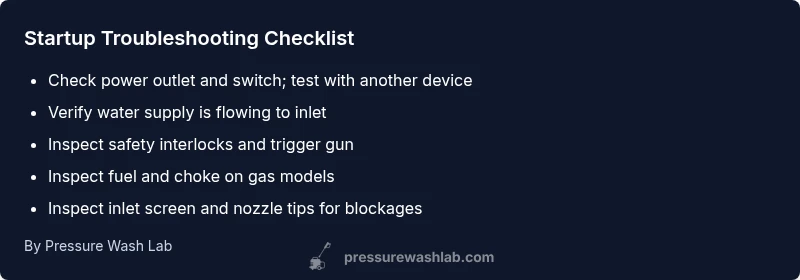
Before you disassemble anything, run a quick safety sweep. Check the power source: is the outlet live? Try a different plug or a known working device on the same outlet. Inspect the power switch and any safety reset buttons; press and hold as needed. Confirm the extension cord (if used) is rated for outdoor use and not damaged. For electric models, verify the GFCI is not tripped. For gas models, check the fuel level, fuel quality, and that the choke is in the correct position for startup. Ensure the water inlet screen isn’t clogged and that hoses aren’t pinched. These low-effort checks catch the most common causes fast.
Electric vs Gas: Key Starting Differences
Electric pressure washers rely on a stable electrical supply and intact safety interlocks, while gas-powered units depend on fuel, ignition, and air‑flow. Electric starters can fail due to a bad outlet, faulty switch, or blown fuse. Gas models may fail to start if stale fuel, a flooded carburetor, or a closed choke prevents ignition. The diagnostic approach should reflect the model you have. Pressure Wash Lab recommends labeling your tests by model type to avoid mixing electric and gas troubleshooting steps, which can lead to confusion and unsafe handling.
Safety Interlocks and Reset Controls
Most modern pressure washers feature interlocks that prevent starting when the trigger gun is not engaged or when the machine detects insufficient water flow. Always verify the trigger gun is fully pulled and held during startup. Some units include a thermal reset; if the motor overheated previously, a wait period may be required. If the device refuses to start after a reset, inspect the trigger assembly for stiffness or sticking components. For safety, never bypass interlocks; they protect you and the pump from damage.
Fuel, Primer, and Ignition (Gas Models)
Gas-powered units depend on a clean, timely fuel supply and proper air intake. Begin by ensuring the fuel is fresh and the tank is not empty. If the engine turns over but stalls, check the primer bulb: it should be firm and pre-prime properly. Confirm the choke setting aligns with the starting procedure in the owner’s manual. A flooded carburetor can make starting nearly impossible; in that case, hold the throttle wide open while pulling the starter cord a few times to clear excess fuel. Pressure Wash Lab notes that improper priming is a leading cause of slow starts in small engines.
Pump, Unloader Valve, and Pressure Switch Checks
If the engine starts but the pump won’t build pressure, inspect the unloader valve for sticking or leaks. A stuck unloader valve can keep the system from pressurizing and the unit may appear to be “not starting.” Check the pressure switch to ensure it is sensing pressure correctly. Leaks around seals or a worn O-ring can also prevent proper startup. When in doubt, replace worn seals and ensure all gaskets are seated properly. Do not over-torque pump fittings; overtightening can damage seals.
Cleanliness: Inlet Screen, Filters, and Nozzle Tips
Blockages on the inlet screen or inside the spray gun can mimic a “not starting” condition by creating a false demand for water flow. Inspect and rinse the inlet screen; clean or replace clogged filters. Dirty nozzle tips or incorrect nozzle selection can affect water flow and pressure, leading to startup confusion. Regularly inspect the wand, gun, and quick-connects for cracks or debris. Pressure Wash Lab stresses a simple habit: check filters and screens every 3–6 months depending on usage, and always flush the system after heavy use.
Preventive Maintenance and Safe Startup Habits
Develop a routine that covers air-cooling paths, fuel stabilization, and regular oil changes if applicable. Drain water from lines when storing in freezing conditions to prevent ice damage. Lubricate moving parts per the owner’s manual and inspect hoses for cracks or kinks. Keep the area around the unit clear of debris and moisture to avoid accidental shorts. By addressing wear and corrosion early, you reduce the probability of a no-start condition during peak cleaning seasons.
When to Call a Professional
If you’ve methodically checked power, water, fuel, ignition, interlocks, and pump components but the unit still won’t start, it’s time to involve a technician. Specific issues like a failing ignition coil, carburetor rebuild, or internal pump wear require professional service. Don’t hesitate to contact an authorized service center or a qualified technician—professional diagnostics can prevent further damage and preserve warranty protection.
Steps
Estimated time: 60-90 minutes
- 1
Verify power and basic electrical readiness
Ensure the unit is plugged into a live outlet, the power switch is on, and the circuit is not tripped. If you use an extension cord, confirm it is rated for outdoor use and test with another device on the same outlet.
Tip: Use a voltmeter or outlet tester to confirm the outlet supplies power. - 2
Check safety interlocks and trigger gun
Make sure the trigger gun is fully depressed and the safety interlock sensors are clean and functioning. If your model has a thermal reset, allow it to cool before attempting to restart.
Tip: Never bypass safety switches; they prevent sudden pump start and potential injury. - 3
Inspect fuel system (gas models)
Confirm the tank has fresh fuel, the choke is in the correct position for startup, and the primer bulb (if present) feels firm. If fuel is old, consider draining and refueling with fresh mix.
Tip: Never start a gas engine with old or contaminated fuel; it can clog carburetors. - 4
Verify water supply and inlet cleanliness
Turn on the water source and check that water is flowing to the inlet. Remove and inspect the inlet screen for debris and clean as needed.
Tip: Water flow must be steady to prime the pump and avoid cavitation. - 5
Inspect the pump and unloader valve
Visualize the unloader valve for leaks or sticking. If the unit starts but won’t pressurize, the unloader valve or pressure switch may be at fault.
Tip: Do not force parts; replace worn components with manufacturer-approved parts. - 6
Test start and observe behavior
After basic checks, attempt a controlled start. Listen for smooth ignition and watch for the expected pressurized spray. If there’s no pressure but no obvious fault, proceed to a professional inspection.
Tip: Document any unusual sounds or leaks to aid the technician.
Diagnosis: Pressure washer won't start
Possible Causes
- highNo power to unit (tripped breaker, blown fuse, bad outlet)
- mediumSafety interlock or switch engaged (trigger gun safety, thermal reset)
- mediumWater supply issues (no water or air in inlet due to kinks)
- mediumGas model fuel issues (empty tank, stale fuel, incorrect choke)
- lowAir in fuel system or flooded carburetor
Fixes
- easyCheck power source: test outlet with a meter, reset breakers, replace blown fuses, and try a different outlet.
- easyInspect safety interlocks and trigger gun; ensure the gun is pulled and safety switches aren’t stuck. If the system requires a thermal reset, wait the recommended cooldown period.
- easyFor gas models, verify fuel level and freshness, check for stale fuel, and confirm proper choke position. Drain or prime as needed to clear flooding.
- easyCheck water inlet and hoses for kinks or blockages; ensure water supply is flowing before starting.
- mediumIf issues persist, consult a professional technician for ignition, carburetor, or pump diagnosis.
Quick Answers
Why won't my electric pressure washer start even though the outlet is fine?
Check the unit’s power switch, fuses, and GFCI. A tripped breaker or a blown fuse will prevent startup even if the outlet is delivering power. If the outlet tests fine, test with a different device to confirm the circuit is stable.
Check switches and fuses first; a tripped circuit is a common culprit and easy to fix.
My gas pressure washer turns over but won’t start. What should I check first?
Check fuel freshness, correct choke position, and whether the primer bulb is firm. A flooded carburetor or stale fuel can prevent ignition. Ensure proper air intake and clean the air filter.
Check fuel and choke first; a flooded carburetor is a common cause.
I hear a grinding or squealing noise when starting. Is that serious?
Unusual noises can indicate a failing pump bearing or a dry or damaged pulley. Stop using the machine, inspect for loose parts, and consult a technician if the noise continues.
A grinding sound usually means a mechanical issue—stop and diagnose before continuing.
What maintenance reduces starting problems?
Regularly inspect and replace worn hoses, filters, and O-rings. Use fresh fuel and empty water lines before long storage. Clean inlet screens and nozzle tips after heavy use.
Maintenance helps prevent most start issues before they happen.
When should I call a professional?
If basics fail—power, fuel, safety interlocks, or pump components—you should contact a qualified technician. This protects the warranty and ensures safe, proper repairs.
Call a pro when simple fixes don’t restore proper startup and performance.
Is it safe to test a pressure washer indoors?
No. Pressure washers release high-pressure spray and exhaust fumes; test outdoors in a well-ventilated area away from people and pets.
Always test outside in a safe, open area.
Watch Video
Key Takeaways
- Start with power, water, and safety interlocks first
- Gas models require fresh fuel and correct choke position
- Don’t bypass safety features — they protect people and equipment
- If in doubt, a professional service preserves warranty and avoids damage