Pressure Washer Not Working? A Troubleshooting Guide for Crime Scene Cleaners
Urgent, step-by-step guide to diagnose and fix a pressure washer not working crime scene cleaner setup. Learn quick checks, safe inspections, and maintenance tips to restore performance fast.


Most often, a pressure washer not working is due to a simple power issue, a clogged nozzle, or a tripped breaker. First, verify the outlet is live and the switch is on. Then inspect the water inlet and filter for debris. If it still won’t start, check electrical connections or the ignition (gas engines), and reset any safety switches.
Common Causes of a Non-Operational Pressure Washer
In high-stress crime scene cleaning workflows, a pressure washer not working is usually caused by power or water supply issues, clogged components, or safety interlocks. Start by verifying that the outlet is live and the switch is on, and confirm the circuit hasn't tripped. Debris in the inlet screen or a clogged nozzle can also prevent operation. For professionals, consider whether a recent pressure-relief test or a misadjusted unloader valve could be the culprit. Address power, water, and debris first before pursuing parts replacements. If the unit is gas-powered, verify fuel supply, choke position, and that the spark plug is clean and correctly gapped. Always consult the user manual for model-specific safety settings. In crime scene cleaning, the water filtration and intake hoses deserve extra attention to prevent cross-contamination.
Quick Diagnostics You Can Do Right Now
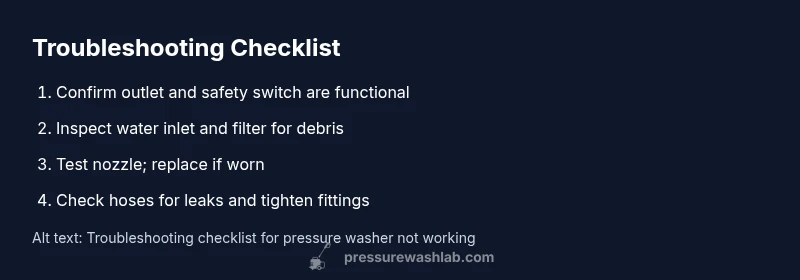
Perform these checks in sequence to rapidly identify the issue behind the pressure washer not working crime scene cleaner scenario. 1) Confirm the outlet is live by plugging in another device. 2) Inspect the water inlet and filter for debris and clean or replace if necessary. 3) Drop the wand and nozzle into a safe position to test spray; replace the nozzle if you see scoring or wear. 4) Reset any safety switch or circuit breaker if tripped. 5) For gas models, ensure fuel is fresh and the choke is set correctly. If the unit still won’t run, move to deeper electrical or pump inspection.
Inspect Electrical System and Hoses Safely
Always power off and unplug before inspecting electrical components. Look for frayed cords, loose connections, and corroded terminals. Check the power switch, GFCI outlets, and any inline fuses. Inspect the high-pressure hose and fittings for cracks or leaks. Ensure the spray wand and trigger gun operate smoothly, and that the unloader valve is not stuck in the open position. For units stored between jobs, verify there is no moisture intrusion in the motherboard or pump casing. In professional crime scene cleaning, follow strict decontamination protocols when inspecting any water or electrical components.
When to Call a Professional or Replace Components
If basic power and water checks fail, it’s time to bring in a service technician. A qualified technician can test the motor windings, regulator, and pump seals without risking personal injury. Consider replacement if the pump or unloader valve shows excessive wear, or if ignition/electrical components fail to respond after several reset attempts. For gas engines, avoid attempting repairs beyond basic maintenance, as improper fuel or ignition work can create safety hazards. In the field, keep a maintenance log to track parts life and service intervals.
Maintenance Habits to Prevent Future Failures
Prevention saves time and money. Create a simple routine: inspect hoses and fittings weekly for leaks, clean inlet filters, and clear debris from the nozzle and spray tip. Use fresh, manufacturer-approved detergent only when appropriate and avoid overloading the pump. Store the unit in a dry, ventilated area away from extreme temperatures, and ensure all safety switches are unobstructed. Regular oil checks (for gas models) and seasonal servicing extend life and reliability, which is crucial for crime scene cleaner operations where downtime hurts productivity.
Gas vs Electric Models: Troubleshooting Paths
Gas-powered units rely on fuel systems, ignition, and exhaust, while electric models depend on power supply and controls. If a gas engine won’t start, check fuel availability, spark plug condition, and air filter cleanliness. For electric machines, verify that the input voltage matches the rated specification and that the controller is not tripped. The unloader valve behavior differs between types, so consult the manual for model-specific guidance. In either case, ensure connectors and grounding are secure to prevent shocks in wet environments.
Real-world Scenarios in a Crime Scene Cleaner Setup
In field scenarios, you may encounter a pressure washer not working when hoses are coiled and stored improperly, or after a power outage during a critical clean. The key is to run through a quick checklist and document any recurring faults. When cleaners are on site, coordinate with decontamination protocols and ensure that all personnel stay clear of the spray path while testing. If the problem recurs after servicing, review the maintenance log for patterns and plan a preventive replacement schedule to minimize downtime.
Steps
Estimated time: 60-90 minutes
- 1
Check power supply and safety switches
Begin with the simplest check: verify the outlet is live by plugging in a known working device. Reset the circuit breaker if tripped and ensure the unit’s power switch is engaged. This step often resolves power-related startup failures in busy crime scene cleanup schedules.
Tip: Always unplug the unit before inspecting internal electrical components. - 2
Inspect water source and filtration
Turn on the water supply and observe pressure at the inlet. Remove and clean the filter or strainer; replace if damaged. A clogged inlet or low water flow is a common cause of no-spray or weak spray conditions.
Tip: Bleed air from hoses after reconnecting to recover proper flow. - 3
Test nozzle and spray wand
Remove the nozzle to inspect for wear, cracks, or mineral buildup. Clean with a soft brush or replace if the orifice is obstructed. Reattach and test at low pressure before increasing force.
Tip: Never run the unit with a damaged orifice; it can cause erratic pressure and hose damage. - 4
Inspect hoses and fittings
Look for cracks, bulges, or leaks in the high-pressure hose and fittings. Tighten connections and replace any damaged hoses to prevent loss of pressure and potential leaks into contaminated environments.
Tip: Wear eye protection and gloves when inspecting pressurized hoses. - 5
Check unloader valve and relief settings
If your unit still won’t sustain pressure, inspect the unloader valve for sticking or misadjustment. Clean or replace as needed and verify relief pressure matches the manufacturer’s specification.
Tip: Do not bypass the unloader valve; it protects you and the pump from overpressure. - 6
Gas engine fuel and ignition check
For gas models, confirm fuel quality, correct choke position, and clean spark plug. Fresh fuel and proper ignition timing are critical for starting reliability in field conditions.
Tip: Spark plugs should be gapped according to the manual; a loose plug can prevent starting. - 7
Call a professional if unresolved
If the unit still won’t start after these steps, it’s time to involve a technician. A professional can diagnose winding issues, seals, and internal components without risking safety.
Tip: Document symptoms and actions taken; share with the technician to speed diagnosis.
Diagnosis: Machine won't start or loses pressure during a crime scene cleaning session
Possible Causes
- highPower issue (outlet, circuit breaker, or switch)
- highClogged water inlet or dirty filter
- mediumClogged nozzle or blocked spray tip
- mediumElectrical fault or failed safety switch
- lowUnloader valve stuck or relief valve misadjusted
Fixes
- easyTest outlet with another device; reset circuit breaker; ensure on/off switch works
- easyClean water inlet screen and replace filter; ensure water source is on and unobstructed
- easyDetach and clean nozzle; replace if worn or damaged
- mediumInspect electrical connections, replace faulty wiring or connectors; consult electrician if needed
- mediumInspect unloader valve and adjust or replace; consult service manual or technician
Quick Answers
Why won't my pressure washer start after a power outage?
Power outages can trip breakers or reset safety interlocks. Reset the breaker, verify the outlet, and ensure the unit’s safety switches are re-engaged before attempting to start again.
A power outage can trip the breaker. Reset it, check the outlet, and re-engage safety switches before trying to start again.
What does a constant low-pressure mean?
Low pressure usually points to a blocked nozzle, dirty inlet filter, or worn pump seals. Inspect these components in order, cleaning or replacing as needed.
Low pressure often means a clogged nozzle or dirty inlet filter; check those first.
Is it safe to run a pressure washer on a contaminated site?
Follow decontamination protocols and PPE guidelines strictly. Use certified cleaners and ensure you’re working within approved safety procedures.
Always follow safety rules and decontamination guidelines for contaminated sites.
When should I replace the unloader valve?
If the valve is stuck or leaking after cleaning, replace it or have a technician inspect. Do not operate with a faulty unloader.
If stuck or leaking, replace the unloader valve or have a pro inspect.
Can a faulty spark plug cause starting problems on gas models?
Yes. A fouled or loose spark plug can prevent ignition. Inspect and replace if needed to restore starting reliability.
A bad spark plug can stop ignition; inspect and replace as needed.
Watch Video
Key Takeaways
- Start with power and water checks before parts replacement
- Clean or replace clogged components to restore flow
- Gas vs electric models require model-specific steps
- Maintain logs to prevent downtime