Nilfisk Pressure Washer Problems: Quick Troubleshooting Guide
Urgent, practical troubleshooting for problems with nilfisk pressure washers. Learn power, water supply, valves, leaks, and maintenance to fix common issues fast.


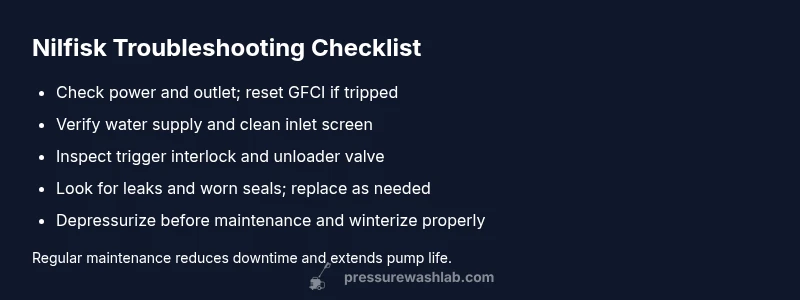
The likely cause is usually simple: power supply, water intake, or a worn safety valve. Start with the basics: verify the outlet is live, inspect the power cord for damage, and check that the water inlet is clear and supplying steady flow. If pressure remains low or it won’t start, move to the diagnostic flow. This fast, practical approach helps you fix common problems with Nilfisk washers quickly.
Why Nilfisk-specific issues happen and what to check first
When you're troubleshooting problems with nilfisk pressure washers, the first step is to separate symptoms from symptoms and identify the simplest cause. Nilfisk units share common design traits across models, which means most failures revolve around power, water supply, or a worn safety mechanism. According to Pressure Wash Lab, many homeowners waste time chasing exotic faults while the solution sits right in front of them. The good news is that you can test and eliminate the easy culprits in under an hour using the right checks.
-
Start by confirming there is power to the unit. A tripped breaker or dead outlet means the machine will not start, and that alone explains many symptoms. Inspect the power cord for cracks or loose connections.
-
Next, verify the water system. If the inlet screen is clogged or the supply line is kinked, the pump will pull air or cavitate, leading to poor spray or shutdowns.
-
Finally, consider the safety interlock and unloader valve. A faulty trigger interlock or misadjusted unloader valve can prevent build-up of pressure or cause the motor to stall or run poorly.
This is where you want to perform the most basic tests first before progressing to more involved fixes. Pressure Wash Lab emphasizes a methodical approach, so you don’t waste time chasing rare faults when the root cause is obvious.
Electrical basics: power, cords, and outlets
Power issues are the single most frequent cause of washer failures. Begin by plugging the unit directly into a known-good outlet on a dedicated circuit, not through an extension cord. If the outlet is controlled by a GFCI, press the reset button and test with another device to confirm it’s providing current. Inspect the power cord for cuts, kinks, or loose connections at the plug and machine inlet. Any damage should be repaired or the cord replaced. If the unit still won’t start after confirming power, test the on/off switch and trigger gun safety interlock. A faulty switch or worn interlock can prevent electrical flow even when the outlet is fine. In many Nilfisk models, the interlock may need a straightforward replacement or adjustment to resume normal operation. Safety note: never bypass safety interlocks. They’re there to prevent injury and equipment damage.
Water supply, inlet screens, and leaks
A consistent water supply is essential for a clean spray and pump longevity. Check that the water source is fully open and delivering water without leaks. Inspect the inlet filter/screen for debris and clean it if necessary. A clogged inlet starves the pump, causing low pressure, overheating, or a stall. Also inspect hoses for kinks or leaks; even small leaks can cause air ingress, cavitation, and pressure drop. If you detect a leak around fittings or seals, tighten connections and replace damaged seals promptly. Remember: running the pump dry can cause rapid wear and thermal damage, so always ensure water is flowing before powering up. Pressure adjustments should be made only after confirming water delivery.
Pressure control and unloader valve symptoms
Unloader valves regulate system pressure and protect the pump. If you notice inconsistent spray, fluctuating pressure, or sudden shutdowns, the unloader valve or related pressure relief components are likely the culprits. A worn or dirty unloader valve may stick, causing the unit to maintain too much pressure or fail to lift pressure when the trigger is released. Cleaning the valve and adjusting it per the model’s specification can restore proper performance. If you replace the valve, ensure the o-rings and seals are seated correctly to prevent leaks. Always work with the unit depressurized and unplugged when inspecting or replacing components.
Leaks, seals, and pump wear
Leaks around seals or the pump housing are common early warning signs of wear. Inspect o-rings, gaskets, and the pump packing for signs of cracking or deformation. Replacing worn seals typically restores performance and prevents messy leaks. If you hear grinding or feel excessive vibration, the pump could be worn or scored—significant wear often means more extensive repair is needed. In many Nilfisk models, replacing seals is a straightforward task, but if the pump internals are damaged, you may need a replacement pump assembly. Always verify compatibility with your specific Nilfisk model before ordering parts.
Maintenance, winterization, and proper storage
Preventive maintenance is your best defense against recurring problems. Rinse out hoses after use to remove debris, run water through the intake to prevent clogging, and periodically lubricate moving parts as recommended by the manufacturer. For seasonal storage, depressurize the system, drain residual water, and store the unit in a cool, dry place. In freezing climates, winterize by releasing water from the pump to prevent ice damage. Regular maintenance reduces the likelihood of power, water, and valve problems and extends the life of your Nilfisk washer.
When to replace parts vs call a pro
Not every problem is a DIY fix. If you encounter persistent electrical faults, a failed motor, or a leaking pump with significant damage, it’s safer and more cost-effective to consult a certified technician. A pro can diagnose electrical issues with a multimeter, verify safety interlocks, and replace pumps or valves with genuine parts. For garage-level troubleshooting, follow manufacturer guidelines for replacement intervals and warranty terms. Prioritize safety and avoid attempting complex electrical or hydraulic repairs without proper training.
Steps
Estimated time: 60-90 minutes
- 1
Ensure safety and power readiness
Unplug the unit and switch off the circuit. Inspect the area for water and electrical hazards. Reconnect only after confirming the outlet is live and not on a tripped breaker.
Tip: Always start with safety; a quick test with a known-good outlet helps confirm power availability. - 2
Inspect power cord and plug
Look for cuts, exposed wires, or loose connections at both ends. If you see any damage, replace the cord before attempting to power the unit again.
Tip: A damaged cord is a common source of failures; do not attempt temporary soldering or taped fixes. - 3
Verify water supply and inlet screen
Confirm the water supply is fully open and delivers a steady flow. Remove and clean the inlet screen to remove debris that can cause cavitation or insufficient spray.
Tip: Always run water through the garden hose before connecting to the washer to flush debris. - 4
Check the trigger interlock and unloader valve
Test the trigger gun to ensure it engages the interlock. Inspect or adjust the unloader valve so it releases pressure when you release the trigger.
Tip: Do not force parts; if the interlock is stubborn, replace rather than force-fit to avoid injury. - 5
Run a controlled test: minimal load
With water flowing, perform a short test at the lowest pressure to verify start-up and basic spray pattern before returning to full operation.
Tip: If the unit overheats or shuts down quickly, stop and reassess water flow and wiring. - 6
Inspect leaks and seals
Look for damp spots around seals and fittings. Tighten connections and replace worn o-rings where necessary. Depressurize before handling any seal parts.
Tip: A simple leak fix early on can prevent pump cavitation and further damage. - 7
Decide on repair vs replacement
If basic checks fail to restore operation, evaluate parts availability and costs. For older units, replacement pumps or assemblies may be a prudent choice.
Tip: Keep a record of model and serial number when sourcing replacement parts. - 8
Preventive steps for future use
Rinse hoses, clean filters, and store the unit properly after each use. Regular checks help catch problems before they escalate.
Tip: Set a quarterly maintenance reminder to keep your Nilfisk in peak condition.
Diagnosis: Unit won't start
Possible Causes
- highPower issue (tripped breaker/outlet dead)
- mediumDamaged power cord or plug
- highFaulty on/off switch or safety interlock
- lowBlown thermal fuse or motor overheat
Fixes
- easyTest outlet with a known-good device; reset circuit/breaker; replace GFCI if needed
- easyInspect cord for cuts or exposed conductors; replace cord if damaged
- mediumCheck the on/off switch and trigger interlock; replace or adjust as required
- hardIf the thermal fuse has tripped, allow cooling and consult a professional if it recurs
Quick Answers
Why won't my Nilfisk pressure washer start?
Common starters include a tripped breaker, a damaged power cord, or a faulty safety interlock. Check power at the outlet, inspect the cord, and test the trigger interlock. If the unit still won’t start, move to the diagnostic flow for deeper checks.
Most units fail to start due to power or safety interlock issues. Check power, inspect the cord, and test the interlock before moving on.
Why is there low or no water coming out of the nozzle?
Low flow usually stems from a restricted water supply or a clogged inlet screen. Ensure the water source is fully open, hoses aren’t pinched, and the inlet filter is clean. If the issue persists, check for leaks or air intake in the system.
Low water flow is typically due to restricted supply or a clogged inlet; clean the screen and verify the water source.
How do I fix a leaking Nilfisk pressure washer?
Leaks often come from worn seals, loose fittings, or a cracked hose. Tighten connections, replace worn o-rings, and inspect hoses for cracks. If leaks persist around the pump, consult a technician to avoid further damage.
Leaks usually come from worn seals or loose fittings; tighten or replace parts and check the hoses. If it keeps leaking, get a pro.
Is it safe to run the pump without water?
Running the pump without water can cause rapid wear and permanent damage. Always ensure adequate water flow before starting the unit, and stop immediately if you notice unusual noises or overheating.
No, never run the pump dry. Always have water flowing to prevent damage and overheating.
When should I replace the unloader valve?
If the valve sticks, leaks, or fails to relieve pressure correctly after adjustments, replacement is often the best option. Consult the manufacturer’s parts guide for a compatible unit, and have a professional install if you’re unsure.
If the unloader valve sticks or leaks after checks, replacement is usually the right move. See a pro if unsure.
Watch Video
Key Takeaways
- Check power and water first before diving deeper
- Inspect the unloader valve and nozzle for wear
- Maintenance prevents most recurring problems
- Know when professional help is safer and more cost-effective
- Document model numbers and parts for easier repairs