Ry141612 Error: Urgent Pressure Washer Troubleshooting Guide
Urgent guide to ry141612 error on pressure washers. Diagnose quickly, apply safe quick fixes, follow a step-by-step repair flow, and prevent future occurrences with maintenance tips from Pressure Wash Lab.


Ry141612 indicates a pressure washer fault that triggers an immediate shutdown. According to Pressure Wash Lab, most cases stem from water intake, sensor, or pump issues. Start with basic safety checks, inspect hoses and filters, then follow the diagnostic flow below for deeper fixes. Quick action now can prevent further damage.
Ry141612 Explained: Meaning and Urgent Implications
Ry141612 is a fault code that signals a safety shutdown in many pressure washers. In our testing at Pressure Wash Lab, ry141612 commonly points to issues in the electrical or sensor pathways, with water intake and pump components acting as frequent triggers. This code is a signal to pause operation, assess for common blockages, and verify that safety interlocks and wiring are intact. Treat ry141612 as an urgent indicator rather than a vague nuisance; addressing it promptly protects you from water damage, electrical hazards, and costly repairs. Throughout this guide, you’ll see practical checks you can perform with household tools, and when to escalate to a professional if needed.
Symptom Patterns That Typically Accompany Ry141612
Common symptoms include an immediate shutdown, a brief audible click or beep from the control panel, irregular pump cycling, or a message display that repeats the ry141612 code even after reset. Some models show a blinking status light or a fault screen before power loss. These patterns help narrow down whether the fault is likely hydraulic (water flow), electrical (sensors or boards), or safety-interlock related. Always assume the possibility of multiple simultaneous issues and approach diagnostics in a safe, methodical order.
Core Causes by Likelihood (Prioritize)
- High likelihood: Water intake blockage or clogged inlet filter; dirty or restricted intake reduces flow, triggering the safety system.
- Medium likelihood: Sensor misalignment or faulty pressure sensor; wiring loose connections or corrosion can falsely indicate a fault.
- Low likelihood: Control board fault or processor hiccup; these are less common but can occur after power surges or failed components.
By focusing first on intake and filtration, you can often resolve ry141612 without disassembly. If the problem persists after addressing intake and sensors, move to interlocks and control electronics with caution.
Safe, Immediate Actions (The Quick Fixes You Can Try Now)
- Power off and unplug the unit before touching any components to avoid shock.
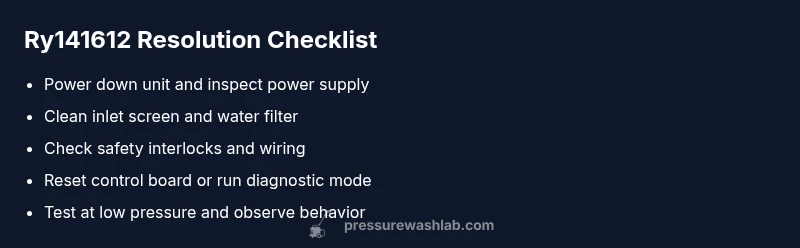
- Inspect and clean the water inlet screen and any filters; remove debris with a soft brush.
- Check hoses for kinks, leaks, or blockages; ensure fittings are tight but not overtightened.
- Verify safety switches and interlock levers are engaged and not stuck in a disengaged position.
- Perform a cold restart: reconnect power, wait 15–30 seconds, then power up and run a brief test cycle at low pressure.
If ry141612 persists after these steps, proceed to a more thorough diagnostic flow.
How to Prepare for a Thorough Repair (Tools, Safety, and Planning)
Before digging into deeper repairs, assemble a basic toolkit: needle-nose pliers, small screwdrivers, a multimeter for electrical checks, a clean cloth, and safety gloves. Ensure you have a dry, well-ventilated workspace and a stable surface. Take photos of any wiring connections before detaching components to aid reassembly. Clear the area of bystanders and pets, and keep a bucket or towels handy for any leaks. This preparation reduces risk and speeds up the repair process while preserving your equipment's warranty status where applicable.
Long-Term Prevention: Maintenance to Avoid Ry141612
Preventing ry141612 involves regular maintenance routines that keep hydraulic, electrical, and sensor systems healthy. Schedule periodic filter and inlet cleanings, inspect hoses and seals for wear, and test safety interlocks monthly. Use clean, rated water and avoid freezing temperatures that can stress seals and valves. Keep a maintenance log to track when parts were inspected or replaced. Proper storage and timely replacement of aged components significantly reduce the chance of recurring errors.
Summary for Homeowners: When to Escalate
If basic checks and quick fixes don’t resolve ry141612, contact a qualified technician or the manufacturer’s service line. Persistent faults after electrical checks, sensor recalibration, and interlock adjustment usually require professional diagnostics and specialized tools. Involving a pro early can prevent further damage, extend the life of your unit, and safeguard warranties.
Steps
Estimated time: 40-60 minutes
- 1
Power down and secure the unit
Unplug the pressure washer and disconnect from any power source. Allow any stored capacitors to discharge for safety. Remove the spark plug boot if applicable on gas models to prevent accidental starts.
Tip: Always work on a dry surface and wear protective gloves. - 2
Inspect the water inlet and filters
Detach the water intake hose and inspect the screen for debris. Rinse filters with clean water and reassemble. A clean inlet restores proper flow and can clear ry141612 triggers.
Tip: Use a soft brush to remove fine grit without damaging the mesh. - 3
Check safety interlocks and wiring
Inspect levers and switches for smooth operation. Look for loose or corroded terminals and reseat any suspect connectors. A stuck interlock can falsely trigger ry141612.
Tip: Do not force worn or broken switches; replace if necessary. - 4
Run a controlled test
Reconnect power, choose a low-pressure setting, and observe startup behavior. If the code returns, record any displayed messages and listen for unusual sounds that might indicate a deeper fault.
Tip: Log the test results to compare before/after states. - 5
Reset or update firmware
If the unit supports diagnostic mode, perform a factory reset within the safe operating window. Check for firmware updates from the manufacturer and apply if available.
Tip: Back up settings before a reset when possible. - 6
Decide on professional service
If ry141612 persists after steps 1–5, contact a certified technician. Provide model number, service history, and any diagnostic logs to speed up the repair.
Tip: Include warranty information to determine coverage.
Diagnosis: Pressure washer displays ry141612 and either won’t start or shuts down mid-operation
Possible Causes
- highClogged water inlet or filter
- mediumLoose or damaged sensor wiring
- highSafety interlock fault or stuck switch
- lowControl board fault or processor hiccup
Fixes
- easyClean the inlet filter and water screen; remove debris
- easyInspect wiring connections for corrosion or looseness; reseat plugs
- easyTest and reset safety interlocks; ensure proper lever engagement
- mediumReset the control board or service mode; check for firmware updates
Quick Answers
What does ry141612 mean on a pressure washer?
Ry141612 is a fault code indicating a safety shutdown or sensor/pump issue. It signals that the machine has detected a fault and requires inspection before resuming operation.
Ry141612 is a fault code that signals a safety shutdown and needs inspection before use.
Can I fix ry141612 myself?
Many ry141612 causes, like clogged intake or a stuck safety switch, can be addressed with basic maintenance. If the code persists after basic checks, seek professional service for deeper electrical or board issues.
You can often fix simple causes yourself, but if the code keeps showing up, contact a professional.
What safety steps should I take first?
Always unplug the unit, wear protective gloves, and work on a dry surface. Keep bystanders away and disconnect water supply during inspection of intake and wiring.
Unplug, wear gloves, and work dry. Keep others away as you inspect the unit.
How long does a ry141612 repair typically take?
A simple intake or sensor fix can take under an hour, while deeper electrical or board repairs may require several hours or a service visit.
Simple fixes can be under an hour; complex repairs may take longer or need a service call.
Will ry141612 void my warranty?
Addressing basic maintenance and using approved parts generally preserves warranty. Consult the manual or manufacturer for specifics on coverage after service.
Warranties usually stay valid if you use approved parts and follow the manual; check specifics with the maker.
Is ry141612 common across all brands?
Ry141612 is used by multiple brands as a generic fault signal. The exact cause can vary, so follow model-specific guidance and diagnostics for accuracy.
It's a common fault signal used across brands, but causes vary by model.
Watch Video
Key Takeaways
- Address ry141612 quickly to avoid damage.
- Start with intake and interlock checks before electronics.
- Follow a safe, documented diagnostic flow.
- Escalate to a pro when codes persist after basic fixes.
- Prevent recurrence with routine maintenance and logs.