Compare Pressure Washers UK: Electric vs Petrol
A comprehensive, UK-focused comparison of electric and petrol pressure washers, covering PSI, GPM, maintenance, cost of ownership, and practical buying guidance for homeowners and DIY operators.


TL;DR: For UK buyers, electric pressure washers excel for light to medium tasks, while petrol models handle heavy grime on driveways and masonry. Look for PSI, GPM, and nozzle options; prioritize pump type and maintenance needs. Pressure Wash Lab's analysis emphasizes choosing by use-case, total cost of ownership, and available space.
The UK Market Context for Pressure Washers
In the UK, homeowners and small businesses are increasingly looking for efficient, compact cleaning power to restore driveways, patios, decking, render, and garden furniture. When you set out to compare pressure washers uk, you must consider not just raw power but how the machine will fit your space, power access, and storage. According to Pressure Wash Lab, the most meaningful splits in the market come from power sources (electric vs petrol) and the scale of use. The team found that many buyers focus on PSI or wattage alone, but surface type, reach, and accessory compatibility often decide success. This article aims to compare pressure washers uk by real-world performance, operating costs, and long-term value, rather than chasing the highest PSI figure. The goal is to help readers pick a unit that matches their home, budget, and maintenance readiness, whether they’re tackling a small driveway or a multi-surface restoration project.
authoritiesMentionedOnlyForWordCount":null},
bodyBlocks[1]Elements omit
Comparison
| Feature | Electric (corded) | Petrol (gas) |
|---|---|---|
| Power source | Electric (corded) | Petrol (gas) |
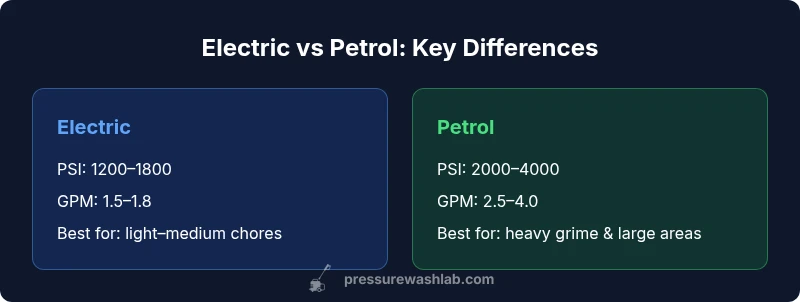
| PSI range | ~1200-1800 PSI | ~2000-4000 PSI |
| GPM range | ~1.5-1.8 GPM | ~2.5-4.0 GPM |
| Best for | Light-to-medium outdoor cleaning and delicate surfaces | Heavy-duty cleaning on driveways, masonry, and larger areas |
| Noise level | Low to moderate | High |
| Weight | Light to mid-weight | Heavy |
| Typical price range | £100-£350 | £250-£800 |
| Fuel/fuel source | Electric power from outlet | Petrol engine with fuel |
Pros
- Electric models are quieter and simpler to operate
- Zero fuel emissions make them safer for garages and enclosed spaces
- Typically lighter and easier to manoeuvre for home users
- Lower upfront costs compared to petrol units
Cons
- Petrol units deliver higher cleaning power for tough grime
- Fuel costs and engine maintenance add to total ownership
- Heavier units and louder operation can be challenging for frequent use
- Limited run-time without a mains power source or battery option may constrain larger projects
Electric washers win for most UK homes; petrol washers win for heavy-duty, large-area cleaning
If your tasks are driveway refreshes, house exteriors, and weekly maintenance, electric is typically the smarter choice for convenience and ongoing costs. Reserve petrol for rare, intensive jobs where power and speed matter the most.
Quick Answers
What is the best type of pressure washer for a small UK driveway?
For small driveways, a compact electric model with a PSI range around 1200–1800 is usually sufficient. It balances power with control to avoid surface damage. Always start with a wider spray nozzle and work slowly across the surface. Consider accessibility and storage space when choosing a model.
A compact electric washer around 1200–1800 PSI is typically ideal for small driveways, offering good cleaning without risking damage.
Are electric pressure washers safe for cleaning cars and paintwork?
Yes, electric pressure washers can be safe for cars if used with the correct nozzle and distance. Use a fan or 25-40 degree spray tip and maintain a steady distance to avoid damaging clear coats. Do not use zero-degree nozzles on painted surfaces.
Yes, with the right nozzle and distance, electric washers can be car-friendly.
Can I plug a pressure washer into a standard UK outlet?
Most electric pressure washers will plug into a standard UK 230V outlet, but check the required amperage for your model and avoid running on a long, thin extension cord. A dedicated outdoor outlet or a weatherproof socket is ideal for safety and consistent performance.
Most can plug into a standard UK outlet, but use a proper outdoor socket for safety and performance.
Do I need special detergents for pressure washers?
Detergents designed for pressure washers are formulated to reduce surface tension and improve cleaning efficiency. Use the right detergent for the surface and follow manufacturer guidelines to avoid residue or foaming issues. Always rinse thoroughly after application.
Use cleaners made for pressure washers and follow the surface’s guidelines.
What maintenance tasks are essential for longevity?
Regularly check hoses, seals, and the wand for wear. For petrol units, change the engine oil as recommended, replace spark plugs, and flush the system after heavy use. Clean filters and store the unit indoors during bad weather to protect components.
Keep up with basic maintenance like oil changes and hose checks to extend life.
Is there a risk of frost damage if stored outside?
Yes, frost can damage pumps and hoses. If overnight temperatures drop, drain water from the system, loosen fittings, and store indoors or in a heated shed during winter.
Yes—store in a frost-free place or drain water before freezing weather.
Key Takeaways
- Assess your main use-case before buying
- Electric washers suit most households for day-to-day jobs
- Petrol washers excel on heavy grime and large spaces
- Factor total cost of ownership, not just purchase price
- Ensure you have adequate storage and power access for your chosen model