Can You Pressure Wash an Engine Bay? A Safe Step-by-Step Guide
Learn how to safely pressure wash an engine bay with proper masking, engine-safe cleaners, and thorough drying. Pressure Wash Lab shares practical tips for homeowners and DIY enthusiasts to clean grime without risking electricals or seals.


Yes, you can safely pressure wash an engine bay if you take precautions: use a low-pressure setting, avoid spraying electricals, mask sensitive components, and dry thoroughly. Start with a test spot and work methodically to prevent water intrusion while removing grime. Keep the work area shaded, wear PPE, and rinse mistakes quickly.
Why Engine Bay Cleaning Matters
According to Pressure Wash Lab, keeping the engine bay clean isn't just about aesthetics; it helps spot leaks, protects electricals, and can improve cooling. A clean engine bay makes it easier to see worn hoses, cracked belts, or fluid leaks before they become bigger problems. When you approach engine bay cleaning with care, you minimize risk and maximize the chance of catching issues early. This article focuses on safe, DIY-friendly methods that homeowners and DIY enthusiasts can apply without specialized equipment. By following proven steps and using engine-safe cleaners, you can refresh the look of your engine bay while supporting better performance and longevity.
Regular maintenance that includes a cautious cleaning habit reduces grime buildup and helps you monitor engine health over time. Pressure Wash Lab's analysis shows that the main risks come from water intrusion into sensitive electronics, corroded connectors, or forcing contaminants into seals. The emphasis is on control, masking, and thorough drying to keep critical parts dry while still removing tough grime.
What Parts Are Sensitive and Why
The engine bay contains live electrical connections, sensors, and moving parts that can be damaged by water or cleaners. Key components to protect include the battery and its terminals, the alternator, fuse/relay boxes, wiring harnesses, the ECU, and any exposed sensors. The air intake, throttle body, and PCV system should be shielded from spray, as should belts and pulleys. Hoses and clamps can deteriorate if sprayed directly with aggressive cleaners. Understanding these sensitivities helps you plan masking and wiping rather than blasting every surface.
Safety and Prep
Prepare the workspace and gather the right gear before you start. Begin by letting the engine cool completely; hot metal can burn you and accelerate drying in a way that makes residue harder to see. Disconnect the negative battery terminal if accessible, which reduces the risk of short circuits while you work. Cover the air intake, mass airflow sensor, distributor, and exposed electricals with plastic wrap or bags, then seal with tape. Use protective eyewear, gloves, and a microfiber cloth for quick blotting. Keep a drip pan handy for any oily drips, and have absorbent rags ready to tackle spills. Finally, test a small corner first to ensure the cleaner doesn't affect finishes or plastics.
Choosing the Right Cleaning Solution and Method
Select an engine-safe cleaner designed for automotive use. Look for pH-neutral or mildly alkaline formulas labeled safe for engine bays and plastics. Dilute according to the product instructions and avoid cleaners with corrosive additives. A light spray, followed by a brief dwell, loosens grime without soaking electrical components. For stubborn grime, use a soft brush or dedicated detailing brush to agitate gently. When rinsing, use a low-pressure stream and keep the wand at a safe distance, sweeping from the top down to prevent dirty water from dripping into sensitive areas.
Common Mistakes and How to Avoid Them
Rushing the job is the fastest route to trouble. Never spray directly into openings, wiring, or the battery. Avoid high-pressure blasts near sensors or connectors; water can force into seals and cause corrosion or shorts. Do not use harsh power cleaners, acidic solvents, or degreasers that are not engine-safe. Skipping masking leads to water pooling in areas that are hard to dry, which can leave residues or promote rust. Finally, neglecting thorough drying invites dampness that shrouds leaks and disguises issues until they worsen.
tip1: null}
Tools & Materials
- Engine-safe cleaner/degreaser(Choose a product labeled safe for engines and plastics, preferably pH-neutral.)
- Masking materials (plastic sheeting, plastic bags, or engine bay covers)(Use to shield electricals, sensors, and air intakes.)
- Protective gloves and safety glasses(Standard PPE to guard skin and eyes from cleaners.)
- Microfiber towels or soft rags(For blotting and drying without scratching surfaces.)
- Soft-bristle detailing brush(Gently agitate grime in tight spots.)
- Spray bottle for diluted cleaner(Apply cleaner evenly without oversaturating areas.)
- Drip pan or absorbent pads(Catch drips and protect surrounding components.)
- Old towels for drying and residue removal(Dry thoroughly to prevent corrosion and residue.)
- Cool, certified water source (if outdoors)(Rinse only with a clean, low-pressure water source.)
Steps
Estimated time: 30-40 minutes
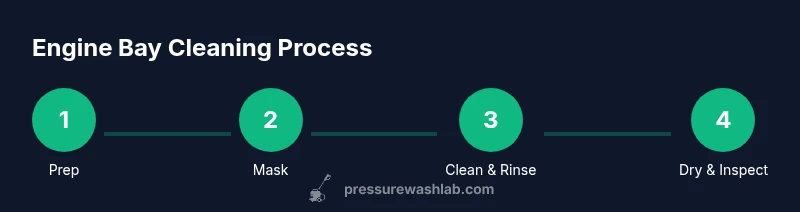
- 1
Prep and Protect
Let the engine cool completely. Disconnect the negative battery terminal if accessible to reduce electrical risk. Mask the air intake and exposed electricals with plastic covers, securing with tape. Keep a drip pan ready and place towels nearby for any spills.
Tip: Masking prevents water from entering sensitive spaces and keeps cleanup easier. - 2
Mask and Cover
Double-check all potentially vulnerable areas. Cover the alternator, fuse boxes, sensors, and exposed wiring with plastic sheeting or bags. Ensure gaps are sealed so spray cannot seep into hidden crevices.
Tip: Take a minute to verify seals before you spray—it saves time later. - 3
Apply Cleaner
Lightly spray the engine surfaces with the engine-safe cleaner. Let it dwell for a short period to loosen grime, but do not saturate electricals. Keep lids closed on any exposed compartments during dwell.
Tip: Use a gentle mist rather than a heavy stream to minimize splash. - 4
Agitate Gently
Using a soft brush, work grime from engine covers, valve covers, and hoses in small circular motions. Focus on heavily soiled spots, watching for grime build-up rather than blasting it away.
Tip: Avoid heavy scrubbing that can dislodge protective coatings. - 5
Rinse with Low Pressure
Rinse from top to bottom with a low-pressure stream, keeping the wand at a safe distance. Direct the water away from connectors and openings and use sweeping motions to prevent pooling.
Tip: Do not use high pressure near sensors or electricals. - 6
Dry and Inspect
Dry surfaces with microfiber towels and allow any hidden areas to air dry. Reconnect the battery if you removed it and perform a quick visual check for any missed grime or moisture near sensitive parts.
Tip: A thorough dry helps you spot leaks and prevents corrosion.
Quick Answers
Is it safe to pressure wash an engine bay?
Yes, with precautions: mask sensitive parts, use low pressure, and avoid wetting delicate components. Dry thoroughly and test a small area first.
Yes—with masking, a gentle spray, and thorough drying, you can safely clean an engine bay.
What PSI should I use for engine bay cleaning?
Use a low, gentle pressure and avoid direct hits at electricals or seals. Focus on grime with a light spray and a short dwell.
Go with a light, careful spray and avoid high pressure near wires and sensors.
Should I disconnect the battery before cleaning?
If accessible, disconnect the negative terminal to reduce electrical risk during cleaning. Reconnect after the area is dry and inspected.
If you can reach the terminal safely, disconnect it before you start cleaning.
Can I use any degreaser on my engine bay?
Use only cleaners labeled engine-safe and compatible with plastics and rubber. Harsh degreasers can damage coatings and seals.
Only use engine-safe cleaners, not industrial-strength solvents.
What parts are most at risk when cleaning a bay?
Electronics, sensors, wiring, and the air intake are most at risk for water intrusion or chemical damage. Mask and protect these areas carefully.
Electronics and sensors are the key risk areas; protect them well.
How do I dry the engine bay after cleaning?
Pat dry with microfiber towels and allow remaining moisture to air-dry in a shaded area. Reinspect for any moisture or residue.
Dry thoroughly with towels and recheck for any damp spots.
Watch Video
Key Takeaways
- Mask electricals and intake before spraying
- Use engine-safe cleaners and avoid harsh solvents
- Dry thoroughly to prevent corrosion and leaks
- Regular cleaning helps spot issues early and extends engine life