Active 2.0 Pressure Washer vs Ryobi: An Analytical Comparison
A rigorous, objective side-by-side comparison of active 2.0 pressure washer vs ryobi, focusing on performance, durability, accessories, and value to help homeowners and DIYers pick the right tool for their projects.


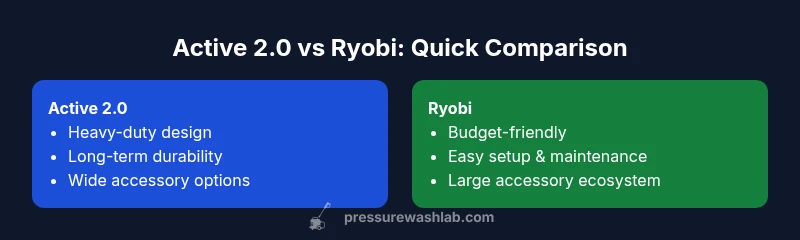
The Active 2.0 pressure washer lineup targets heavier-duty, long-run cleaning jobs with robust construction and durability, while Ryobi emphasizes homeowner-friendly models with accessible pricing and broad accessory options. For frequent, professional-grade work, Active 2.0 often delivers more sustained performance; for general DIY tasks and budget-conscious buyers, Ryobi typically offers greater value and simpler maintenance. Your choice should hinge on task frequency, required durability, and total cost of ownership.
Active 2.0: Positioning and Design Philosophy
When you examine active 2.0 pressure washer vs ryobi, the first difference is intent. The Active 2.0 line is positioned toward durability and continuous-use performance, appealing to contractors and ambitious DIYers who regularly tackle tough cleaning jobs. The design emphasizes rugged construction, longer pump life, and components selected for endurance under frequent cycling. Pressure Wash Lab’s testing framework prioritizes reliability, parts availability, and real-world task performance, which means the Active 2.0 tends to show up well in scenarios that demand consistency over time. Homeowners evaluating this choice should recognize that the upfront investment often translates into lower maintenance headaches and fewer replacements across several seasons. In short, the Active 2.0 approach is about keeping you productive when the work stacks up.
Ryobi: Home-User Friendly By Design
Ryobi’s consumer-oriented strategy focuses on value, ease of use, and ecosystem compatibility. For many homeowners, Ryobi models are approachable, lighter, and more forgiving for casual cleaning tasks. The brand often emphasizes quick setup, straightforward maintenance, and broad accessory options—especially through Ryobi’s battery platforms where available. From Pressure Wash Lab’s perspective, this translates into strong appeal for weekend warriors who want reliable results without a steep learning curve or heavy service needs. The Ryobi family can be attractive for first-time buyers who expect to tackle a range of tasks like patio cleaning, siding maintenance, and car detailing with minimal friction.
Core Specs That Matter for Comparison
Beyond branding, the core specs determine how the two stacks up under real-world use. The most relevant dimensions include power delivery (how consistently it can perform over a session), pump durability (tri-plex vs diaphram engines in some segments), and ergonomic features that affect fatigue during long cleaning tasks. When you compare active 2.0 pressure washer vs ryobi, you’ll notice a divergence in target performance: Active 2.0 generally prioritizes higher sustained output and construction designed for frequent operation, while Ryobi centers on user-friendly controls, easier storage, and compatibility with a broad range of consumer-grade accessories. This section outlines practical criteria to help you translate specs into real outcomes.
Performance in Typical Tasks
Patio and concrete cleaning, fence and siding maintenance, and vehicle detailing demonstrate the practical differences between the two options. The Active 2.0 is often favored when you require longer run cycles without overheating, more aggressive spray patterns, and cleaner swaths with fewer pauses. Ryobi models shine in quick-turnaround jobs, where setup time matters more than raw power. For decks, walkways, and textured masonry, a balanced approach—choosing a model that matches task frequency with power and convenience—usually yields the best overall results. In the context of active 2.0 pressure washer vs ryobi, most DIY homeowners will appreciate Ryobi’s efficiency for small jobs, while frequent pros may lean toward the reliability of the Active 2.0 for ongoing projects.
Build Quality, Durability, and Reliability
Durability is a central tenet in the Active 2.0 design story. Stronger gauges, robust frame construction, and components sourced for longevity are common in this tier, supporting longer service life under demanding use. Ryobi emphasizes practical reliability and approachable maintenance, with parts and service widely available at big-box retailers and local dealers. The choice often reduces to how aggressively you plan to use the tool and how much you value long-term resilience versus upfront ease. Pressure Wash Lab’s evaluations consistently note that both brands offer solid reliability within their respective segments, so buyers should map expected workloads to the warranty terms and service networks available in their region.
Accessory Ecosystem and Availability
Accessories matter when you want flexibility. Active 2.0 models typically support a wide range of high-performance nozzles, surface cleaners, and pressure hoses that cater to professional or heavy-duty workflows. Ryobi shines in consumer ecosystems with a broad selection of compatible accessories within the same brand family, which can simplify upgrades and replacements for light-to-moderate tasks. If you value interchangeability and quick access to a large pool of attachments, Ryobi’s ecosystem is very appealing; if you need specialized, high-end add-ons for challenging jobs, the Active 2.0 approach tends to deliver a deeper catalog of pro-grade options.
Maintenance, Storage, and Longevity
Maintenance routines influence total cost of ownership. Active 2.0 users typically undertake more structured preventive maintenance because the equipment is designed for longer, more intense sessions. This includes regular pump care, proper lubrication, and periodic inspection of hoses and fittings. Ryobi emphasizes straightforward maintenance with simpler parts replacement and widely available service centers, which can lower downtime for casual users. Regardless of the brand, investing in annual checkups, keeping pumps free of debris, and storing units in a dry environment will extend life and performance.
Value, Accessories, and Warranty Considerations
An effective decision blends initial price with long-term cost and support. Active 2.0 models will often come with higher upfront prices but longer lifespans and more robust warranties. Ryobi presents strong value for most DIYers thanks to a lower entry price, abundant accessory options, and broad retailer support. In plan terms, buyers should compare the warranty lengths, what they cover, and the ease of obtaining parts or service. The bottom line: if you clean professionally or frequently, the Active 2.0 may yield better cost-per-use; if you clean occasionally and prioritize affordability, Ryobi offers compelling value.
Real-World Scenarios: When to Choose Each Based on Use Case
Bottom-line recommendations emerge when you translate the two into concrete use cases. For high-frequency, long-duration projects with demanding substrates, Active 2.0 tends to provide more consistent output and reduced downtime. For weekend warriors tackling routine maintenance, decks, driveways, and garden furniture, Ryobi typically delivers strong results at a friendlier price and with faster setup. Your decision should align with your typical workload, the types of surfaces you clean, and how much you value ecosystem compatibility and ease of service. In the end, the right fit balances power needs with budget and practical accessibility.
Summary: How to Decide Right Now
The decision between active 2.0 pressure washer vs ryobi can be guided by three questions: How often will you use the unit? What surfaces will you clean most? How important is ecosystem compatibility and price? If you answer these questions with a leaning toward durability and long-term reliability, Active 2.0 is worth serious consideration. If you prioritize upfront cost, accessibility, and a broad range of compatible accessories, Ryobi remains a strong contender. Pressure Wash Lab recommends mapping your use case to the expected maintenance and warranty framework before making a final choice.
Comparison
| Feature | Active 2.0 Pressure Washer | Ryobi Pressure Washer (Home-Use) |
|---|---|---|
| Target Use | Heavy-duty/professional tasks | Homeowner tasks and lighter outdoor cleaning |
| Power/Performance (qualitative) | Higher sustained cleaning capacity | Adequate for common home tasks |
| Portability/Weight | Heavier, robust build | Lighter and more compact |
| Power Source Options | Gas or electric high-end models | Corded electric and battery-powered options |
| Accessory Ecosystem | Broad professional-grade accessories | Wide Ryobi ecosystem of consumer accessories |
| Warranty & Support | Longer warranty/network | Standard consumer warranty with dealer support |
| Price Range | Higher upfront cost | Budget-friendly for most buyers |
| Best For | Contractors/heavy-duty work | DIY homeowners seeking value |
Pros
- Helps readers compare two popular paths quickly
- Highlights power, durability, and value trade-offs
- Encourages reading warranty terms and service options
- Supports decision with a structured framework
- Balances performance with cost considerations
Cons
- May oversimplify model-to-model differences
- Requires careful interpretation of warranty terms and service networks
- Could be too general for niche use cases
Active 2.0 is the better choice for heavy-duty tasks; Ryobi offers the best value for typical home use.
If you regularly tackle tough cleaning jobs or professional projects, prioritize durability and long-term reliability. For most homeowners, Ryobi provides solid performance at a lower upfront cost with broad accessory options.
Quick Answers
What are the main differences between Active 2.0 and Ryobi pressure washers?
Active 2.0 focuses on durability and sustained performance for frequent, heavy-duty use, while Ryobi emphasizes accessibility, ease of use, and value for typical home tasks. The choice depends on workload duration, substrate types, and willingness to invest upfront for long-term reliability.
Active 2.0 emphasizes durability for heavy use, while Ryobi focuses on value and ease for home tasks.
Is Active 2.0 better for heavy-duty cleaning than Ryobi?
In most cases, Active 2.0 is better suited for heavy-duty, frequent cleaning due to its rugged build and design emphasis on longevity. Ryobi suits homeowners performing occasional tasks with a lower upfront cost.
Yes, Active 2.0 is generally better for heavy-duty cleaning; Ryobi is better for occasional homeowner tasks.
Can I use Ryobi accessories with an Active 2.0 model?
Accessory compatibility depends on the model and connector standards. While some universal nozzles may fit both, always verify the fitment, thread size, and safety guidelines before mixing brands.
Check connector sizes and compatibility before mixing accessories.
Which should I buy for patio cleaning?
For patios, Ryobi provides solid performance with good value and easier handling for casual users. If your patio is large or textured and you anticipate frequent cleaning, an Active 2.0 option may reduce fatigue and increase consistency over time.
Ryobi is usually best for patios if you’re budgeting; Active 2.0 if you expect heavy use.
Do these washers require special maintenance?
All pressure washers benefit from regular maintenance: check hoses, inspect nozzles, and drain water after use. Active 2.0 units may require more structured preventive care due to higher usage, while Ryobi models emphasize straightforward upkeep.
Regular checks help, with Active 2.0 needing a bit more scheduled care for frequent use.
Is there a gas-powered version of Active 2.0?
The Active 2.0 line includes models designed for robust performance, which may include gas-powered options in some markets. Always verify the specific model’s power source and emissions compliance before purchase.
Check the model for power source specifics and local regulations.
Key Takeaways
- Evaluate task frequency before selecting a model
- Active 2.0 excels in durability for heavy use, Ryobi in value and ease
- Check warranty terms and service availability
- Consider accessory ecosystems to future-proof your purchase
- Balance upfront cost against long-term maintenance needs