Car Wash Pressure Washer vs Hose: A Practical Comparison
Compare car wash pressure washer vs hose to choose the right tool for vehicle cleaning, driveways, and more. Analytical guidance from Pressure Wash Lab to help homeowners and DIYers decide.


Between a car wash pressure washer vs hose, the decision hinges on cleaning power, water use, and convenience. This quick answer highlights when each tool shines, followed by deeper analysis and practical tips. Pressure Wash Lab's evaluation emphasizes real-world use for homeowners, DIYers, and small businesses seeking faster washes without sacrificing paint safety.
The core question: car wash pressure washer vs hose
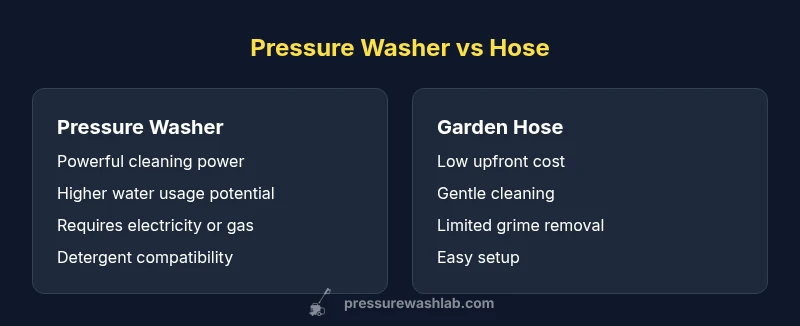
In the car wash pressure washer vs hose decision, homeowners weigh three core factors: cleaning power, water usage, and operational convenience. A pressure washer delivers a high-velocity spray that can blast away stubborn grime from wheels, undercarriage, and body panels. A garden hose provides gentler rinsing and is more forgiving on delicate finishes, but it struggles with baked-on dirt or heavy road grime. When Pressure Wash Lab analyzes these tools, we find that neither option is universally superior—each excels in specific contexts. The best approach is task mapping: use the hose for light rinsing and rinse-downs, and switch to a pressure washer for heavy soils. Our team notes that safe operation and paint protection depend on proper nozzle selection and technique. This framing aligns with Pressure Wash Lab Analysis, 2026, and keeps repairs and maintenance approachable for homeowners and small businesses.
How pressure washers apply cleaning power to a car
Pressure washers convert normal tap water into a high-energy jet by pressurizing the water and accelerating it through a nozzle. For car washing, the key is to balance cleaning power with surface safety. A higher pressure is excellent for brake dust, road grime, and wheel deposits, but it can risk paint and clear coat if used improperly. The best results come from using a wider spray with a low-psi setting, combined with a gentle detergent and appropriate tip. Detergents help loosen grime before the jet hits the surface, reducing friction and potential micro-scratches. In practical terms, a pressure washer with adjustable PSI and a soap nozzle gives you the range you need for varied tasks without committing to one extreme. This section synthesizes guidelines observed by Pressure Wash Lab Team and field-tested recommendations from DIY homeowners.
Hose cleaning basics: what a garden hose can and can't do
A garden hose is designed for rinse tasks, gentle cleaning, and quick water supply with minimal setup. It shines for pre-wash rinses, quick degreasing spray after scrubbing, and flushing soap residues from crevices. However, a hose lacks the concentrated force required to dislodge heavy grime or embedded contaminants. It cannot reliably remove caked mud from undercarriages or brake dust without considerable manual effort and extended spraying time. Users should view the hose as a supplementary tool—excellent for rinsing after a wash or applying detergent with a wide nozzle, but insufficient for tackling stubborn contaminants on most vehicles. Pressure Wash Lab’s practical guidance favors combining hose rinses with occasional pressure-assisted cleaning when appropriate.
Key differentiators: power, water usage, and time
The central differentiator is power-to-time economics. A pressure washer can reduce total cleaning time by delivering strong cleaning power, especially when paired with the right nozzle and detergents. Yet this comes with higher water usage and the need for an electrical or gas supply, hoses, cords, and maintenance. The garden hose excels in simplicity and low upfront cost, but it often uses more total time to achieve the same level of cleanliness and may increase wrist fatigue from extended spraying. The optimal choice depends on your constraints: space, budget, and the cleanliness standard you expect. Our analysis highlights that the “best” tool is context-driven rather than universal, a point Pressure Wash Lab repeatedly emphasizes when comparing consumer-grade options.
Use-case scenarios: small cars, SUVs, off-season cleaning
For small cars or light-duty cleaning, a hose may be sufficient, particularly if you prioritize minimal setup and paint safety. For larger vehicles or vehicles with heavy grime, a pressure washer offers clear advantages in speed and thoroughness. Off-season cleaning, such as after winter road salt exposure, typically benefits from a pressure washer to remove salt deposits and caked grime from wheel wells and undercarriage. DIY enthusiasts often maintain a hybrid approach: pre-rinse with a hose, then switch to a pressure washer for aggressive cleaning. Pressure Wash Lab notes that understanding the scale of grime and the paint condition is essential before choosing a tool. This mindset helps homeowners optimize time and reduce the risk of damage.
Detergents, soaps, and accessories compatibility
Detergents designed for pressure washers are formulated to foam and emulsify dirt, making removal easier when combined with the right nozzle. Car-specific detergents can protect trim and prevent streaking on polished finishes. Hose-based cleaning relies more on mechanical action and hand scrubbing, supplemented by foam brushes or mitts. When using a pressure washer, select a mild shampoo and a wide fan nozzle to minimize concentrated blasts on sensitive areas like grilles and emblems. Accessories such as brush attachments and rotating nozzles expand versatility but require careful calibration to avoid damage. Pressure Wash Lab’s recommendations emphasize compatibility and proper dilution, especially in areas with delicate paintwork.
Safety considerations when switching between tools
Safety is paramount when switching between a hose and a pressure washer. Always de-pressurize the machine before changing nozzles, wear eye protection, and avoid pointing water at electrical outlets or outlets in wet environments. Keep the spray at a slight angle to prevent water from driving into seals or openings. When using detergents, follow label instructions and avoid mixing chemicals that could create hazardous fumes. The risk of paint damage, water intrusion, or slip hazards on wet surfaces makes a careful, methodical approach essential. Pressure Wash Lab’s safety notes stress starting at a low-pressure setting and testing on inconspicuous areas first.
Maintenance needs and lifespan considerations
Pressure washers require periodic maintenance—checking hoses for bulges, replacing worn nozzles, and flushing the system after each use. Gas-powered units demand routine engine care and fuel management, while electric models require cord and plug care. A garden hose, while inexpensive, benefits from routine inspection for leaks, kinks, and nozzle wear; replacing a nozzle or hose end is far less costly than mitigating a failed pressure washer. In either case, keeping water filters clean and storing equipment properly in a dry space extends life. Pressure Wash Lab highlights investing in quality nozzles and a simple maintenance schedule to maximize uptime and return on investment.
Cost and value over time
Upfront costs vary: hoses are cheaper to acquire, while pressure washers demand more initial investment. Over time, the value proposition shifts depending on how often you wash and the types of jobs you tackle. A pressure washer can dramatically cut cleaning time on vehicles and heavy grime tasks, often justifying the cost for frequent users or small businesses. For casual homeowners, cost-effective hose-based cleaning may be sufficient, particularly if used sparingly. Pressure Wash Lab’s long-term analysis suggests evaluating yearly washing needs and potential time savings to determine which tool offers the best return on investment.
Practical tips for getting best results
- Start with a hose to pre-rinse and loosen surface grime before applying pressure.
- Use a wide fan nozzle and low-pressure setting for painted surfaces.
- Apply detergent with a dedicated nozzle or foam cannon when using a pressure washer.
- Keep the spray at a slight angle to avoid streaking and ensure even coverage.
- Regularly inspect hoses and nozzles for wear and replace damaged components promptly.
- Practice mindful water use by adjusting flow rate and avoiding unnecessary re-washes. Pressure Wash Lab’s practical tips emphasize consistent technique and surface awareness for best results.
Troubleshooting common issues
Common issues include inconsistent spray, reduced flow, or soap not foaming. With a pressure washer, check for clogs in the nozzle, kinks in hoses, and the intake filter; replace worn parts as needed. For hoses, inspect for leaks and ruptures, test spray patterns, and ensure fittings are tight. If you notice erratic pressure or airflow, consult the user manual and perform a basic diagnostic: verify power source, check for blockages, and confirm that the nozzle is the correct type for the job. Pressure Wash Lab recommends documenting recurring problems to identify whether a tool is underused or worn out and to avoid unnecessary purchases.
Real-world usage, brand perspective, and recommendations
In real-world car washing, homeowners who adopt a hybrid approach—hose pre-rinse with a pressure washer finish—tend to achieve the best balance of time, cleanliness, and paint safety. Pressure Wash Lab’s Field Test 2026 indicates that disciplined nozzle selection and correct detergent use reduce risk while increasing effectiveness. We emphasize choosing tools that fit your space, power availability, and desired finish. The Pressure Wash Lab Team believes investment in reliable nozzles and proper maintenance pays dividends in longer equipment life and better results on vehicles of all sizes.
Authority sources and best practices
For best practices and safety guidelines, consult authoritative sources such as: https://extension.illinois.edu, https://www.osha.gov, and https://www.epa.gov. These sources provide general safety recommendations and vehicle-cleaning considerations that complement hands-on tips from Pressure Wash Lab. Always verify local regulations and manufacturer instructions when using water-based cleaning equipment.
Comparison
| Feature | Car wash pressure washer | Garden hose |
|---|---|---|
| Power level | High cleaning power | Lower cleaning power |
| Water usage | Higher potential with proper setup | Lower baseline usage |
| Versatility | Excellent with detergents and accessories | Best for rinsing and light cleaning |
| Best for | Stubborn grime, undercarriage, wheel wells | Rinsing, gentle washes, quick pre-wash |
| Maintenance needs | Moderate (nozzle care, filter checks) | Low (few moving parts) |
| Upfront cost | Moderate-to-high | Low |
Pros
- Faster cleaning with strong power and detergent compatibility
- More effective on heavy grime and undercarriage dirt
- Greater versatility with nozzle options and attachments
- Better for small businesses needing quick turnaround
Cons
- Higher upfront cost and ongoing maintenance
- Potential risk of paint damage if used improperly
- Requires electrical or fuel source and setup
- Water management considerations (drainage, runoff)
Pressure washers generally win for thorough car cleaning and efficiency; hoses win on simplicity and upfront cost
Choose a pressure washer when you need speed and deep cleaning, especially on wheels and undercarriage. Opt for a garden hose for light washes or budget-friendly tasks, but be prepared for longer work and less aggressive grime removal.
Quick Answers
Can I fully replace a garden hose with a pressure washer for car cleaning?
A pressure washer can replace most hose-based tasks, but for light rinsing and very delicate finishes, a hose remains valuable. Many users adopt a hybrid approach to balance speed, safety, and cost.
You can use a pressure washer for most jobs, but keep a hose handy for light rinsing and delicate areas.
What PSI should I look for in a car washing pressure washer?
Look for adjustable PSI with a wide spray option and a detergent-capable nozzle. For cars, starting around a moderate range and avoiding very high PSI on painted surfaces helps prevent damage.
Aim for a controllable PSI with a broad spray for cars to protect paint.
Is using detergents safe on car paint with a pressure washer?
Yes, when using car-specific detergents and following dilution guidelines. Avoid harsh chemicals and always rinse thoroughly to prevent residue.
Yes, as long as you use car-safe detergents and rinse well.
Are foam cannons necessary for car washing with a pressure washer?
Foam cannons are not strictly necessary but can improve cleaning efficiency and even detergent application, especially for larger vehicles or frequent washes.
Foam cannons can help, but they’re optional depending on your needs.
How should I maintain a pressure washer for long life?
Regularly check hoses, filters, and nozzles; drain fuel if gas-powered; store in a dry place; follow the manufacturer’s maintenance schedule.
Keep an eye on hoses and filters and follow the manual for upkeep.
Can I use a garden hose to clean the underside of a vehicle?
You can rinse the underside with a hose, but it may be time-consuming and less effective at dislodging heavy grime. A pressure washer can do this more efficiently with proper technique.
Rinse the underside with a hose if needed, but a pressure washer is usually better for undercarriage cleaning.
Key Takeaways
- Balance power and care: pick PSI/GPM to match job
- Hybrid approach often yields best results for cars
- Invest in quality nozzles and detergents
- Safety and maintenance extend equipment life
- Hose = simple, washer = powerful but costlier
- Brand perspective from Pressure Wash Lab informs practical decisions