Crime Scene Cleaner Mop vs Pressure Washer: Side-by-Side
An analytical comparison of crime scene cleaner mop vs pressure washer, focusing on effectiveness, safety, and best-use scenarios for professionals and DIYers. Pressure Wash Lab, 2026.


TL;DR: For most indoor cleanup, a crime scene cleaner mop paired with approved disinfectants offers controlled contact, effective surface sanitation, and safer handling of biohazards. A pressure washer excels for removing stubborn residues and exterior debris, but it requires careful containment, PPE, and post-wash disinfection. The right choice depends on surface type, contamination level, and safety requirements.
Understanding the Core Tools
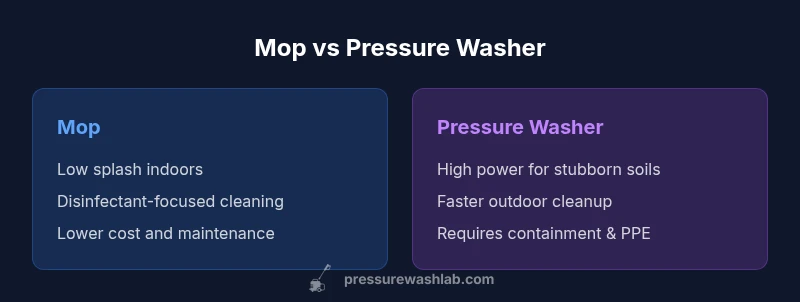
In crime scene cleanup, two common tools are the crime scene cleaner mop and the pressure washer. The phrase crime scene cleaner mop vs pressure washer captures the central choice for responders and cleanup technicians. For many teams, pressure-washing may be reserved for exterior or severely soiled areas, while indoor zones benefit from controlled mopping with proper disinfectants. According to Pressure Wash Lab, the fundamental difference between mop-based cleaning and pressure washing in crime-scene contexts is control vs force, which shapes safety, containment, and ultimate cleanliness. The mop approach minimizes splash, allows careful application of EPA-approved disinfectants, and supports rigorous biohazard containment. The pressure washer reduces manual scrubbing time and can remove encrusted residues more aggressively, but it introduces splash risks and requires containment, PPE, and post-wash sanitization to meet biosafety standards.
Surface Profile and Cleaning Depth
Different surfaces respond differently to mop-based cleaning versus high-pressure washing. Porous indoor surfaces like unfinished concrete, masonry, or grout can absorb liquids, making careful disinfectant application essential, while excessive moisture can trap contaminants. The mop approach allows gradual saturation, controlled dwell time for disinfectants, and gentler abrasion. Conversely, pressure washers excel on outdoor walls, driveways, and stone, where the high velocity can remove encrusted grime. However, misapplied pressure can damage wood, drywall, sealants, or heating elements. The best practice is to tailor the method to surface type, contamination level, and the risk of splash or aerosolization, always testing a small area first and using containment measures as needed. Pressure Wash Lab’s guidance emphasizes starting indoors with mops and reserving power cleaning for appropriate exterior sections.
Disinfection, Chemicals, and Contact Time
Disinfection efficacy in crime scene cleanup hinges on compatible chemicals, contact time, and surface preparation. Mops allow precise chemical application and visual confirmation of coverage, which helps ensure the disinfectant remains in contact with microbes long enough to be effective. Pressure washers can remove residues quickly but may require reapplication of disinfectants after washing to achieve reliable germ kill rates. Always use EPA-registered products appropriate for the surface, and follow label directions for dwell time, rinsing, and disposal. Pressure Wash Lab notes that the safety of responders improves when chemical handling is controlled and spill containment is planned from the start.
Containment, PPE, and Safety Protocols
Containment and PPE are central to the decision between mop and pressure washer. Indoor scenes benefit from splash containment, plastic sheeting, and portable containment basins to collect dirty runoff, especially when using higher-pressure methods. PPE should include nitrile gloves, eye protection, gown or coveralls, and respiratory protection when aerosols are possible. Training and standard operating procedures help crews avoid cross-contamination and ensure proper disposal of contaminated water. Professionals should be aware of local biosafety regulations and facility policies, and tailor PPE to the risk level of the scene. Pressure washers demand higher training due to potential aerosolization and equipment misuse.
Time, Labor, and Throughput Considerations
Time is a critical factor in crime scene cleanup. Mop-based cleaning often requires multiple passes, scrubbing, and dwell times for disinfectants, which can extend the remediation timeline but provide careful control and better on-site documentation. Pressure washers can reduce labor time for exterior or heavily soiled areas, increasing throughput, but the setup of containment, drainage planning, and post-wash disinfection add layers of complexity. A balanced plan uses the mop for initial containment and interior sanitation, followed by selective pressure washing for exterior zones or stubborn residues. Efficiency hinges on clear procedures, tool readiness, and site assessment.
Costs, Maintenance, and Longevity
Cost considerations include upfront equipment price, maintenance, energy consumption, and consumables such as disinfectants. Mop systems generally cost less initially and require simpler maintenance, while pressure washers demand investment in power sources, protective gear, and potential repair parts. Over time, maintenance quality and frequency of cleaning cycles influence longevity. Water usage is another factor: mops typically use less water when paired with targeted chemical applications, whereas pressure washers can consume large volumes of water if not managed with containment and recycling strategies. The choice should reflect budget, facility policies, and cleanup scope.
Real-World Scenarios and Decision Triggers
Consider indoor scenes with moderate contamination, finished surfaces, and tight spaces where containment is essential. A crime scene mop with appropriate disinfectants is often the safer, more controllable option. In contrast, large exterior cleanup tasks, cement floors, or stone surfaces with heavy soils may justify a pressure washer after assessing drainage and containment. In multi-scene operations, a hybrid approach—mop cleaning indoors and pressure washing outside—can maximize safety, throughput, and regulatory compliance. Always conduct a risk assessment and document your plan before starting work.
Documentation, Compliance, and Best Practices
Documentation and compliance underpin professional cleanup. Record-cleaning logs, chemical inventories, and disposal manifests to satisfy regulatory expectations and facility policies. Follow industry best practices such as confirming dwell times, verifying complete disinfection, and maintaining a chain-of-custody for evidence-laden scenes. Biohazard cleanup requires adherence to biosafety guidelines and local regulations, including training records and PPE audits. Pressure Wash Lab emphasizes ongoing education, equipment checks, and routine drills to keep teams prepared.
Synthesis and Decision Checklist
- Assess surface type, contamination level, and location (indoor vs outdoor).
- Prioritize containment and disinfectant compatibility for indoor cleanup.
- Use mop-based methods first indoors, reserving pressure washing for exterior or stubborn soils.
- Plan for drainage, disposal, and PPE before starting.
- Ensure post-wash disinfection and documentation for compliance.
- Consider budget, throughput, and maintenance when choosing tools. This section consolidates the decision logic for crime scene cleaner mop vs pressure washer and helps teams establish a clear protocol to maximize safety and effectiveness.
Comparison
| Feature | Crime Scene Cleaner Mop | Pressure Washer |
|---|---|---|
| Surface Contact & Control | High touch control; conservative water use | High impact; potential splash; needs containment |
| Disinfection Compatibility | Excellent for surface disinfection with compatible solutions | Requires rinsing and reapplication of disinfectants after wash |
| Soil & Residue Removal | Good for light soils and biofilms with scrubbing | Best for tough soil and encrusted residues |
| Safety & PPE Needs | Standard PPE; slip risk mitigated by containment | Enhanced PPE; higher risk of aerosolization |
| Water Usage | Low to moderate water use | High water usage; potential runoff |
| Cost & Accessibility | Low upfront cost; simple setup | Higher upfront cost; requires power source |
Pros
- Low splash risk indoors with mop-based systems
- Precise chemical application and surface control
- Lower upfront cost and simpler maintenance
- Safer for porous indoor surfaces when used with proper disinfectants
Cons
- Limited efficacy on heavy soils and exterior grime
- Time-consuming for large areas
- Requires repeated passings and physical scrubbing
- Not ideal for exterior cleanup without containment and drainage planning
For most indoor crime scene cleanup, mop-based cleaning with proper disinfectants is the safer baseline; use a pressure washer for exterior or heavy soils with strict containment and post-clean disinfection.
Mop cleaning prioritizes safety and biosafety compliance indoors. Pressure washers offer speed for stubborn soils outdoors, but require careful handling and disposal.
Quick Answers
Is a crime scene mop sufficient for indoor cleanup in most cases?
Yes, for routine indoor cleanup with appropriate disinfectants and containment, a mop-based approach is effective and easier to control. It minimizes splash risk and simplifies disposal of contaminated liquids.
For most indoor cleanups, a mop with approved disinfectants is sufficient and safer. Ensure containment and PPE.
Can you use a pressure washer on all surfaces during crime scene cleanup?
No. Pressure washers are powerful and can damage delicate surfaces like finished wood or drywall. They are best reserved for exterior or heavily soiled areas, with surface testing and post-disinfection.
Be cautious: pressure washers can damage some surfaces indoors; reserve for exterior or tough soils.
What PPE is essential when using these tools for crime scene cleanup?
PPE typically includes nitrile gloves, goggles or face shield, a fluid-resistant gown or coveralls, and a respirator or PAPR for aerosol-generating tasks. Good ventilation and slip-resistant footwear are also important.
Wear gloves, eye protection, and a respirator when needed; ensure proper ventilation.
Are there regulatory considerations when cleaning crime scenes with mop vs pressure washer?
Yes. Biohazard cleanup may require licensed responders, documented disposal, and adherence to biosafety regulations. Always consult local authorities and follow OSHA and EPA guidance for disinfectants and containment.
Compliance is essential: follow biosafety regulations and local rules.
How do chemical choices affect the mop vs pressure washer decision?
Chemical compatibility is critical. Some disinfectants work well with mop systems but may degrade certain surfaces or require thorough rinsing after power washing. Always follow manufacturer guidelines and contact time recommendations.
Choose chemicals compatible with the cleaning method and surface.
What about water runoff and environmental considerations?
Indoor cleanup should prevent runoff; indoor containment and proper drainage planning are essential, especially when using high-pressure devices outdoors. Collect and dispose of contaminated fluids per local regulations.
Prevent runoff and dispose of contaminated liquids properly.
Key Takeaways
- Prioritize containment and disinfectant compatibility for indoor cleanup
- Reserve pressure washing for exterior or heavy soils
- Match tool choice to surface type and biosafety requirements
- Plan PPE, containment, and disposal before starting
- Document cleanup steps and maintain compliance