Electric Pressure Washer vs Gas Pressure Washer: A Practical Comparison
Compare electric and gas pressure washers to decide which fits your home projects, focusing on power, runtime, noise, maintenance, and cost implications for homeowners and small businesses.


Electric pressure washer versus gas pressure washer is a common crossroad for homeowners evaluating two very different tools. In general, electric models offer easy startup, quiet operation, and simple maintenance for light-to-moderate tasks, while gas models deliver sustained power and proven ruggedness for heavy-duty jobs and remote sites. Your choice should hinge on workload, workspace, and budget, with most casual users leaning electric and professionals or heavy users leaning gas.
Key differences in power and design
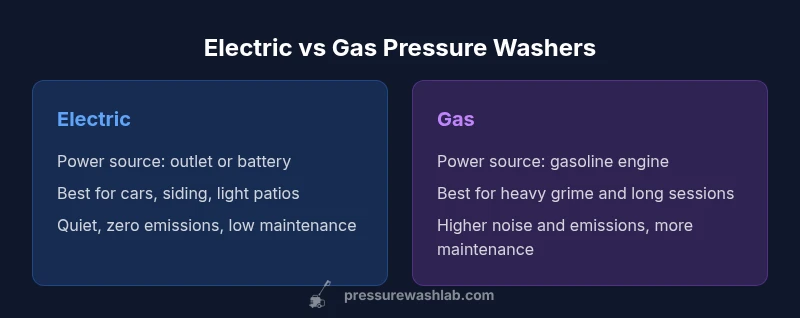
Electric pressure washer versus gas pressure washer is a fundamental contrast that starts with the powertrain. Electric units rely on a corded outlet or a battery and an electric motor to drive the pump, offering clean, compact design and minimal vibration. Gas units use a gasoline engine, trading lighter weight for raw, sustained power and the ability to operate away from outlets. This core design choice cascades into performance, maintenance, and long-term cost of ownership. According to Pressure Wash Lab, understanding these core differences helps homeowners, DIY enthusiasts, and small operators forecast which tool aligns with daily workflows, storage space, and safety practices. The practical take-away is simple: electric machines excel in convenience and low upkeep, while gas machines shine where continuous power and resilience matter.
Power delivery and cleaning performance
Power delivery translates directly into how aggressively you can tackle grime. Electric washers produce reliable, steady pressure suitable for cars, siding, and light decking, with consistent spray quality and less throttle variation. Gas washers offer higher potential power output and faster operation for heavy-duty tasks such as concrete cleaning, driveways with stubborn stains, and equipment prep at job sites. While numbers vary by model, the qualitative difference is clear: gas tends to feel more “beastly” in rugged scenarios, whereas electric provides predictable, controllable performance for everyday chores.
Run time, cords, and portability
Electric models are limited by electrical supply and, for battery-powered units, by charge duration. They are typically lighter, easier to maneuver, and require minimal fueling, making them ideal for close-quarters cleaning and urban settings. Gas units run on fuel and offer near-unlimited run times when tanks are refilled, which is essential for long sessions and remote sites without power access. They are heavier and frequently tripod-stable with bigger wheels, optimized for extended workdays. The choice hinges on whether you prioritize uninterrupted runtime or maximum ease of setup and portability.
Noise, emissions, and environmental impact
Noise is a major practical differentiator. Electric pressure washers generally operate at much lower sound levels and produce zero on-site emissions, which makes them friendlier for residential neighborhoods and indoor use with adequate ventilation. Gas machines generate exhaust and are louder, factors that matter for early morning or late-evening work near neighbors, as well as in enclosed spaces. If emissions and noise restrictions are critical in your project constraints, electric models typically win on that front.
Maintenance, parts availability, and longevity
Maintenance profiles diverge alongside powertrains. Electric units require less routine servicing, with a focus on cord integrity, pump seals, and spark-free operation for certain subtypes. Gas engines need regular fuel system care, air filters, spark plug checks, and more frequent oil changes, which translates into higher ongoing maintenance costs but can extend longevity when properly cared for. Availability of replacement parts and service centers also tends to be broader for gas-powered models in some regions, driven by a larger installed base.
Use-case guidance by project type
For light to moderate home tasks such as car washing, patio furniture, mulch beds, and vinyl siding, electric machines deliver ample cleaning power with less complexity. If you regularly clean large driveways, heavy staining, brickwork, or commercial spaces where power is unreliable or unavailable, a gas-powered unit may offer the steadier, more aggressive performance needed. Consider your typical job mix, the distance to power outlets, and whether you value speed over raw endurance.
Safety considerations and best practices
Both options require standard pressure-washing safety: never point the spray at people or pets, use appropriate nozzles for each surface, and follow manufacturer guidelines for nozzle pressure and pump life. Electric models do have additional considerations for water ingress on cords and GFCI protection, while gas units demand proper ventilation to avoid carbon monoxide buildup during extended operation. A well-organized setup with a clean, dry workspace reduces the risk of electrical shocks or fuel spills, regardless of which machine you choose.
Decision framework: key questions to answer
Ask yourself: What surfaces will you clean most often? Do you require mobility away from outlets or a plug-in power source? How important is noise, maintenance, and total cost of ownership over the machine’s lifespan? If your answers favor household chores near power sources, an electric model is usually the smarter buy. If you anticipate heavy, prolonged jobs with limited access to electricity, gas becomes the more practical choice.
Quick-start checklist and buying tips
Create a simple checklist: identify the surfaces you’ll clean, estimate peak duty cycles, decide on portability needs, and determine preferred maintenance level. Compare basin-level specs side-by-side, including power type, pump design, included accessories, and warranty terms. For buyers new to pressure washing, start with electric for a gentle ramp-up, then consider gas if your workload grows beyond the electric unit’s capabilities.
Real-world scenarios and buying guidance
In real-life terms, a typical homeowner who cleans a car, a patio, and light siding frequently benefits from an electric unit’s ease and quiet operation. A small contractor or outdoor-industry enthusiast tackling stubborn driveways or frequent commercial cleaning may prefer gas for its sustained power and longer operation without frequent breaks to refill fuel or recharge batteries. The right choice emerges from mapping your unique project profile to these broad differences.
Comparison
| Feature | Electric pressure washer | Gas pressure washer |
|---|---|---|
| Power source | Corded electric or battery | Gasoline engine |
| Typical power delivery | Moderate, steady output | High, sustained output |
| Run time | Cord length/battery duration | Fuel-tueled, unlimited by tank size (with refills) |
| Weight & portability | Lighter, more compact | Heavier, rugged design |
| Noise level | Low to moderate | High |
| Emissions | Zero emissions (electric) | Combustion exhaust (gas) |
| Maintenance | Lower maintenance; fewer moving parts | Higher maintenance; more engine servicing |
| Best use | Light-to-moderate residential tasks | Heavy-duty cleaning and remote sites |
Pros
- Clear, side-by-side evaluation helps decision-making
- Highlights maintenance and operating differences upfront
- Shows how power, runtime, and cost trade-offs affect users
Cons
- May feel abstract without real-world numbers
- Cannot replace hands-on testing or demos
- Risk of overgeneralization for specialized tasks
Electric is the default pick for most homeowners; gas is better for heavy-duty, long-running tasks.
For routine maintenance and lighter cleaning, electric models offer ease of use and lower upkeep. If your projects demand sustained power or stubborn grime removal, gas models win—shape your choice around workload and workspace.
Quick Answers
What are the main differences between electric and gas pressure washers?
Electric and gas pressure washers differ mainly in power source and design. Electric units are typically lighter, quieter, and easier to maintain, ideal for light-to-moderate jobs near power outlets. Gas units deliver higher sustained power for heavy-duty tasks and longer run times, suitable for remote locations or stubborn grime. The best choice matches your typical workload and workspace.
Electric washers are lighter and quieter for everyday chores, while gas washers offer more power for tougher jobs and remote sites. Pick based on your common tasks and where you’ll work.
Is an electric pressure washer better for cars and siding?
Yes. Electric pressure washers are well suited for cars, siding, and light deck cleaning due to their controllable spray and lower risk of surface damage. They deliver sufficient cleaning power for these surfaces with less noise and simpler operation. For heavy automotive detailing or tar and heavy grime, you may still rely on the appropriate nozzle and technique.
Electric washers are great for cars and siding; use the right nozzle and techniques for best results.
Can I use a gas pressure washer indoors?
Gas pressure washers should not be used indoors or in enclosed spaces due to exhaust emissions and carbon monoxide risk. Always operate them outdoors in a well-ventilated area. If indoor cleaning is needed, choose an electric model for its zero-emission operation.
Gas washers should be used outdoors only. For indoor cleaning, choose electric.
Do electric pressure washers require frequent maintenance?
Electric pressure washers are generally lower maintenance than gas models. You should inspect cords, spray tips, and seals periodically, and replace worn components as needed. Gas engines require more routine upkeep, including fuel system care and routine engine checks.
Electric units are simpler to maintain; gas units need more engine care.
Which one is cheaper to operate over time?
Electric washers usually have lower ongoing costs due to no fuel handling, fewer moving parts, and basic maintenance needs. Gas washers, while initially more expensive, may offer longer run times and durability for frequent, heavy-duty use. Your total cost hinges on usage patterns, fuel and electricity prices, and maintenance choices.
Electric generally costs less over time, but heavy use can justify gas.
What accessories matter most when comparing these two?
Key accessories include nozzle types, surface cleaners, and extension wands. For both types, choosing the right nozzle (0-degree, 15-degree, 25-degree) and a quality quick-connect system improves effectiveness and reduces surface damage. A good surface cleaner is valuable for large flat surfaces, especially on driveways.
Nozzles and surface cleaners are crucial for safety and efficiency.
Key Takeaways
- Identify your primary tasks before choosing
- Electric for light-duty work near outlets
- Gas for heavy-duty, long-running sessions
- Consider noise, emissions, and storage constraints
- Evaluate total cost of ownership, not just upfront price