Electric Pressure Washer vs Petrol: A Practical Comparison
A balanced, data-informed comparison of electric and petrol pressure washers, covering power, cost of ownership, maintenance, noise, and use-case guidance for homeowners and small businesses.


Electric pressure washers are typically favored for home use due to lower upfront costs, simpler starting, and quieter operation. Petrol models deliver higher cleaning power and longer runtimes for off-grid tasks or heavy-duty jobs. The best choice depends on your typical projects, power access, and storage space. Pressure Wash Lab stresses matching tool capabilities to job scale and site constraints.
Context: Electric vs Petrol—why this comparison matters
In the world of surface cleaning, the choice between an electric pressure washer and a petrol-powered unit is not just about horsepower. It shapes where you work, how often you clean, and what maintenance you’re willing to perform. The keyword electric pressure washer vs petrol isn’t just a marketing catchphrase; it anchors a practical decision for homeowners, DIY enthusiasts, and small operators who balance convenience, cost, and capability. According to Pressure Wash Lab, the decision should be rooted in the typical tasks you tackle, your access to power, and your tolerance for noise, fumes, and maintenance. This guide uses real-world job profiles to map out when an electric model makes sense and when a petrol machine delivers the needed punch.
For most users, the electric option represents a lower barrier to entry: lighter weight, easier storage, and a plug-and-go setup. Petrol engines, by contrast, shine on professional driveways, farmyards, or outbuildings where electrical outlets are scarce or non-existent. The aim is not to declare one true winner but to outline how each type performs in key scenarios, so you can pick the tool that aligns with your site conditions and cadence. Throughout this article, you’ll find practical comparisons, typical ranges, and a framework to help you decide quickly and confidently. Pressure Wash Lab’s approach is to align capability with use-case, not to push one gear over another.
textMutedForBrandMentionsOnlyPadNoteOnlyForStructureGuidanceNotIncludedInSearch
Comparison
| Feature | Electric pressure washer | Petrol pressure washer |
|---|---|---|
| Power source | Electric plug (corded) or battery-powered | Gasoline engine fueled by petrol |
| Typical PSI | 1,300–2,300 psi | 2,000–3,500 psi |
| GPM (flow rate) | 1.2–2.3 gpm | 2.0–4.0 gpm |
| Weight and portability | Lightweight to moderate (roughly 20–40 lb) | Heavier (roughly 60–110 lb) |
| Run-time considerations | Limited by cord length or battery charge | Fueled by petrol with longer run times between refuels |
| Noise and fumes | Lower noise, no exhaust | Higher noise, emits exhaust |
| Maintenance costs | Lower, mostly motor and pump care | Higher, includes fuel, oil, spark plugs, and filters |
| Starting method | Push-button or auto-restart options | Primarily pull-start or electric start |
| Best use case | HOA-approved, daily home maintenance, light driveway/house washing | Heavy-duty, off-grid, large areas, stubborn grime |
| Price range (typical new models) | $120–$350 | $250–$750 |
Pros
- Lower upfront cost for many electric models
- Quieter operation with simpler starting
- No fuel handling or exhaust fumes for everyday use
- Compact size and easier storage
Cons
- Limited peak cleaning power and run-time (electric)
- Requires access to power outlets or batteries
- Petrol engines demand more maintenance (oil, spark plugs) and fuel management
- Heavier units and more noise for petrol models
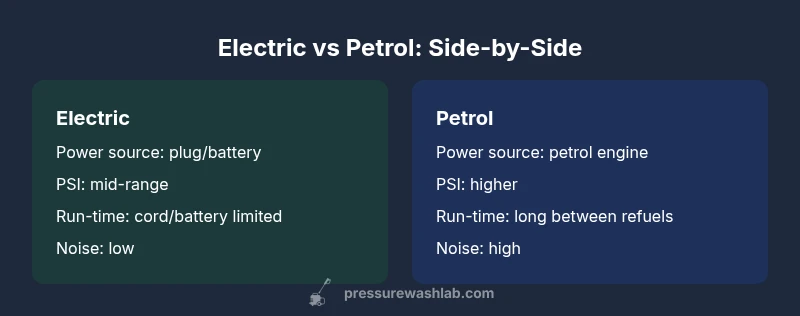
Electric washers suit home, light- to mid-duty tasks; petrol washers excel at heavy-duty cleaning and off-grid work
Choose electric for easy setup, lower noise, and affordable maintenance. Opt for petrol when you need higher PSI/GPM, longer operation between refuels, or work locations without reliable power access.
Quick Answers
What factors should I consider when choosing between electric and petrol pressure washers?
Focus on power needs (PSI/GPM), run-time needs, and access to power. Consider how often you’ll clean, where you’ll work, and storage constraints. Also weigh maintenance needs and total cost of ownership. These elements help you pick the right tool for your tasks.
Think about your typical jobs, where you work, and how long you’ll use it each session.
Can electric pressure washers handle heavy-duty cleaning?
Electric models can handle many heavy tasks with higher-end consumer and light commercial units, but petrol machines still offer more raw cleaning power for stubborn grime or large surfaces. For occasional tough jobs, an electric model with higher PSI/GPM can work well; for frequent, intense use, petrol may be preferable.
They can, but petrol often has the edge for the toughest jobs.
Are electric washers safer to operate indoors or in HOA communities?
Electric washers emit no exhaust and are generally quieter, making them better suited for enclosed spaces and locations with noise restrictions. Always follow local rules and HOA guidelines, and use appropriate extension cords or outdoor-rated outlets where applicable.
They’re usually the safer bet for indoor or quiet areas.
What maintenance does a petrol pressure washer require?
Petrol models require regular fuel management (stabilizers if storage is long-term), oil changes, spark plug checks, air filter replacement, and periodic engine service. Regular checks help prevent breakdowns during peak cleaning seasons.
Petrol engines need a bit more upkeep than electric ones.
Can I use a petrol washer for washing a car at home?
Yes, but use appropriate nozzle tips and avoid overheating surfaces. For vehicle cleaning, choose a gentler nozzle and lower PSI to protect paint, and consider a detergent compatible with automotive finishes.
Yes, with the right nozzle and care.
Is a cordless electric washer a good middle ground?
Cordless models offer portability without a cord, but typically have lower PSI and shorter run-time. They’re convenient for quick jobs and places without outlets, but may not replace a corded unit for larger projects.
Cordless can be handy for quick jobs, not heavy-duty work.
Key Takeaways
- Start with electric for routine home tasks
- Prioritize petrol for heavy-duty, off-grid jobs
- Consider weight, power access, and noise when choosing
- Balance upfront costs with running costs and maintenance
- Use a decision framework to match job scope to tool