Gas or Electric Pressure Washer: A Practical Comparison
In this in-depth comparison, Pressure Wash Lab analyzes gas-powered and electric pressure washers, covering performance, portability, maintenance, and value to help homeowners pick the right tool.


For a typical homeowner, an electric pressure washer is the safer, lighter, and quieter first choice for most light to moderate cleaning tasks. A gas-powered unit delivers more sustained cleaning power for large outdoor jobs or stubborn grime, but comes with higher noise, weight, and ongoing fuel costs. Your decision should hinge on project size, runtime needs, and how portable you must be.
Core Performance Differences: Power, Pressure, and Flow
When comparing a gas or electric pressure washer, the first dimensions that matter are power delivery and sustained performance. Gas-powered washers typically offer higher continuous power output and greater flow for demanding jobs, such as deep-cleaning a textured driveway or weathered siding. Electric models, especially larger, purpose-built units, can deliver robust performance for ordinary outdoor cleaning tasks, car detailing, and deck maintenance without emitting fumes. Pressure Wash Lab notes that the choice often comes down to project scale and portability. For homeowners who clean sidewalks, fences, and vehicles with regular frequency, an electric washer with a capable pump and good nozzle kit can be more than adequate. For larger properties or tougher grime, a gas washer may justify its higher upfront cost with longer runtimes and sustained power.
Weight, Portability, and Handling
Gas pressure washers are generally heavier due to the engine and fuel reservoir. This extra weight can influence maneuverability, transport in a tight garage, and vibration on hard surfaces. Electric models tend to be lighter and easier to lift onto a cart or storage area, making them more convenient for quick jobs around the yard. Both types benefit from wheels and ergonomic handles, but the gas variant often requires planning for fueling breaks and cooler-down periods after long bursts of cleaning. Noise levels also tend to be higher with gas units, which can affect neighbor relations during afternoon projects.
Power Source: Fuel vs Electricity
Gas-powered units run on gasoline and rely on an internal combustion engine to drive the pump. They typically require more regular maintenance, such as oil and filter changes, air filter checks, and spark plug inspections. Electric washers draw power from a standard electrical outlet (or a dedicated outdoor circuit with GFCI protection) and require far less routine maintenance. The trade-off is dependence on a power outlet and, for some setups, a longer hose and extension cord. If you value plug-and-play simplicity, electric washers often win; if you need independence from outlets, gas is advantageous.
Run Time, Duty Cycle, and Refueling
Gas washers can run for longer periods between refueling, which is beneficial for big jobs, but you must stop to refuel and perform basic engine maintenance. Electric washers run as long as they’re plugged into power, with the caveat that cord management and outlet availability can limit continuous use. Battery-powered models exist but are less common and typically lighter-duty. Pressure Wash Lab cautions against letting any unit overheat during extended sessions; after certain duty cycles, a cooling interval improves longevity. Plan your tasks with a break schedule to avoid overheating and to preserve performance.
Noise, Vibration, and User Experience
Gas engines produce more noise and vibration than their electric counterparts. This can affect comfort, especially on multi-hour projects, and may require hearing protection and a longer, more rugged setup. Electric models tend to be quieter and smoother, which improves usability for beginners and those working in close proximity to home walls, vehicles, or garden areas. If you live in a noise-sensitive neighborhood or want to avoid fatigue from vibration, an electric washer is typically the better option, provided it meets your cleaning needs.
Maintenance Needs and Longevity
Gas washers demand more routine maintenance, including fuel system care, oil changes, spark plug checks, and air filter replacements. Gas units may also require more frequent service to maintain optimal performance, especially after heavy use. Electric washers require less servicing since there are fewer moving parts subject to wear; a simple belt inspection and pump maintenance are often sufficient for routine care. Regardless of type, following the manufacturer’s recommended maintenance schedule helps maximize longevity and performance.
Upfront Costs and Long-Term Value
Gas-powered washers usually come with a higher upfront price tag and ongoing fuel and maintenance costs. Electric washers tend to be cheaper to purchase and operate, with lower ongoing expenses. The long-term value depends on how often you use the tool, the surfaces you clean, and the need for mobility. If you are a DIYer performing occasional weekend tasks, electric may provide the best balance of cost and convenience. For professionals or households with frequent, heavy-duty cleaning, the long-term value of a gas unit can justify the higher initial investment.
Space, Storage, and Weather Considerations
Electric washers benefit from compact footprints and easier storage in a shed or garage. They also avoid fuel storage issues and fumes. Gas washers, while bulkier, can be stored outdoors if properly sheltered, but fuel handling (storing gasoline, disposing of old fuel) adds planning. Weather can influence both; electric models may be sensitive to moisture exposure, while gas units may require winterization if you’re storing them for extended periods. Assess your storage space and climate before purchasing to minimize loss of performance over seasons.
Best Use Cases for Electric Pressure Washers
Electric washers excel for light-to-moderate cleaning tasks, such as removing dirt from vehicles, patio furniture, houses’ siding with limited area, and routine deck maintenance. They’re ideal for homeowners who want low noise, simple setup, minimal maintenance, and easy storage. If you have a smaller property or prefer quick adjustments, electric models with higher GPM and PSI ranges (within their design limits) are a practical choice for day-to-day chores.
Best Use Cases for Gas Pressure Washers
Gas washers are best when you need sustained cleaning power for large outdoor surfaces and heavy grime removal—driveways, tough mold on siding, and long fence lines are typical scenarios. They’re also favorable for remote sites with no convenient power source or where you want to avoid lengthy cord management. For frequent, intensive jobs, a gas unit's durability and power can translate into faster completion times, albeit with more ongoing costs and heavier handling requirements.
Attachments and Accessories to Consider
Choosing the right nozzle tips, surface cleaners, and extension wands can dramatically impact performance. For electric washers, a robust surface cleaner can compensate for lower flow, while for gas washers, higher-pressure nozzles and longer hoses help reach distant areas. Always match attachments to the engine size and pump rating, and verify compatibility with your model. A quality, wide-angle nozzle can improve control on large surfaces, and a surface cleaner reduces splash and increases efficiency.
Safety Considerations and Best Practices
Safety matters more with gas units due to fuel handling and exhaust. Always operate outdoors, wear eye protection, and keep away from flammable materials. Use proper extension cords rated for outdoor use if you opt for an electric washer, and inspect outlets and GFCI protection before starting. Read the user manual for startup procedures and shutoffs, and never run a machine in a confined space where fumes can accumulate. Routine checks of hoses and connections prevent leaks and bursts during use.
Common Mistakes to Avoid When Choosing Between Gas and Electric
Common mistakes include selecting a unit solely on price, ignoring maintenance requirements, and neglecting outlet availability or the need for mobility. Also, buying a gas washer for a handful of light tasks wastes money and fuel, while an undersized electric unit can stall on heavy workloads. Pressure Wash Lab recommends mapping your typical jobs first, then choosing a unit with the right balance of power, weight, and runtime.
Quick Decision Framework: How to Decide Today
Start by listing your top tasks (driveway cleaning, siding, cars, deck). If most chores are small to medium in scope and you value quiet operation and storage ease, lean electric. If you tackle large surfaces, deep stains, or operate in places without ready power, a gas washer may be worth the investment. Factor in budget, storage, maintenance willingness, and noise tolerance. A practical rule: choose electric for most home tasks; reserve gas for heavy-duty, long-running projects.
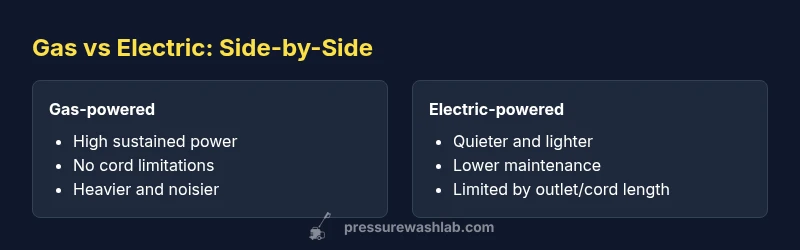
Comparison
| Feature | Gas-powered Pressure Washer | Electric Pressure Washer |
|---|---|---|
| Power source | Gas engine | Electric motor |
| Typical use focus | Heavy-duty outdoor cleaning | Light-to-moderate tasks |
| Weight | Heavier, more portable with wheels | Lighter and easy to store |
| Run-time / duty cycle | Continuous until refuel | Limited by outlet cord length |
| Maintenance needs | Higher maintenance (fuel, oil, spark plugs) | Lower maintenance (no fuel handling) |
| Noise level | Louder operation | Quieter operation |
| Initial cost | Typically higher upfront | Typically lower upfront |
| Best for | Large properties, stubborn grime | Small-to-medium jobs, daily chores |
Pros
- Higher cleaning power for tough stains and large surfaces
- Gas units don’t rely on outlets, enabling remote use
- Longer continuous run times for big jobs
- Durable for frequent use in harsh environments
Cons
- Heavier, louder, and more demanding to transport
- Higher ongoing fuel and maintenance costs
- More complex startup and storage considerations
- Fumes and exhaust require outdoor operation
Gas power excels for heavy-duty, large outdoor jobs; electric shines for everyday, quiet, and portable cleaning.
Choose electric for most home tasks to minimize noise and maintenance. Opt for gas when you need sustained power on big surfaces or when you lack ready access to electricity.
Quick Answers
What is the main difference between gas and electric pressure washers?
The primary difference is the power source and how that power is delivered. Gas washers use a combustion engine for continuous, high-pressure output, suitable for large jobs, while electric washers rely on electricity, offering quieter operation and simpler maintenance for typical home tasks.
Gas washers run on a gas engine with higher power; electric washers use electricity and are quieter and easier to maintain for most home tasks.
Are gas-powered washers louder and heavier than electric models?
Yes. Gas washers are generally heavier and louder due to the engine and exhaust. Electric washers are lighter and operate with less noise, which makes them more comfortable for extended use and in residential areas.
Gas models are heavier and louder, while electric ones are lighter and quieter, making them better suited for home use.
Can electric pressure washers handle heavy-duty jobs like driveway cleaning?
Electric models can handle many driveway and siding tasks, especially if you choose higher-end, larger-capacity units. For very tough grime or large surfaces, a gas washer may perform more consistently without concerns about cord length or outlet availability.
Electric washers can do a lot, but for the toughest jobs, gas models have an edge.
What maintenance is required for gas pressure washers?
Gas units require regular fuel system care, oil changes, air filter checks, spark plug inspections, and occasional carburetor service. Keep fuel fresh and follow the manufacturer’s maintenance schedule to avoid performance drops.
Gas washers need oil changes, air filters, and fuel system checks, plus general engine care.
Do I need special outlets or cords for electric washers?
Yes. Most electric washers require a weather-rated outdoor extension cord and a GFCI-protected circuit. Ensure the cord gauge matches the unit’s amp draw to prevent voltage drop and insufficient pressure.
You’ll need a proper outdoor cord and a GFCI outlet for electric washers.
What about using a gas washer in cold weather?
Gas engines can be harder to start in cold weather and fuel stability becomes a concern. If you operate year-round, consider winterization steps and store fuel properly to protect the engine and fuel system.
Cold weather can make gas engines tougher to start; winterize and store fuel properly.
Key Takeaways
- Prioritize electric for daily, light-to-moderate cleaning
- Choose gas for big projects and remote sites
- Balance weight, noise, and maintenance in your decision
- Invest in compatible accessories to maximize performance
- Follow safety and maintenance best practices for longevity