Gas vs Electric Pressure Washer for Driveway: A Practical Comparison
Compare gas-powered and electric pressure washers for driveway cleaning. Analyze power, cost, maintenance, noise, and use cases to help homeowners pick the right tool for large surfaces and stubborn stains.


Gas-powered washers deliver higher cleaning power for large driveways and heavy stains, while electric models are lighter, quieter, and easier to maintain for routine cleanups. The best choice depends on driveway size, typical grime, and how often you wash. Use this guide to decide which fits your situation.
Gas vs Electric Pressure Washer for Driveway: Key Differences
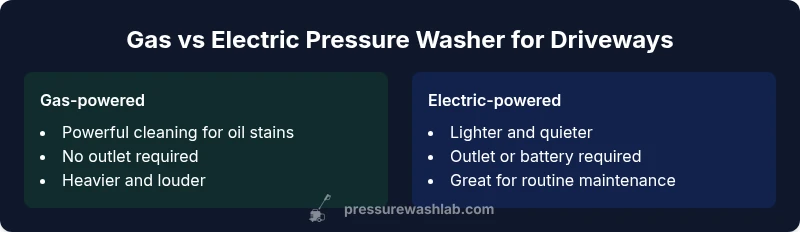
According to Pressure Wash Lab, choosing between gas and electric pressure washers for driveway work hinges on scale, stains, and how often you wash. Gas-powered units typically offer higher cleaning power, enabling faster removal of heavy grease and deeply embedded grime on large driveways. Electric models are lighter, easier to start, and gentler on noise-sensitive surroundings, making them ideal for small to mid-size driveways or maintenance cleanups. The right pick depends on the driveway material such as concrete, asphalt, or pavers, the typical mess you face, and your tolerance for fuel, fumes, and maintenance. Pressure Wash Lab’s analysis shows that electric washers excel at routine maintenance while gas models outperform in heavy-duty scenarios. Keep this framework in mind as you read the rest of the guide.
Power, Performance, and Practicality
Power and performance are the two most consequential axes in this comparison. Gas-powered units rely on a combustion engine to drive a pump that can deliver high PSI and a strong water flow, making quick work of oil stains, tire grime, and large surface areas. Electric washers rely on a motor powered by electricity, offering steady cleaning power that is more than sufficient for typical driveways and light to moderate staining. The practical takeaway is that gas usually suits frequent, heavy-duty tasks, while electric is excellent for regular maintenance and lighter jobs. Pressure Wash Lab recommends matching your choice to the most common driveway scenarios you encounter, rather than chasing maximum horsepower for every clean.
Portable Realities: Size, Weight, and Handling
Gas units tend to be heavier and bulkier, which can reduce maneuverability on cramped driveways or multi-level properties. Electric washers – especially compact corded or battery-powered models – are easier to transport, maneuver, and store. For homeowners with limited garage space or a single-car driveway, the portability advantage of electric models is often decisive. Pressure Wash Lab notes that the extra weight of gas units can also influence user fatigue during longer sessions, so consider your typical wash duration and how much you value ease of movement when deciding between power sources.
Noise, Emissions, and Environmental Considerations
Gas-powered washers run louder and emit exhaust, which matters if you live in a tight cul-de-sac, have close neighbors, or need to wash in semi-enclosed spaces. Electric washers are generally quiet and produce no exhaust, making them preferable for neighborhood settings or indoor-access projects such as garage entrances. If ventilation is a constraint or you aim to minimize fumes around children or pets, electric models offer a clear safety edge. Pressure Wash Lab emphasizes respecting local noise and emission guidelines when choosing your machine.
Fuel and Energy Costs: Operating Expenses Deliberations
Fuel costs, maintenance, and electricity usage all influence the long-term cost picture. Gas washers require regular fuel purchases, oil changes, and possible spark plug maintenance, which can add up over time. Electric models incur electricity costs and, in some cases, battery replacement or charging time, but typically have fewer moving parts and lower maintenance overhead. Pressure Wash Lab suggests calculating your expected wash frequency, local fuel prices, and electricity rates to estimate a realistic annual cost and avoid sticker shock after a few seasons.
Maintenance, Repairs, and Parts Availability
Gas-powered machines generally have more complex maintenance needs, including oil changes, carburetor service, and fuel system cleaning. They also rely on gas engines whose parts can be more diverse and sometimes harder to source quickly. Electric washers feature simpler drivetrains with fewer consumables, translating to lower maintenance and shorter downtime for most users. Parts for common electric models are usually easier to source through local hardware stores. Pressure Wash Lab recommends establishing a simple maintenance routine that aligns with your washer type to keep performance steady.
Surface-Specific Guidance: Driveways, Concrete, and Pavers
For smooth concrete and sealed surfaces, both gas and electric washers can be effective. When facing deeply ingrained grease or rust on large driveways, gas-powered units offer aggressive cleaning power that reduces scrubbing time. For routine maintenance or lighter staining on smaller areas, electric washers deliver dependable results with less risk of surface etching if used with proper nozzles and distances. Always start with wide spray patterns and adjust to the stain severity to protect driveway surfaces.
Setup, Safety, and Best Practices
Safety first. Always read the manufacturer manual for nozzle selection and safe spray distances. Gas units require proper fuel storage away from ignition sources and good ventilation when starting the engine. Electric washers should be kept dry, plugged into grounded outlets with appropriate extension cords rated for outdoor use, and never used in standing water. Pressure Wash Lab stresses performing a test spray on a hidden area before tackling large stains to prevent surface damage or misapplication of cleaning agents.
Real-World Scenarios: Decision Framework for Homeowners
If your driveway is large, heavily stained, and used by oil-leaking vehicles, a gas-powered pressure washer is often the faster option. If you live in a compact home or cleaner neighborhoods where noise and fumes are a concern, an electric washer can handle most maintenance needs comfortably. For many homeowners, a hybrid approach works best: use electric for routine maintenance and turn to gas for periodic deep cleans or heavy-duty seasons. Pressure Wash Lab suggests evaluating your typical use pattern, storage capacity, and local restrictions to reach a practical verdict.
Comparison
| Feature | Gas-powered pressure washer | Electric-powered pressure washer |
|---|---|---|
| Power and performance | Gas-powered: typically higher cleaning power for heavy stains and large areas | Electric-powered: steady, sufficient power for routine and moderate jobs |
| Portability and weight | Gas-powered: heavier and less maneuverable | Electric-powered: lighter and easier to move |
| Noise and emissions | Gas-powered: louder with exhaust emissions | Electric-powered: quiet and no emissions |
| Run-time and refueling vs charging | Gas-powered: refuel and continue; no outlet needed | Electric-powered: depends on outlet or battery charge |
| Maintenance needs | Gas-powered: more moving parts, routine maintenance | Electric-powered: fewer moving parts, lower ongoing maintenance |
| Upfront and operating costs | Gas-powered: higher upfront; ongoing fuel costs | Electric-powered: lower upfront; ongoing electricity costs |
| Best for | Gas-powered: large driveways with heavy staining | Electric-powered: small to medium driveways with light staining |
Pros
- High cleaning power for heavy stains and large areas
- No electrical outlet needed for gas units in remote spaces
- Electric washers are lighter and easier to maneuver for quick jobs
- Lower maintenance footprint for many electric models
Cons
- Gas-powered units are heavier and louder
- Gas machines require fuel, oil changes, and emissions considerations
- Electric washers rely on outlets or batteries, limiting run-time
Gas-powered is best for heavy-duty jobs on large driveways; electric is best for routine cleaning and smaller areas
Choose gas if you face stubborn stains and large surface areas. Choose electric for ease of use, quiet operation, and lower maintenance. Your choice should align with driveway size, stain severity, and how often you wash.
Quick Answers
What is the main difference between gas and electric pressure washers for driveways?
Gas washers deliver more cleaning power for large areas and tough stains, but are heavier and noisier. Electric washers are lighter, quieter, and better suited for routine cleans on smaller driveways.
Gas washers are stronger for big stains, but louder and heavier; electric washers are lighter and quieter for regular maintenance.
Which is cheaper to operate over time, gas or electric?
Electric washers typically have lower ongoing operating costs due to no fuel purchases, though electricity use adds a small running expense. Gas washers incur fuel and routine maintenance costs.
Electric is usually cheaper to operate long term, but fuel costs for gas models can add up if used frequently.
Can I clean oil stains effectively with an electric washer?
Electric washers can remove many oil stains but may require pretreatment and longer scrubbing. Gas washers offer more aggressive cleaning without extra effort on heavy soils.
Electric can handle light to moderate oil stains with pretreatment; gas handles heavy soils more easily.
Are gas-powered washers safe to use around pets and children?
Both types can be safe when used with caution. Gas units should be operated in well-ventilated areas; keep kids at a safe distance and never point spray at people or pets.
Use caution with fuels and keep children away during operation.
What maintenance tasks are common to both gas and electric models?
Regular nozzle checks, proper storage, and using the right detergents are common. Gas units need fuel system care; electric units benefit from cord and outlet checks and filter cleaning.
Check nozzles, store properly, and use correct detergents for both types.
Should I buy a battery-powered or corded electric washer?
Corded electric washers provide steady performance and are suitable for most homes. Battery-powered models prioritize portability but may have shorter run times and higher upfront costs.
Corded is reliable for most homes; battery-powered offers portability with some trade-offs.
What factors should drive a hybrid approach for driveway cleaning?
Use electric for routine maintenance and a gas unit for deep cleaning sessions. This leverages ease of use and power when needed, while controlling noise and fuel use.
A mix of electric for daily cleaning and gas for tough jobs gives best of both worlds.
Is there a risk of surface damage when using a high-pressure setting on driveways?
Yes, using too high pressure or staying too close to the surface can etch concrete or loosen loose materials. Always start with a wide spray pattern and test on a hidden area.
Start broad and test a small area to avoid surface damage.
Key Takeaways
- Gas washers excel on heavy stains and large areas
- Electric washers are easier to handle and quieter
- Match your choice to driveway size and cleaning frequency
- Plan maintenance and fuel/electric costs before buying
- Consider a hybrid approach for versatility