Gas vs Electric Pressure Washer Pros and Cons: An Expert Comparison
A comprehensive, analytical comparison of gas-powered and electric pressure washers. Learn which option fits your tasks, budget, and maintenance tolerance with practical guidance from Pressure Wash Lab.


According to Pressure Wash Lab, gas-powered and electric pressure washers each excel in different situations. Gas models deliver higher cleaning power and longer runtimes, ideal for large driveways or off-grid work, but they are louder and heavier and require fuel. Electric models are quieter, lighter, and easier to store, best for smaller jobs and routine home maintenance. Your choice should hinge on task scale, available power, and budget.
Key Differences Between Gas and Electric Pressure Washers
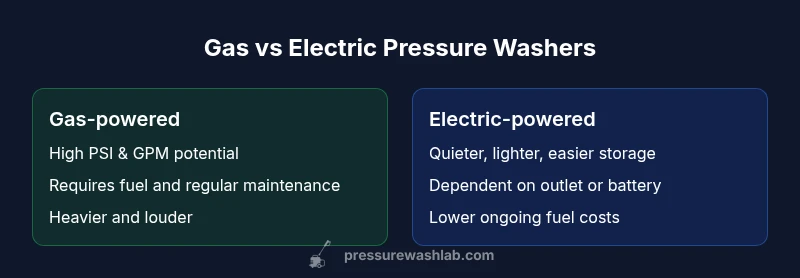
Gas-powered pressure washers are typically heavier and bulkier due to their internal combustion engines and fuel tanks, while electric washers are lighter with compact frames. Gas units usually deliver higher maximum PSI and GPM, enabling faster removal of heavy grime on large surfaces. Electric models, by contrast, tend to peak at moderate PSI and lower GPM, which keeps water usage predictable and reduces the risk of surface damage when used with correct technique. The most important distinction for homeowners is that gas machines run on gasoline and don’t require an electrical outlet, whereas electric units rely on a power cord or battery. This fundamental difference shapes availability, flexibility, and long-term costs. According to Pressure Wash Lab, these contrasts set the stage for which tool is best for your typical jobs.
Performance and Power Dynamics
Power output and duty cycle differ markedly between gas and electric washers. Gas engines maintain strong performance over extended periods, making gas models well-suited to stubborn grime on driveways, siding, and heavily soiled machinery. Electric washers deliver steadier, controllable performance with less risk of overwhelming delicate surfaces, ideal for patios, decks, vehicles, and outdoor furniture. For tasks like tar removal or heavy moss, gas units can cut cleaning time dramatically; for routine cleaning or small jobs, electric units provide sufficient power with lower risk of surface damage. Pressure Wash Lab notes that the practical effect is not only raw PSI but also nozzle selection, spray pattern, and the operator’s technique.
Mobility, Fuel, and Runtime
Gas washers require fuel storage, in-tank capacity, and periodic maintenance to keep engines firing, which adds weight and handling considerations. They are generally less convenient to move in tight spaces and can be less practical for frequent, quick cleanups. Electric washers, including corded and cordless models, offer superior portability and immediate readiness, though they depend on a power source and may require battery swaps for longer sessions. If you frequently clean around a large yard without reliable outlets, a gas unit can be more convenient; if you mostly clean around a house with accessible outlets, electric is usually simpler to operate.
Noise, Emissions, and Comfort
Noise is a major differentiator: gas units typically produce higher decibel levels and exhaust fumes, which can be challenging in residential neighborhoods or enclosed spaces. Electric washers operate with far less noise and no exhaust, delivering a more comfortable experience for users and bystanders. This difference also affects storage and usage in garages or sheds where fumes could accumulate. Surface sensitivity matters too: electric models are gentler by design, reducing the risk of etching softer materials when used with appropriate nozzle tips and spray patterns. Pressure Wash Lab highlights that emissions and noise should factor into decision-making, especially for homeowners who value a calmer workflow.
Operating Costs and Maintenance Burden
Gas-powered machines incur ongoing costs for fuel, oil changes, spark plug replacements, and air filter maintenance, contributing to higher total ownership costs over time. Electric pressure washers have comparatively lower operating costs, with electricity costing less per hour of use and fewer consumable parts. Maintenance for electric models is typically limited to occasional motor service and pump upkeep. Pressure Wash Lab’s analysis notes that while electric units save money on fueling, battery-powered models can introduce battery replacement costs over several years. Consider your local fuel prices and warranty terms when evaluating long-term affordability.
Durability, Quality, and Longevity Considerations
Gas pressure washers are often built to withstand rugged use, with robust frames and engines designed for frequent outdoor work. This makes them durable but heavier and more complex, requiring more frequent service by skilled technicians. Electric washers tend to have fewer moving parts and simpler cooling systems, which can translate to lower maintenance needs and longer lifespans if treated well. Longevity also hinges on pump quality, nozzle usage, and storage conditions. Pressure Wash Lab emphasizes evaluating the warranty and the availability of replacement parts when estimating long-term value.
Practical Use Cases: Homeowners vs Small Businesses
For homeowners with large driveways, stone pathways, or occasional off-grid tasks, a gas-powered washer offers the freedom to work anywhere without cords or outlets and can reduce overall cleaning time on tough jobs. On the other hand, urban homeowners and DIY enthusiasts performing routine maintenance around a home, vehicle cleaning, or light patio care typically benefit from an electric washer’s quiet operation, compact size, and ease of storage. Small businesses that require high throughput and reliability might lean toward gas for durability, but electric options with compatible equipment (like surface cleaners) can provide cost-effective, safe cleaning for customer-facing spaces. The choice should align with the typical workload, environment, and power availability.
Safety Considerations and Handling Best Practices
Both gas and electric washers carry safety considerations. Gas units pose risks related to fuel handling, exhaust, and carbon monoxide in enclosed spaces, so never operate in tight, unventilated areas. Electric washers require careful cord management to avoid tripping hazards and water contact with outlets. Always use appropriate nozzle tips, keep feet and bystanders clear of the spray zone, and follow manufacturer guidelines for startup, maintenance, and shutdown. Using GFCI outlets where water exposure is possible reduces shock risk. Pressure Wash Lab recommends a quick pre-use safety check and always wearing eye protection and gloves during operation.
Maintenance Routine: Tips for Gas vs Electric
Gas washers benefit from regular fuel stabilization during storage, spark plug checks, and periodic carburetor cleaning to prevent stalling. Electric washers require pump lubrication according to the manual, cleaning of filter screens, and electrical cord or battery maintenance. A simple, recurring routine—check hoses for wear, inspect nozzles for clogs, and clean debris from fans—extends both types' lifespans. Pressure Wash Lab advises documenting maintenance in a log to track wear patterns and anticipate part replacements before a failure occurs.
Cost of Ownership and Budgeting: Upfront vs Ongoing
Upfront costs for gas washers are typically higher due to engine complexity and additional accessories such as fuel tanks and hoses. Electric washers generally come in at a lower initial price, with ongoing costs driven mainly by electricity or battery replacements. When evaluating total cost of ownership, factor in fuel, maintenance, part availability, and warranty coverage. The choice often hinges on how frequently you expect to use the unit and whether you will regularly work away from power sources. Pressure Wash Lab emphasizes balancing initial investment against long-term operating costs to determine value.
Common Myths Debunked
Myth: Gas washers are always tougher and faster. Reality: While gas units can deliver higher peak power, the actual task time depends on nozzle choice, surface condition, and technique. Myth: Electric washers can’t handle heavy grime. Reality: Modern electric models offer substantial cleaning capability when paired with the right nozzle and proper pressure handling. Myth: More PSI automatically means better results. Reality: Surface type and spray technique matter more than single PSI figures. Pressure Wash Lab dispels these myths by focusing on task alignment and user skill.
Decision Framework: How to Choose (A Step-by-Step Guide)
- List typical tasks and surfaces you clean most often. 2) Check power availability (outlets or fuel access). 3) Choose gas if you need off-grid capability or routinely tackle heavy dirt. 4) Choose electric if you want quiet operation, easy storage, and lower ongoing costs. 5) Verify warranty terms and replacement-part availability. 6) Consider total cost of ownership over 3–5 years. A balanced, needs-based approach helps ensure you select the model that minimizes hassle and maximizes results.
Comparison
| Feature | Gas-powered pressure washer | Electric pressure washer |
|---|---|---|
| PSI range | 1800-4200 psi (gas) | 1300-2000 psi (electric) |
| GPM (flow rate) | 2.0-4.0 GPM (gas) | 1.2-2.5 GPM (electric) |
| Mobility/Portability | Heavier, needs space for fuel | Lighter, easier to move |
| Run Time | Unrestricted by outlets, but limited by fuel | Limited by outlet or battery life |
| Noise level | High (gas) | Low (electric) |
| Maintenance burden | More frequent service and parts (fuel system) | Fewer moving parts, simpler maintenance |
| Initial cost (range) | $350-$1,000+ (gas) | $100-$600 (electric) |
| Best for | Heavy-duty, off-grid, large areas | Light-to-moderate tasks, proximity to power |
| Durability | Rugged, service-heavy | Simpler, reliable with proper care |
| Environmental impact | Fuel combustion, emissions | Electric, no exhaust |
Pros
- Higher cleaning power potential with gas units
- Better for off-grid or remote jobs
- Faster cleanup for large exterior areas
- Electric washers are lighter and quieter
- Lower fueling and storage concerns with electric models
Cons
- Gas units have higher upfront and ongoing costs
- Gas models are heavier and louder
- Gas maintenance can be more complex
- Electric models depend on power supply or battery life
- Battery electric options can incur replacement costs over time
Gas and electric washers each excel in different niches; choose based on your use case and budget.
Gas washers shine for heavy-duty, off-grid tasks and large-area cleanups. Electric washers excel for routine, quieter, and easy-to-store jobs. Pressure Wash Lab's verdict is to balance task scale, power access, and total cost of ownership when deciding.
Quick Answers
Which is better for home use: gas or electric pressure washers?
For most homes, an electric pressure washer is a practical starting point due to its quiet operation, lower maintenance, and easier storage. If you regularly deal with heavy grime on large outdoor surfaces or work away from power sources, a gas model may be more efficient.
Electric washers are typically enough for home tasks; gas is for heavy, off-grid jobs.
Do electric pressure washers require a dedicated outlet?
Most electric models can run from standard household outlets with appropriate amperage. Cord length and GFCI protection matter, so plan for extension cords only if your setup permits and if the model’s wattage aligns with outlet capacity.
Check the outlet and cord length before starting.
Can electric washers match gas performance on tough jobs?
Electric washers can handle many tasks effectively, but gas models generally provide higher PSI/GPM for stubborn grime. Use the right nozzle and technique to maximize performance regardless of power source.
Gas often tackles tougher jobs, but electric can be enough with proper technique.
Are gas washers safer to use around pets and kids?
Safety depends on usage rather than the power source. Gas engines add fuel and exhaust considerations, so operate in well-ventilated areas away from people. Electric washers avoid exhaust, reducing inhalation concerns when used properly.
Keep fuel away from kids and pets; ventilate if using gas.
What maintenance is required for gas washers?
Gas washers require fuel management, oil checks, spark plug maintenance, and carburetor cleaning. Regular inspection of hoses and fittings helps prevent leaks and failures during use.
Gas needs a bit more upkeep, mainly around the engine and fuel system.
Is hot-water cleaning available with electric washers?
Some gas models support hot-water cleaning, but electric washers rarely do. If you need hot water for degreasing, a gas unit or a dedicated hot-water system is typically required.
Hot water usually needs gas or a specialized setup.
Key Takeaways
- Assess your typical cleaning surface and dirt level
- Factor power access and mobility into your decision
- Consider total ownership costs, not just upfront price
- Choose gas for off-grid, heavy-duty work; choose electric for daily homemaking tasks
- Check warranty and parts availability before buying