Kärcher Pressure Washer vs DeWalt Pressure Washer: Side-by-Side Guide
A thorough, practical comparison of Kärcher vs DeWalt pressure washers for homeowners and DIYers. Explore build, performance, accessories, maintenance, and value to pick the right tool for your projects.


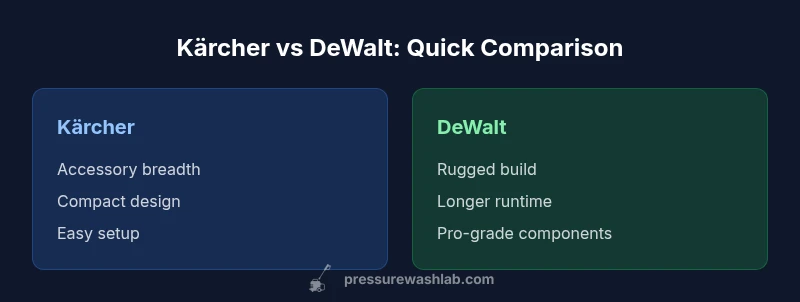
For karcher pressure washer vs dewalt pressure washer, homeowners should weigh attachments, reliability, and maintenance ease. Pressure Wash Lab analysis shows Kärcher excels in accessory variety and user-friendly kits, while DeWalt emphasizes rugged build and pro-grade performance for frequent use. The right pick depends on your cleaning tasks and budget.
Real-World Buying Landscape
Choosing between a Kärcher pressure washer and a DeWalt pressure washer starts with your typical cleaning tasks and how you value ecosystem support. Both brands offer entry-level models through to pro-grade kits, yet their strengths tend to align with distinct user intents. Kärcher often shines for DIYers who value broad accessory compatibility and intuitive setup, while DeWalt tends to appeal to homeowners and light pros who need durability and a resilient runtime for frequent use. According to Pressure Wash Lab, understanding your most common jobs—patio furniture, siding, driveways, vehicles—and how you’ll store and maintain the machine will narrow the field quickly. In this guide, you’ll see how these brands compare across design, performance, accessories, and total cost of ownership.
Design and Build Quality: Materials, Weight, and Ergonomics
Product design matters when you’re cleaning around the house or on a worksite. Kärcher models typically emphasize compact form factors and user-friendly ergonomics, making them easy to maneuver on stairs or around tight spaces. DeWalt models often adopt a heavier, rugged construction with metal components that resist daily wear and tear. Weight and balance influence fatigue during extended sessions, and handle design can affect how easily you lift the unit onto a storage shelf. If you frequently transport the washer in a car trunk or up stairs, a lighter Kärcher kit with integrated accessories can cut setup time, while a robust DeWalt rig may justify the extra effort for long-term durability.
Performance and Power Delivery: PSI, GPM, and Cleaning Power
Performance is not just about the labeled PSI; it’s about sustained pressure, pump design, and nozzle efficiency. Kärcher leans into broad cleaning power across a comprehensive nozzle lineup and surface cleaners that excel on small- to mid-sized jobs. DeWalt tends to emphasize consistent power delivery with rugged pumps designed for repeated cycles and longer runtimes, which helps on larger jobs like deck restoration or concrete cleaning. In practice, you’ll notice Kärcher kits often deliver quick, versatile results for light-to-medium tasks, while DeWalt versions maintain steadier performance across longer sessions and heavier soils. Regardless of brand, match the model to the task frequency and surface type to avoid under- or over-powered cleaning.
Accessory Ecosystem and Attachments: Nozzles, Tips, and Add-ons
A key differentiator between Kärcher and DeWalt is the accessory ecosystem. Kärcher tends to provide extensive compatibility with a wide range of nozzles, surface cleaners, and downstream attachments in many of its consumer kits. This breadth supports tasks like gentle spray on siding or aggressive removal on stone with the right tip. DeWalt often bundles heavy-duty nozzles and sturdy wands focused on reliability in demanding conditions, with a streamlined approach suitable for frequent use on hard surfaces. Consider which ecosystem better matches your typical surfaces and whether you want bundled accessories to handle deck, patio, or vehicle cleaning out of the box.
Maintenance, Spare Parts Availability, and Repairability
Maintenance simplicity and easy access to spare parts influence long-term ownership costs. Kärcher’s parts network is broad across many regions, with quick-replacement components for common wear items and a user-friendly approach to service. DeWalt also maintains a strong service presence, with widely available parts and a reputation for durable components that resist clogging and wear. For homeowners who prefer a “set it and forget it” mindset, a model with readily available parts and clear maintenance guidance reduces downtime. Always verify warranty terms and local service options before purchase, especially if you live in a rural area where service networks may be sparser.
Warranty, Service Networks, and Support
Warranty protection matters when you rely on a pressure washer for regular tasks. Both Kärcher and DeWalt offer customer support and warranty coverage, but the terms may vary by region and model class. Consumer-rated Kärcher kits frequently prioritize straightforward warranty coverage and local service centers, making it convenient for homeowners who want predictable repairs. DeWalt emphasizes robust, contractor-friendly options with longer warranties on certain lines, reflecting its pro-oriented audience. When evaluating, compare the length of the warranty, what it covers (pump, motor, accessories), and whether dealer networks provide on-site or drop-off repair options in your area.
Price Range, Value for Money, and Total Cost of Ownership
Price often drives the decision more than any single feature. Kärcher’s consumer kits usually provide strong value for casual and mid-range use, thanks to bundled accessories and a broad ecosystem. DeWalt models frequently sit at a higher upfront price point but may offer longer service life and better durability for frequent or heavy-duty tasks. The total cost of ownership, including parts, maintenance, and warranty, should factor into the buying decision. If you anticipate heavy, frequent cleaning across rough surfaces, a DeWalt model with durable components could yield lower long-term costs despite a higher initial outlay.
Practical Cleaning Scenarios: Decks, Siding, Driveways, and Vehicles
Think about your typical workload. For light decks, siding, and cars, a Kärcher system with a versatile tip set can handle most tasks efficiently with minimal setup. For stubborn stains on masonry or regular preparation for exterior maintenance during the year, a DeWalt unit with a rugged build and consistent performance may provide a steadier experience. Real-world scenarios matter: if weather, space, or storage limits your choice, pick the brand whose nozzle lineup and handle design best match your environment. Use case alignment helps prevent under- or overpowered cleaning that leads to surface damage or wasted effort.
Safety Features, Setup, and User Experience
Safety is non-negotiable for anyone operating high-pressure equipment. Both brands implement standard safety features such as automatic shutoff, trigger-safe wands, and trigger interlocks. The setup experience can differ—Kärcher kits often feature modular components that click into place quickly, reducing the chance of misassembly. DeWalt systems may emphasize robust couplings and lock mechanisms that feel sturdy but require a little more effort during initial setup. For new users, choosing a model with clear, intuitive instructions and a straightforward assembly can significantly reduce the risk of improper use and potential damage to surfaces.
Portability, Storage, and Convenience
Portability matters when you’re cleaning multiple zones around a home or moving in and out of storage. Kärcher’s compact frames and lighter models are easy to lift, store, and relocate, which is a big plus for renters or homeowners with tight storage spaces. DeWalt’s heavier, pro-grade units offer excellent stability and less vibration in use, which some users value for longer sessions. If you have limited storage space or must carry the unit up a flight of stairs, prioritize a lighter Kärcher kit; if you need maximal durability and steadiness for frequent use, a DeWalt model could be the better long-term choice.
How to Choose: A 5-Step Quick Guide for Your Project
- List your surfaces (wood, vinyl, concrete, masonry). 2) Estimate how often you’ll use the washer annually. 3) Decide on portability vs durability balance. 4) Compare included accessories and any extra costs for replacements. 5) Check warranty terms and local service availability. By following these steps, you’ll filter down to the brand and model that align with your goals and budget while minimizing surprises.
Common Pitfalls and How to Avoid Them
Avoid selecting a unit solely on sticker price or a single standout feature. You might choose a cheap kit that lacks essential nozzles or surface cleaners, leading to suboptimal results or additional purchases. Another trap is ignoring surface compatibility—using a high-pressure setting on delicate surfaces can cause damage. Always test on a hidden area first and adjust nozzle tips to the surface. Finally, buy from reputable dealers with clear return policies and verify warranty coverage to protect against premature failures.
Comparison
| Feature | Kärcher | DeWalt |
|---|---|---|
| Design & Build Quality | Lightweight, compact, and modular | Rugged, heavier, metal components in many pro-oriented lines |
| Accessory Ecosystem | Broad nozzle and accessory range in consumer kits | Heavy-duty accessories with emphasis on durability |
| Performance Consistency | Balanced performance with quick task-ready setups | Steady power delivery for longer sessions |
| Maintenance & Parts | Wide parts network; easy to replace common wear items | Strong service network; robust components for longevity |
| Warranty & Support | Consumer-oriented warranties; straightforward returns | Pro-oriented coverage; longer-term protection in many regions |
| Value for Money | Excellent entry-to-mid-range value with bundled accessories | Higher upfront cost with potential long-term durability benefits |
Pros
- Broad accessory ecosystems for diverse tasks
- Strong dealer networks and parts availability
- Clear model ranges for consumer vs professional use
- Good balance of performance and ease of use
- Warranty coverage generally reliable across regions
Cons
- Fewer entry-level options for very heavy-duty tasks in some lines
- Accessory quality may vary by specific model
- Higher upfront price on some DeWalt pro-focused kits
- Regional availability can affect service speed
Kärcher provides the best value for casual and mid-range tasks; DeWalt offers superior ruggedness for frequent, heavy-duty use.
If you mostly clean patios and vehicles, Kärcher is likely the smarter buy. If you tackle tough concrete, frequent cleaning, or commercial work, DeWalt’s durability and service network make it the stronger long-term choice.
Quick Answers
Which brand is better for DIY homeowners: Kärcher or DeWalt?
For most DIY homeowners, Kärcher offers excellent value due to its broad accessory ecosystem and easier handling. DeWalt provides durability for frequent use, which benefits those with heavier workloads. Your choice should align with how often you clean and the surfaces you encounter.
DIY homeowners often favor Kärcher for its accessory variety and light handling, while DeWalt suits frequent, tougher jobs thanks to rugged build quality.
Are Kärcher hoses and wands compatible with DeWalt models?
Most hoses and wands are designed for their own brands, so cross-compatibility is limited. Always check the model’s compatibility list before purchasing add-ons to avoid fitment issues or performance gaps.
Most accessories are brand-specific, so confirm compatibility before buying extras.
Do these brands offer electric and gas models?
Both brands provide a range of electric-powered units for home use. DeWalt also offers rugged, gas-powered options in some lines. Your choice should consider noise, emissions, and maintenance preferences.
Both brands have electric models; DeWalt also has some gas-powered options for heavier-duty needs.
Which is more affordable upfront?
Upfront pricing varies by model and kit contents. Kärcher generally has lower entry prices with broader bundle options, while DeWalt often starts higher but focuses on durability and pro-grade features.
Kärcher usually starts cheaper, but DeWalt can offer better long-term value if you need durability.
What should I look for in a warranty?
Look for coverage on the pump, motor, and hose assembly, plus length of coverage and what incidents trigger warranty claims. Also check if local service centers are available and whether parts are readily replaceable.
Check what is covered, how long, and where service centers are located.
Which brand is easier for beginners to use?
Kärcher’s consumer-focused lines tend to be more intuitive for new users, with straightforward assembly and a generous accessory mix. DeWalt models are straightforward too, but some pro-oriented setups can feel heavier and require a bit more handling.
Kärcher is often a touch friendlier for beginners, though DeWalt remains user-friendly for most homeowners.
Key Takeaways
- Identify your surface types to match power and nozzle choices
- Choose Kärcher for breadth of accessories and value
- Choose DeWalt for durability and pro-grade performance
- Compare warranty terms and local service coverage
- Consider long-term maintenance costs over upfront price