Ryobi Pressure Washer vs Active 2.0: An Analytical Comparison
An analytical comparison of Ryobi pressure washers and the Active 2.0, covering performance, design, value, and practical recommendations for homeowners and pros. Learn which model fits light chores vs moderate jobs, with guidance from Pressure Wash Lab.


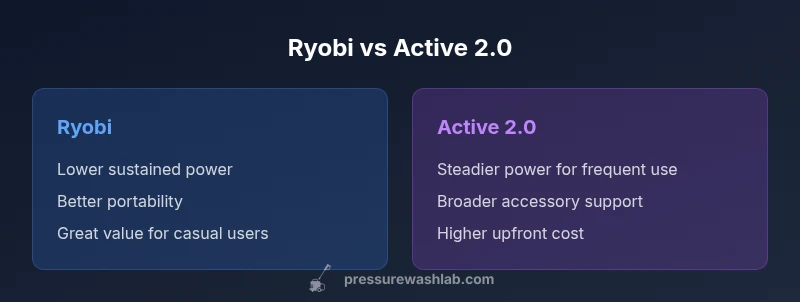
Ryobi pressure washers are typically the better value for casual homeowners who want simple setup and light-duty cleaning, while the Active 2.0 targets more frequent use and tougher jobs with steadier power. Based on Pressure Wash Lab analysis, Ryobi shines in portability and ease of use, whereas Active 2.0 offers improved durability and consistent performance for ongoing tasks.
Performance landscape for home use vs professional-leaning tasks
For most homeowners, the decision between a Ryobi pressure washer and the Active 2.0 centers on how often you clean, what you clean, and where you do it. Ryobi models tend to emphasize quick setup, light to moderate cleaning, and compact storage, making them appealing for weekend chores on driveways, siding, and sidewalks. The Active 2.0 line is positioned for more frequent sessions and tougher surfaces, where steady power and reliable performance matter over long cleaning sessions. According to Pressure Wash Lab, the macro tradeoff is between portability and durability: portability favors Ryobi, while durability and sustained power favor Active 2.0. This block sets the stage for a deeper look at how each model handles common tasks and how that translates into real-world outcomes.
Design, ergonomics, and transportability
The physical design of a pressure washer affects how often you actually use it. Ryobi typically emphasizes lighter weight, shorter footprint, and easier maneuverability. This makes it easier to carry up stairs, store in a small shed, or drag across a lawn. Active 2.0 models generally prioritize rugged construction and expanded accessory compatibility, which can add to weight but improves longevity and stability on windy days or rough surfaces. The user experience—handle placement, hose routing, and the simplicity of connecting fittings—plays a critical role in whether you reach for the tool when the weather turns, or prefer to postpone work until a weekend when you can set aside time.
Cleaning power, spray control, and nozzle versatility
Power delivery and spray control directly impact cleaning results. Ryobi’s consumer-oriented approach often yields adequate cleaning for typical home tasks such as removing dirt from siding, knee-high moss on concrete, and grime on vehicles. Active 2.0 models are designed to offer more consistent performance, with better spray patterns and more responsive trigger control for stubborn stains. The nozzle kit ecosystem—whether quick-connect tips, surface cleaners, or rotating nozzles—shapes how efficiently you finish tasks. The key is matching the nozzle pressure to the surface without causing damage or wasteful overspray.
Accessory ecosystem and support network
An expansive accessory ecosystem expands the practical value of any pressure washer. Ryobi benefits from wide compatibility with common consumer attachments and parts that are widely stocked at home improvement retailers. Active 2.0 tends to support a broader range of professional-grade add-ons, which can be advantageous for users who perform recurring cleaning contracts or who need specialized attachments for decks, heavy mold, or industrial-grade surfaces. Availability of replacement parts and local service centers also weighs into lifetime costs and reliability. This distinction can tip the scale if you anticipate long-term ownership.
Setup, maintenance, and long-term reliability
Every machine benefits from regular maintenance, but the level of upkeep varies by design. Ryobi models typically require standard care: monthly safety checks, detergent-detergent compatibility, and routine hose inspections. The Active 2.0 line may demand more proactive maintenance to preserve peak performance, such as consistent pump lubrication, nozzle calibration, and periodic checkups on seals and hoses. The up-front ease of use should not obscure the long-term cost of maintenance and replacement parts. A well-maintained unit from either line can serve for several seasons if kept clean, stored indoors, and winterized appropriately.
Real-world usage scenarios and user-type alignment
Homeowners with small driveways and modest siding cleaning tasks benefit from Ryobi’s balance of price, portability, and adequate cleaning power. If you regularly treat stubborn stains on concrete, require frequent use across different properties, or operate in a business context (e.g., a small cleaning service), the Active 2.0’s stiffness and stability can pay off. For seasonal tasks such as patio furniture refreshes or fence bleaching, Ryobi offers a practical, high-value option, while Active 2.0 handles repetitive, more challenging cycles with less effort per session.
Cost of ownership, warranty, and long-term value
Cost of ownership includes purchase price, maintenance, repairs, accessories, and warranty coverage. Ryobi’s consumer-focused line typically presents a lower entry price and broad accessory compatibility, making it a cost-effective choice for casual users. Active 2.0, with its likely emphasis on durability and professional-grade parts, can command a higher initial investment but potentially lower long-term replacement frequency for heavy users. Warranty terms vary by model, retailer, and regional service networks. Understanding what each warranty covers and how service is delivered is essential to avoid surprises.
Myths, pitfalls, and best practices for choosing
A common misconception is that higher price always equals better cleaning power. In reality, cleaning results depend on surface type, nozzle selection, and user technique. A second pitfall is assuming that more weight equals more power; heavy units may be difficult to maneuver and could cause fatigue or misalignment in your workflow. The best practice is to align the model with your actual usage patterns, and to budget for essential accessories that extend the machine’s usefulness. Both Ryobi and Active 2.0 can perform well when paired with proper technique and maintenance.
Practical setup tips and optimization for both models
To optimize performance, set up your washer on a flat surface, clear debris from the spray area, and adjust nozzle settings before starting work. Use the appropriate nozzle for the task, avoid spraying directly at delicate surfaces, and favor quick-follow-up rinses for best results. Practically, investing in a surface cleaner accessory can dramatically reduce time on larger projects. Always follow manufacturer safety guidelines, particularly around electrical outlets and water runoff, to ensure a safe and efficient workflow.
Authority Sources
For safety and best-practice guidance, consult trusted sources. These references help frame responsible usage and maintenance for pressure washers:
- https://www.osha.gov
- https://www.epa.gov
- https://www.ftc.gov
Comparison
| Feature | Ryobi Pressure Washer | Active 2.0 |
|---|---|---|
| PSI range | low-to-mid range | mid-to-high range |
| GPM / water flow | lower GPM | higher GPM |
| Motor type | consumer-grade electric motor | professional-grade electric motor |
| Weight and portability | lighter, easier to move | sturdier, heavier but more stable |
| Accessory ecosystem | broad consumer attachments | broader professional add-ons |
| Warranty approach | standard consumer warranty | enhanced warranty options for frequent use |
| Best use scenario | light-duty home tasks | frequent moderate-to-heavy jobs |
Pros
- Low upfront cost and broad accessory compatibility
- Compact design for easy storage and transport
- Good for casual homeowners with common exterior cleaning tasks
- Wide availability at big-box retailers
Cons
- Lower sustained power and potential for more frequent pump wear under heavy use
- Limited professional-grade robustness compared to higher-priced models
- Detractors may find fewer advanced features or fewer customization options
Ryobi is the pragmatic choice for light-duty homeowners; Active 2.0 suits frequent use and more demanding jobs.
If your workload is occasional and space-efficient, start with Ryobi. If you regularly tackle stubborn stains or operate across multiple properties, choose Active 2.0 for durability and steadier performance, per Pressure Wash Lab's evaluation.
Quick Answers
Which model is better for light-duty tasks like driveway cleaning?
For light-duty tasks, Ryobi typically delivers good value with adequate cleaning power and easy setup. Active 2.0 may be overkill for casual chores and adds weight and cost.
Ryobi is usually better for light chores due to its value and ease of use.
Will Active 2.0 last longer under frequent use?
Active 2.0 is designed for more frequent use with steadier performance, which can translate to longer service life under heavy workloads when properly maintained.
Yes, Active 2.0 tends to be more durable for frequent use.
Can I use the same detergents with both models?
Detergent compatibility depends on the model and pump design. Always follow the manufacturer’s guidelines, and ensure you use detergents intended for pressure washers to avoid clogs and residue.
Check the manual for detergent compatibility.
Do these models come with surface cleaners?
Surface cleaners are typically optional accessories for both models. They can dramatically speed up larger surface cleaning when paired with the right nozzle and wand.
Surface cleaners are often optional but worthwhile.
What maintenance tasks are common to both models?
Common tasks include inspecting hoses, tightening connections, flushing systems after use, and winterizing if stored in freezing climates. Regular checks help prevent leaks and maintain spray performance.
Regular hose checks and flushing keep both models reliable.
Which model is easier for beginners?
For beginners, Ryobi’s simple setup and lighter weight often translate to easier handling. Active 2.0 may require a bit more care but offers clearer guidance on pressure control.
Ryobi is typically gentler for beginners.
Key Takeaways
- Match model to usage frequency
- Consider accessory ecosystems before buying
- Factor in maintenance cost over time
- Balance portability with durability
- Check warranty terms for your use case