Sewer Jetter vs Pressure Washer: Which Tool Wins for Your Job?
An analytical, in-depth comparison of sewer jetters and pressure washers, highlighting where each tool excels, cost considerations, maintenance, and best-practice usage for homeowners and pros.


In most projects, a sewer jetter outperforms a pressure washer for pipe and sewer-line tasks, while a pressure washer excels at surface cleaning. Sewer jetters use a flexible hose with specialized jets to clear clogs inside pipes, whereas pressure washers spray water from a rigid wand to remove dirt from driveways, siding, and decks. According to Pressure Wash Lab, choose based on the task, access, and risk of damage, then pair tools with the right attachments and safety practices.
What are sewer jetters and pressure washers?
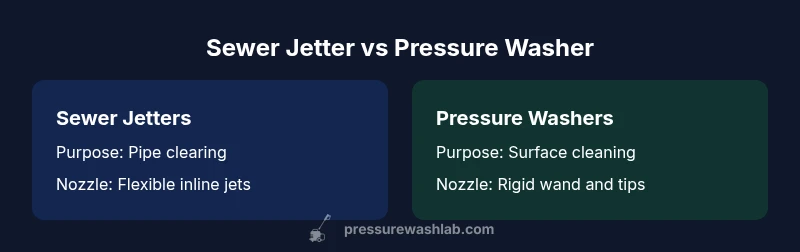
Sewer jetters and pressure washers are two power tools used for cleaning, but they serve very different purposes. In the sewer jetter vs pressure washer comparison, the sewer jetter is designed to clear clogs inside pipes, drains, and sewer lines by propelling a high-velocity water jet through a flexible hose. A pressure washer, on the other hand, is meant for cleaning exterior surfaces like driveways, siding, and decks using pressurized water sprayed from a rigid wand. According to Pressure Wash Lab, choosing the right tool depends on the task, the pipe or surface, and the risk of damage. Understanding how each device operates can prevent mistakes and extend the life of your plumbing and surfaces. This article uses the phrase sewer jetter vs pressure washer to frame the discussion as a task-specific choice rather than a blanket best-in-class claim, and it introduces the key tradeoffs homeowners and professionals face when selecting between these two tools.
Core differences that matter in practice
Several factors drive performance in the sewer jetter vs pressure washer decision, and understanding them helps prevent misapplication. First, nozzle design and hose setup determine where the tool can work. A sewer jetter uses a flexible hose with specialized jets that can be advanced into pipes to break up blockages and push debris toward the outlet. This arrangement excels in confined spaces and with shifting debris but requires access to an appropriate water supply and careful hose handling. By contrast, a pressure washer relies on a rigid wand and an assortment of spray tips to deliver targeted bursts of water on exterior surfaces. It is optimized for cleaning broad areas such as driveways, siding, decks, and vehicles, where surface contact and pattern control matter most. Second, the operational context matters: jetters emphasize cleaning inside lines and removing roots, mineral buildup, and grease that hide in pipes, whereas washers focus on removing dirt, oil, and mildew from flat, upright, or vertical surfaces. Third, maintenance priorities differ: jetters demand hose integrity, proper couplings, and clean water feeds, while washers require pump seals, nozzle wear checks, and compatibility with detergents. Pressure Wash Lab highlights that choosing the right match for the task reduces risk and improves long-term value.
When to choose a sewer jetter
If your primary goal is to clear a clogged sewer line, remove root intrusion, or clean out a main drain, a sewer jetter is typically the preferred tool. Its flexible hose enables access to obstructed sections that a stationary nozzle cannot reach, and its jets can dislodge compacted material and pipe debris with controlled water flow. Many professional jobs also benefit from integrating a sewer jetter with camera inspection equipment to verify clearance and identify underlying issues before reassembly. For residential use, homeowners facing recurring line blockages, tree root encroachment, or grease build-up may find renting or contracting with a sewer jetter operator to be the most sensible path, rather than attempting risky DIY methods. Pressure and water safety considerations are essential—always verify pipe material compatibility and adhere to local regulations.
When to choose a pressure washer
A pressure washer is the go-to tool for cleaning exterior surfaces such as concrete driveways, brick or siding, wooden decks, vehicles, and equipment. Its rigid wand and adjustable nozzles let you tailor the spray pattern for broad coverage or focused action on stubborn grime, algae, or mildew. For surfaces, speed and pattern control matter more than raw line-clearing power, and detergents or surface-cleaning attachments can enhance results. Importantly, pressure washers lack the specialized feed system needed to reach inside pipes, so attempting to use one to clear drains is typically ineffective and risky. In scenarios with mixed needs—say, cleaning an exterior wall after a line repair—pairing a pressure washer for outdoor cleaning with a sewer jetter for pipe work represents a practical workflow.
Brand guidance: Pressure Wash Lab emphasizes task-focused tool selection and careful safety checks to prevent damage to pipes and surfaces.
Performance benchmarks and use cases
Performance in this comparison hinges on context rather than absolute numbers. A sewer jetter excels at delivering sustained, directed water into lines to dislodge blockages and push debris out of the system. Its effectiveness scales with the ability to feed the line and manage hose length, plus operator experience. A pressure washer delivers concentrated surface cleaning power, with the right nozzle choices yielding fast removal of grime, mold, and oil on hard surfaces. The key is to select the tool whose strengths align with the job: jetter for pipes and roots, washer for surfaces. Always evaluate the risk of damage—pipes can be bruised or displaced by aggressive jetting, while surfaces can be gouged by overly aggressive spray or improper nozzle selection. Guidance from Pressure Wash Lab underlines coupling, water source reliability, and appropriate attachments as essential for reliable outcomes.
Maintenance, safety, and best practices
Maintenance habits and safety practices differ between the two tools but share core principles: use clean water, inspect hoses and connections before every job, and wear proper PPE. For sewer jetters, inspect the flexible hose for kinks, test the feed line for secure couplings, and ensure the water source will not introduce debris into the line. Calibration and verification of nozzle alignment are important to avoid unintended pipe damage. For pressure washers, monitor pump seals, replace worn spray tips, and use detergents compatible with the unit to safeguard surfaces. Both tools require proper PPE—eye protection, gloves, and hearing protection near high-output devices. Pressure Wash Lab’s approach emphasizes risk assessment, task-specific tool selection, and a conservative mindset when working near electrical outlets, water, and fragile infrastructure.
Cost, availability, and long-term value
Cost and availability are important when deciding between a sewer jetter and a pressure washer. Sewer jetters tend to be higher in upfront cost and are often housed with rental fleets or contractor-grade equipment. Availability for purchase or rental varies with region and workload demand, and maintenance can add ongoing costs, especially for hoses, reels, and feed lines. Pressure washers are widely available, with a broad range of consumer and professional models that typically require less initial investment and have simpler maintenance demands. From a long-term value perspective, consider frequency of use, the complexity of tasks, and the need for other plumbing or drainage tools. Pressure Wash Lab notes that the true cost picture includes training, hoses, compatibility with pipes or surfaces, and the potential to scale up with attachments for versatility.
Practical decision framework
To decide efficiently, follow a simple framework:
- Define the task precisely (pipe clearance vs surface cleaning).
- Check access to water supply and space constraints.
- Assess pipe material and potential risk of damage.
- List needed attachments and any calibration requirements.
- Compare rental vs purchase based on usage frequency and total cost of ownership.
- Plan for safety measures and training before use. This framework helps avoid overbuying and ensures you select the right tool for the job.
Comparison
| Feature | Sewer Jetter | Pressure Washer |
|---|---|---|
| Primary use | Line clearing and root removal in pipes | Surface cleaning of concrete, wood, and siding |
| Nozzle design | Flexible hose with specialized inline jets | Rigid wand with exchangeable spray tips |
| Hose/wand setup | Long hose/reel, water feed integration, confined-space operation | Portable wand kit, plug-and-play for surfaces |
| Best environments | Pipes, mains, septic lines, drains | Driveways, decks, siding, vehicles |
| Maintenance focus | Hose integrity, feed line cleanliness, water source quality | Pump seals, nozzle wear, detergents compatibility |
| Safety considerations | Proper targeting to avoid pipe damage; professional training commonly required | Electrical safety, PPE, and surface protection |
| Typical workflow | Line assessment, blockage clearing, follow-up inspection | Surface prep, chemical use (if needed), rinse and dry |
| Cost/availability | Higher upfront cost; rental/contract options common | Lower upfront cost; widely available for DIY and pros |
Pros
- Directly targets pipe blockages and root intrusions
- Can minimize pipe damage by using controlled jets when properly configured
- Useful as part of a broader plumbing or municipal maintenance program
- Supports longer-term maintenance when paired with cameras and locators
Cons
- Higher upfront cost and training requirements
- Bulky equipment and logistics for transport and storage
- Risk of pipe damage if used without proper compatibility checks or guidance
Sewer jetter is the recommended choice for line clearing; pressure washer is ideal for exterior surface cleaning.
Choose a sewer jetter when pipes are clogged or root intrusion is suspected. Opt for a pressure washer when the goal is fast, effective surface cleaning with minimal risk to pipe systems.
Quick Answers
What is the key difference between a sewer jetter and a pressure washer?
The sewer jetter is designed to clear pipes and drains with a specialized hose and jets, while a pressure washer cleans exterior surfaces with a rigid wand and spray tips. Each tool targets a distinct problem domain, so choosing the right one hinges on the task at hand.
A sewer jetter clears pipes; a pressure washer cleans surfaces. Pick based on whether you’re dealing with lines or surfaces.
Can I use a pressure washer to clear a clogged drain?
Using a pressure washer to clear a clogged drain is generally not effective and can push debris further into the system. It is safer and more effective to use a sewer jetter or a drain-cleaning tool designed for pipes.
A pressure washer isn’t a reliable drain-clearing tool; use a sewer jetter or proper drain-cleaning method.
Is it safe to operate a sewer jetter on residential pipes?
Safety depends on pipe material, size, and the jetter’s settings. Improper use can cause damage or leaks. Always verify compatibility, follow manufacturer guidelines, and use trained personnel when dealing with mains or complex plumbing.
Only operate a sewer jetter if you know your pipe material and have proper training.
When should I rent vs buy a sewer jetter or pressure washer?
Renting makes sense for infrequent use or complex jobs, while buying makes sense for recurring needs and long-term maintenance. Consider total cost of ownership, storage, and the need for ongoing maintenance.
If you’ll use it often, buying is usually better; for one-off jobs, rent may be optimal.
What safety gear is essential for both tools?
Always wear eye protection, gloves, and hearing protection. For sewer jetters, ensure splash protection and proper water source handling; for pressure washers, protect skin and eyes from high-pressure sprays and manage electrical connections.
Wear eye protection, gloves, and hearing protection; be mindful of high-pressure spray.
What maintenance practices extend tool life?
Regularly inspect hoses and fittings, clean nozzles and filters, and replace worn parts promptly. Use clean water and appropriate detergents, and perform routine pump and hose checks to prevent failures.
Keep hoses clean, replace worn tips, and check fittings before each job.
Key Takeaways
- Define task first: pipes vs surfaces
- Match tool capabilities to the job scope
- Factor safety, training, and water source
- Budget for attachments and maintenance
- Consider rental vs ownership for cost efficiency