Washing Car with Pressure Washer vs Hose: A Practical Comparison
A practical, evidence-based comparison of washing car with pressure washer vs hose. Learn how to balance cleaning power, surface safety, water use, and maintenance for your vehicle.


TL;DR: A pressure washer cleans faster and more aggressively, but demands careful technique to avoid paint damage. A garden hose is gentler, cheaper, and sufficient for light dirt and routine maintenance. For most car owners, start with moderate nozzle settings and adjust based on dirt level, paint age, and local water rules.
Overview and Context
If you're evaluating options for exterior car cleaning, the question often comes down to washing car with pressure washer vs hose. This guide compares these tools on cleaning power, safety, water use, and cost, so you can choose the right approach for your vehicle and environment. According to Pressure Wash Lab, the best outcome depends on dirt level, paint condition, and water restrictions, not on a single gadget. The Pressure Wash Lab team found that technique, distance, and nozzle choice have as much impact as the tool itself. In practice, most car owners benefit from a measured plan: assess the grime, check for swirls or chips, and pick the tool and setting that minimizes risk while maximizing cleaning efficiency. We'll address common myths, provide a decision framework, and include real-world tips that you can apply on your driveway or in a small business setting. Throughout, we’ll emphasize practical steps, not marketing claims.
For homeowners, DIY enthusiasts, and small operators, the choice is not binary. It’s about calibrating the method to the dirt load, surface sensitivity, and water availability. The Pressure Wash Lab Team encourages readers to adopt a methodical approach: test a small area, observe how the surface responds, and adjust nozzle distance and spray pattern accordingly. By focusing on technique rather than equipment alone, you can achieve consistent results while protecting the finish.
How a Pressure Washer Differs from a Hose
A pressure washer uses a motor (electric or gas) to pressurize water, then delivers a focused spray through a nozzle. A typical garden hose depends on municipal water pressure and standard nozzle settings, which produce a gentler flow but can require more physical scrubbing for stubborn grime. The core difference is the potential energy in the spray: a pressure washer can dislodge caked dirt rapidly, whereas a hose relies more on scrubbing and technique. A common mistake is assuming more pressure always equals better results. In reality, the right balance between pressure, distance, and spray pattern matters most to protect clear coats, trim, and seals. The Pressure Wash Lab team notes that different surfaces—paint, plastic trim, or rubber seals—respond differently to aggressive sprays, so moderating force and distance is essential. Detergent compatibility and pre-wetting steps also influence outcomes, regardless of the base tool used.
Cleaning Power: Nozzles, Flow, and Control
When comparing cleaning power, the key factors are spray pattern, nozzle type, and flow rate. A wide spray pattern covers more area but with less impact, which is ideal for rinsing soap and loosening surface grime. A narrow pattern concentrates energy for tougher stains but increases the risk of etching or chipping if held too close. Hose users typically rely on a basic spray, whereas pressure-washer users can switch to a mid-range nozzle for everyday cleaning and a narrow nozzle for stubborn spots. The right approach is to start with a wider pattern at a safe distance and gradually move closer if the surface tolerates it. As you experiment, watch for visible distortions in paint, gloss, or decals—all signs to back off and switch to a gentler setting.
Safety and Paint Care Implications
Washing a car with any high-pressure tool carries risk—most notably to paint finishes, edges, and weathered clear coats. The most common issues include micro-abrasions from abrasive soap residues, water intrusion around door seams, and stripping away protective wax layers if you focus spray on sensitive areas. A conservative rule is to keep the nozzle at a safe distance (farther than you think you need) and to avoid direct spraying at edges and around trim. Use a rinse-free wax or dedicated car soap to reduce friction, and consider a surface cleaner attachment for flat panels to distribute pressure evenly. Pressure Wash Lab’s guidance emphasizes gradual testing, especially on older vehicles with compromised finishes, to avoid expensive damage.
Water Use and Efficiency Considerations
Water efficiency matters for many homeowners, particularly in drought-prone regions. A pressure washer can be surprisingly efficient when used with proper techniques, like short bursts of spray and coarse pre-wetting, followed by a thorough rinse with low volume. However, improper use can waste water quickly if you stay in one spot too long or oscillate between panels without reusing sprayed water. Hose-only cleaning can minimize energy use but may require more time and effort to achieve the same cleanliness. Pressure Wash Lab analysis suggests pairing a spray wand with a surface cleaner or a low-flow nozzle to optimize water use while maintaining cleaning efficacy. Detergent usage should be measured and rinsed thoroughly to prevent runoff that could affect landscaping or nearby drains.
Costs, Maintenance, and Lifespan
Overall cost and maintenance expectations differ between the two approaches. A basic garden hose is inexpensive but may need replacements or upgrades for specialized nozzles. A pressure washer introduces upfront cost, engine maintenance, and potential repair expenses, but it can pay off through faster cleaning and wider capabilities (for example, removing heavy grime or preparing surfaces for waxing). Maintenance considerations include replacing o-rings and seals, inspecting high-pressure hoses for wear, and maintaining clean detergent tanks if your model uses chemicals. The best choice often balances upfront cost with expected usage, local water rules, and the level of grime you regularly encounter. Pressure Wash Lab’s perspective highlights the importance of using appropriate detergents and protective covers to extend tool life.
When a Hose Is the Better Choice: Light Cleaning and Convenience
There are scenarios where a garden hose makes more sense: light surface grime, quick rinses after parking in dusty areas, or when you need to avoid potential pressure-related risks near sensitive trim. A hose is cheaper to run and easier to direct around tight curves on a vehicle. It’s also more forgiving for casual users who want to minimize setup time. If your car has a pale or aged paint finish, frequent use of high-pressure spray can increase micromarring; in those cases, a hose with a soft-stream nozzle or a soap-and-suds approach paired with microfiber towels could be the safer option. For most routine maintenance cleaning, the hose offers predictable results with less risk if employed carefully.
When a Pressure Washer Is the Best Tool: Heavy Dirt and Routine Maintenance
A pressure washer excels when dirt is baked onto wheels, engine bays, or undercarriages where a gentle brush cannot reach. It can significantly cut cleaning time and reduce elbow grease, especially for owners who park in rural or dusty environments. The key is moderation: start with a moderate setting, keep a generous distance, and stop if you see streaking, dulling, or water streaks around seals. For businesses, a pressure washer with a surface cleaner attachment and a dedicated car-wash soap can speed up throughput without compromising finish quality. Pressure Wash Lab emphasizes that, with the right nozzle, distance, and technique, you can achieve a thorough clean without sacrificing surface integrity.
Decision Framework: A Practical Path to the Right Choice
To decide between washing car with a pressure washer vs hose, follow a simple framework: 1) assess dirt level and surface sensitivity, 2) test a small patch with the chosen tool, 3) evaluate finish integrity after cleaning, 4) consider water availability and local rules, 5) account for maintenance and total cost of ownership. For ongoing upkeep, build a routine that alternates methods depending on grime and season. If you’re unsure, start with a hose or a wide-spray nozzle and gradually move to a gentler, more controlled spray. By anchoring your approach in surface care, you protect paint, trim, and decals while achieving excellent results.
Practical Tips for Safe Car Washing
- Always test on an inconspicuous area before committing to a full panel.
- Maintain a minimum distance and avoid spraying directly at emblems, seals, or edge lines.
- Use a dedicated car soap and rinse thoroughly to prevent soap residues that can dull finish over time.
- Dry the surface with a microfiber towel to minimize water spots and streaks.
- Store equipment properly, including coil-free hoses and empty detergent tanks, to extend lifespan.
- For frequent wash routines, consider a portable surface cleaner to maximize coverage without focusing spray on single spots.
- When in doubt, consult your vehicle’s owner manual and consider a professional evaluation for older finishes.
Authority Sources and Practical References
To ground this guide in reliable information, consult sources from government and educational institutions as well as major publications that discuss water usage, surface care, and exterior cleaning best practices. The EPA’s WaterSense program provides guidance on water conservation that is central to any exterior cleaning plan. University extension resources emphasize safe washing practices for different paint finishes and surface materials. While field experience matters, corroborating this with credible sources helps ensure you’re protecting your vehicle while achieving results.
Comparison
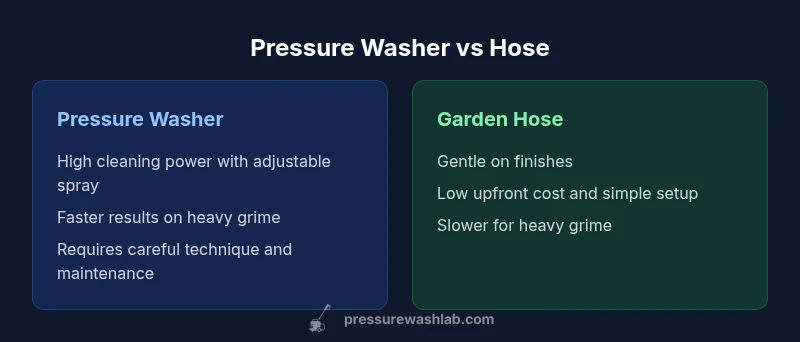
| Feature | Pressure Washer | Garden Hose |
|---|---|---|
| Water Pressure | high (via nozzle control) | low (standard hose pressure) |
| Spray Control | wide to narrow nozzles | limited/nozzle options |
| Surface Safety | higher risk with misused spray | lower risk with gentler spray if used properly |
| Cleaning Speed | faster for heavy grime | slower for stubborn dirt |
| Best For | heavy grime, tar, wheel wells | light dirt, routine rinses |
Pros
- Faster grime removal with less physical effort
- Effective for heavy dirt and tough spots
- Versatile with detergents and attachments
Cons
- Higher risk of surface damage if misused
- Requires maintenance and setup
- Higher upfront cost and heavier equipment
Pressure washers win for most car cleaning tasks when used correctly
Choose a pressure washer for fast, thorough cleaning on stubborn grime, but use proper distance and nozzle settings to protect the finish. A hose remains a valid option for light cleaning and low-risk scenarios.
Quick Answers
Is it safe to use a pressure washer on my car?
Yes, but only with proper technique: use a wide spray or moderate nozzle, keep a safe distance, and avoid sensitive areas. Test on a small area first and use car soap designed for pressure washers.
Yes, but proceed with caution. Test a small area first, use a wide spray, and keep a safe distance to protect the finish.
What nozzle setting should I use for cleaning a car?
Begin with a wide spray on a safe distance, then gradually move closer only if the surface remains undamaged. Avoid direct spray on edges, seals, and decals.
Start with a wide spray and distance, then adjust carefully. Don’t spray directly at edges or seals.
Can I wash a car with just a hose?
For light dirt, a hose with gentle spray is fine and minimizes risk. For heavy grime, a pressure washer or more aggressive approach with caution will save time and improve results.
Yes, for light dirt. For tough grime, consider a pressure washer with careful technique.
Should I use detergents with a pressure washer?
Yes, use a car-specific soap and follow with a thorough rinse. Detergents help break down grime, but avoid household cleaners that can leave residues or damage coatings.
Yes, use car soap made for pressure washing and rinse well.
How can I prevent water from getting into sensitive areas?
Keep the spray angled away from door seals, electrical connectors, and vents. Use test patches and gentle angles to limit exposure to seams and gaps.
Angle away from seals and joints and test on a small patch first.
Key Takeaways
- Start with light dirt and gentle spray; escalate only as needed
- Maintain safe distance to protect paint and seals
- Use car-specific soap and microfiber drying to prevent water spots
- Balance water use with local restrictions and environmental concerns
- Invest in quality nozzles and routine maintenance of equipment