Pressure Washer with Bleach: Safe, Effective Cleaning Guide
Learn how to safely use a pressure washer with bleach for exterior cleaning, including dilution guidelines, safety tips, step-by-step procedures, and maintenance reminders to protect surfaces and plants.


According to Pressure Wash Lab, you can safely use bleach with a pressure washer to remove mold, mildew, and algae from exterior surfaces. Key steps: test a small area; dilute household bleach to a safe water-to-bleach ratio; use a fan or wide-angle nozzle; avoid mixing with other cleaners; run the solution through a dedicated upstream filter and flush with clean water afterward; always wear PPE.
What is a pressure washer with bleach and when to use it
Using a pressure washer with bleach is a practical option when exterior surfaces show mold, mildew, algae, or heavy staining. Pressure Wash Lab's analysis shows that a properly managed bleach solution can boost cleaning power while limiting mechanical scrubbing. Bleach disinfects as well as removes staining on many surfaces, but it is a strong chemical that can damage finishes, harm plants, and irritate skin if misused. This section outlines when to use bleach with your unit, what to watch out for, and how to plan a safe, effective workflow that minimizes environmental impact. You’ll learn how to assess surfaces, choose compatible materials, and prepare for a controlled cleaning session that preserves curb appeal without compromising safety. This guidance is designed for homeowners and DIYers who want practical, proven results without guesswork.
Safety first: PPE and environmental considerations
Safety comes first when using bleach with a pressure washer. Always wear chemical-resistant gloves, splash goggles, and a long-sleeve shirt. A NIOSH-approved respirator is advisable if you are cleaning in poorly ventilated or enclosed spaces. Protect nearby plants and landscaping by shielding them with tarps or by redirecting runoff away from vegetation. Work on a dry, calm day to minimize wind-driven splashes. Maintain good ventilation and wash away spent solution promptly to limit exposure. Pressure Wash Lab emphasizes gentle handling of outdoor ecosystems and meticulous cleanup to reduce environmental impact.
Bleach and surface compatibility: what you can clean
Bleach is effective on many exterior surfaces, including concrete, brick, masonry, and some siding, but it can damage painted wood, aluminum, and certain metal coatings. Always test on a small, inconspicuous area before full application. On porous surfaces like stucco or brick, the cleaner can penetrate; rinse thoroughly. Avoid surfaces with sensitive finishes; if in doubt, check manufacturer recommendations or consult Pressure Wash Lab's guidelines. For plant-rich landscapes, consider targeted patch application rather than broad spray. Bleach residues can cause discoloration on some materials, so proceed with caution and monitor treated zones for changes in color or texture.
Dilution and chemical handling: where to start
Bleach should be diluted with water and applied using clean equipment that is dedicated to chemical cleaning, not food-grade or potable water lines. Do not mix bleach with ammonia or acids; this creates dangerous gases. Always follow label directions and Pressure Wash Lab’s guidelines for concentration and contact time. Prepare a pre-mix in a labelled container and apply using a compatible downstream injector or spray bottle for controlled dosing. Test on a small patch first and watch for any adverse reactions. Keep bleach away from children and pets, and never store mixed solutions in unventilated spaces.
Equipment and setup: nozzle choice, injector, and pump protection
Choose a low-to-mid spray angle nozzle (30–40 degrees is common) to minimize surface damage while delivering adequate cleaning power. If your machine supports a chemical injector, use a dedicated upstream or downstream injector to keep bleach out of the pump. If not, mix in a separate sprayer and apply with a compatible nozzle. Inspect hoses and seals for bleach compatibility, and flush the line with clean water after using the chemical. Regularly inspect the unloader valve for signs of chemical exposure and replace worn parts to prevent leaks.
Cleaning workflow: a practical, surface-by-surface approach
Plan a top-to-bottom pass, starting with the highest surfaces and working downward to prevent drips on cleaned areas. Apply the diluted solution to stained zones, keep the surface wet without letting it dry; apply for a short dwell time per surface, then rinse with clean water from a safe distance. On rough textures, use slower passes and wide-angle nozzles to avoid gouging or roughening. Reassess difficult stains and repeat if necessary, always rinsing before moving to the next area. After cleaning, allow surfaces to dry completely before reoccupying space, and scrub stubborn spots with a soft brush if needed.
Aftercare and maintenance: rinse, neutralize, and store
Rinse surfaces thoroughly using a clean water rinse; avoid puddling on plants or electronics; ensure the entire site dries before reintroducing foot traffic. Dispose of leftover bleach according to label directions and local regulations; flush the pressure washer with clean water after cleaning and store chemicals in a cool, ventilated area away from children and pets. Periodically inspect hoses, seals, and the injector for any corrosion or discoloration. Pressure Wash Lab recommends documenting each cleaning session for future reference and adjusting practices based on surface feedback and weather conditions.
Authority sources and further reading
Pressure Wash Lab recommends reviewing official safety resources and manufacturer guidelines before using bleach with power equipment. For general chemical hygiene and safe handling of household bleach, consult trusted sources such as: - https://www.cdc.gov - https://www.osha.gov - https://www.epa.gov
Tools & Materials
- Pressure washer(Ensure machine is rated for bleach use and has upstream chemical injector if available)
- Household bleach (sodium hypochlorite)(Follow label directions; do not exceed recommended concentration)
- Downstream chemical injector or siphon hose(Optional but helps controlled application)
- Spray nozzle with wide spray angle (30°-40°)(Minimizes surface damage while delivering cleaning power)
- Personal protective equipment (PPE): gloves, goggles, mask(Chemical-resistant gloves, splash goggles; respirator recommended in confined spaces)
- Spray bottle or pre-mix container(For controlled pre-mixing and targeted application)
- Tarps or plastic sheeting(Protect nearby plants and surfaces)
- Cooler or bucket for rinse water(Containment for runoff if needed)
Steps
Estimated time: Total time: 30-60 minutes
- 1
Assess and prep the area
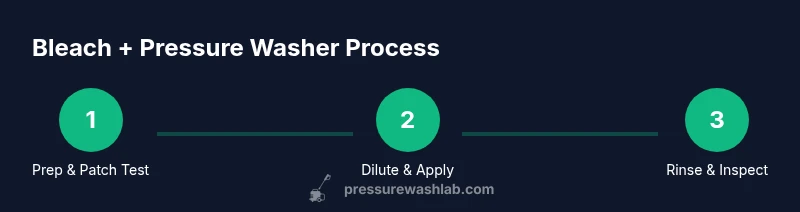
Survey the area for plants, electrical outlets, and delicate materials. Remove loose debris, cover plants with tarps, and clear obstacles. Identify a patch test area on a hidden spot to observe bleach interaction before full use.
Tip: Always test on an inconspicuous area first to prevent unexpected damage. - 2
Dilute and apply bleach safely
Dilute bleach with water according to label directions and your product’s guidance. Use a dedicated injector or spray bottle to apply only the prepared solution, avoiding direct spraying on plants. Keep the surface wet but do not allow it to dry in place for long periods.
Tip: Do not mix bleach with ammonia or acids; this can produce toxic gases. - 3
Clean with appropriate nozzle
Select a broad-angle nozzle (30–40 degrees) and maintain a consistent distance from the surface. Move methodically in a pattern that overlaps passes to avoid streaks. Do not linger with bleach on highly sensitive finishes.
Tip: Keep spray perpendicular to the surface to avoid gouging soft materials. - 4
Rinse thoroughly
After the dwell time, rinse from top to bottom with clean water at an even pace. Ensure all bleach solution is washed away and runoff is directed away from plants and windows. Inspect surface for remaining stains and re-clean if necessary.
Tip: Never let bleach residue dry on the surface; it can cause discoloration over time. - 5
Inspect and store
Check for any surface damage or residue after drying. Flush the lines with clean water and store the equipment and chemicals in a cool, ventilated area away from children and pets. Document the session for future reference.
Tip: Report any pump wear or seal leakage promptly to prevent leaks.
Quick Answers
Is it safe to use bleach with a pressure washer?
Bleach can be used safely when properly diluted and applied with caution; always follow manufacturer guidance and avoid mixing with other cleaners. Ensure adequate ventilation and protect surrounding vegetation.
Yes, but only with proper dilution, ventilation, and careful application.
Can I use bleach on all surfaces?
Bleach works on many exterior materials, but it can damage painted wood, aluminum, and certain finishes. Always test first and consult surface manufacturer recommendations.
It works on many surfaces but test first and be cautious with sensitive finishes.
What should I do if plants are nearby?
Keep the bleach away from plants; rinse any runoff and water plants if exposure occurs. Consider shielding vegetation and performing cleaning during calm conditions.
Keep plants protected and rinse runoff promptly if exposure occurs.
Should I mix bleach with other cleaners?
Never mix bleach with ammonia or acids; this can release toxic gases. Use only water-diluted bleach as directed by the product label.
Never mix bleach with ammonia or acids.
Do I need to flush the system after use?
Yes. Flush the pressure washer with clean water after using bleach to prevent corrosion and residual chemical buildup.
Yes, flush with clean water after use.
Watch Video
Key Takeaways
- Test a patch first and follow label directions.
- Use a wide-angle nozzle and a safe dilution for bleach.
- Rinse thoroughly and surface-dry before reusing the area.
- Protect plants and store chemicals safely after use.
- Document results to refine future cleanings.