Two Bucket Wash vs Pressure Washer: A Practical Comparison for Homeowners and Pros
Analytical comparison of two bucket wash vs pressure washer, detailing finish, speed, safety, and maintenance for homeowners and pros.


When weighing two bucket wash vs pressure washer, the core decision is surface safety versus cleaning speed. The two bucket wash offers gentle, controlled cleaning and minimizes swirl marks, but takes more time. A pressure washer delivers rapid grime removal and efficiency, yet requires careful technique to avoid surface damage. For most homeowners, the balance favors a method aligned with the substrate and dirt level.
Defining the two bucket wash vs pressure washer debate
The phrase two bucket wash vs pressure washer captures two fundamentally different approaches to exterior cleaning. The two bucket wash relies on hand-cleaning with a mitt, using one bucket for soapy water and another for rinse water, with deliberate, methodical strokes. A pressure washer, by contrast, uses pressurized water to lift grime quickly, often accompanied by a nozzle kit and detergents. In practice, homeowners must choose based on surface sensitivity, finish quality, and time available. According to Pressure Wash Lab, the two bucket wash vs pressure washer comparison emphasizes preserving finishes and reducing swirl marks as much as it emphasizes speed. When you understand the substrate, the dirt level, and the tool’s limitations, you can tailor your approach for the best long-term results. The decision is rarely black and white; most projects benefit from a blended strategy that leverages the strengths of each method while mitigating risks. The goal is predictable results with minimal damage, not just faster cleaning.
How the two bucket wash works: setup, technique, and tips
The two bucket wash method centers on separation of tasks to reduce cross-contamination and surface abrasion. Start with two pails: one filled with clean, soapy water and a dedicated wash mitt, and a second filled with clean rinse water for frequent mitt refreshment. Keep a separate grit guard or basket to trap particles in the wash water. Move from the top down, washing small sections at a time, and rinse the mitt often in the rinse bucket to prevent dragging dirt across the surface. Dry with a clean microfiber towel to minimize water spots. The two bucket wash vs pressure washer comparison here highlights how control and gentleness are the key advantages of the former. A consistent routine—soapy wash, rinse, and dry—helps maintain a showroom finish over time. This method is especially effective for surfaces like painted metal, wood siding, and vinyl where marring is a concern.
How a pressure washer cleans: nozzle choice and technique
A pressure washer changes the game by delivering a high-velocity spray that dislodges dirt with less physical scrubbing. Begin with a wide-angle nozzle and an appropriate pressure setting for the surface you’re tackling. Avoid direct contact with delicate finishes; keep the nozzle at a safe distance and use a surface cleaner or a directional nozzle when possible. The two bucket wash vs pressure washer decision in this context centers on the balance between efficacy and surface safety. For rough concrete, brick, and large flat surfaces, a pressure washer can dramatically reduce cleaning time. For sensitive areas like painted wood, the risk of etching or stripping clear coats can rise if you push too hard or hold the spray too close. Always test a small area first and increase distance or switch methods if you’re unsure.
Surface considerations: paint, vinyl, and stone
Not all surfaces tolerate the two bucket wash vs pressure washer approach equally well. Two bucket washing shines on surfaces where finish preservation matters: painted siding, polished metal, car finishes, and vinyl wraps benefit from hand cleaning to minimize swirl marks. Low-risk surfaces like rough wood decks can tolerate a gentle wash and rinse with a mitt and soap. Pressure washers excel on hard, porous surfaces—concrete driveways, brick walls, and stone patios—where scouring power provides real-time grime removal. However, soft masonry or loose paint layers can be damaged by aggressive nozzles or high pressure. The choice between two bucket wash vs pressure washer should consider material tolerance, required cleanliness, and the presence of delicate trim. In the long run, selecting the right method reduces maintenance costs and extends surface life.
Decision framework: when to choose two bucket wash vs pressure washer
When faced with a cleaning decision, use a clear framework to select two bucket wash vs pressure washer based on objective criteria. First, assess surface sensitivity: delicate paint or vinyl requires gentleness; sturdy masonry can tolerate pressure. Second, evaluate grime level: mild dirt often suffices with hand washing, while heavy, baked-on grime benefits from pressure. Third, consider time constraints: a two bucket wash is more labor-intensive but yields a meticulous finish; a pressure washer is faster but demands careful technique. Fourth, verify availability of equipment: if you lack a washer, the two bucket wash route remains highly effective. The ongoing routine of maintenance, protective coatings, and seasonal cleaning all interact with your choice. The two bucket wash vs pressure washer comparison should be used in tandem with a surface test on an inconspicuous area to validate your approach before committing to the entire project.
Gear, detergents, and workflow optimization
Optimizing workflow for the two bucket wash vs pressure washer decision starts with organizing gear and planning steps. For the two bucket wash, gather two sturdy pails, a high-quality wash mitt, a microfiber towel, and car-safe soap. A grit guard helps separate dirt; a dedicated rinse bucket reduces cross-contamination. Detergents should be mild and pH-balanced to avoid stripping protective coatings. For the pressure washer path, select a suitable machine, a wide-angle nozzle, a surface cleaner for flat areas, and a detergent injector if available. Always wear eye protection and secure hoses to prevent tripping hazards. In the two bucket wash vs pressure washer comparison, the workflow matters as much as the equipment: consistent scratches, even coverage, and steady motion drive consistent results. Efficient cleaning depends on rhythm and repetition, not brute force.
Common mistakes and how to fix: avoiding swirls and streaks
Common mistakes in two bucket wash vs pressure washer scenarios include washing with a dirty mitt, oversoaping, and rinsing inconsistently. On the wash side, ensure your mitt stays clean in the rinse bucket and avoid dragging grit across the surface. In pressure washing, start far away, avoid fixed nozzle contact, and never direct spray at edges or corners where coatings are thin. For both methods, dry thoroughly to prevent water spots. The two bucket wash vs pressure washer choice benefits from practice and careful attention to technique; mistakes are most costly on delicate surfaces or when working around trim and seals. By maintaining a calm, deliberate pace and testing on hidden areas, you can build a robust cleaning routine that yields durable results over time.
Time, cost, and environmental considerations
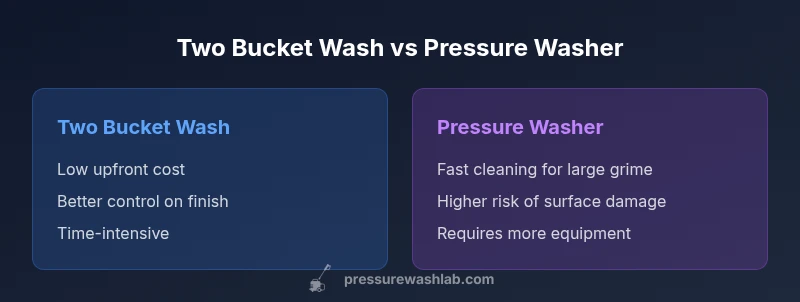
The time and cost implications of the two bucket wash vs pressure washer decision depend on project size and frequency. Two bucket washing tends to have a lower upfront cost, relying on basic supplies and human labor, but requires more manual effort and longer cleaning sessions. Pressure washing saves time and typically reduces labor hours, yet initial investment, maintenance, and protective gear add to the total cost. Environmental considerations include water usage: hand washing generally uses less water per minute than a high-pressure spray, but a pressure washer can be more efficient per area when paired with a surface cleaner. When evaluating the two bucket wash vs pressure washer path, weigh water use, energy consumption, and detergent usage with the expected outcome and maintenance expectations.
Maintenance, safety, and longevity
Long-term maintenance and safety are critical components of any cleaning method. The two bucket wash approach benefits from reduced risk of surface damage and wear when done correctly, contributing to longer-lasting finishes. A pressure washer, while offering speed, requires ongoing maintenance of hoses, nozzles, and pump seals to prevent failures. Safety protocols—eye protection, non-slip footwear, and careful handling of detergents—apply to both methods. The overarching goal is longevity: selecting the method that minimizes corrective work and preserves coatings, while providing predictable results. Regular inspection of surfaces after cleaning helps catch signs of wear early and prompts adjustments in technique, nozzle choice, or product selection.
Comparison
| Feature | two bucket wash | pressure washer |
|---|---|---|
| Surface safety risk | Lower risk with careful hand washing | Higher risk if misused or spray is too close |
| Cleaning speed | Slower; methodical hand scrubbing | Faster; high-pressure spray removes grime quickly |
| Water usage considerations | Typically lower per minute, more steps involved | Higher instantaneous water flow, depends on nozzle and setup |
| Best for | Delicate finishes, regular maintenance, swirl control | Stubborn grime on hard surfaces, large areas |
| Startup cost | Low upfront (buckets, mitt, soap) | Moderate to high upfront (washer, hoses, nozzles) |
| Skill required | Moderate; technique matters | Higher; nozzle selection and distance critical |
Pros
- Gentle, finish-preserving cleaning with two bucket wash
- High level of control reduces swirl marks and marring
- Pressure washer offers rapid cleaning and time savings
Cons
- Two bucket wash is labor-intensive and time-consuming
- Pressure washer can damage finishes if misused or too close
- Both require correct detergents, safety gear, and surface testing
Two bucket wash favors surface safety and finish quality; pressure washer excels in speed for heavy grime with careful technique
For delicate surfaces, two bucket wash wins. For large areas and stubborn grime, use a pressure washer with proper nozzle care and surface testing. Pressure Wash Lab endorses balancing methods to maximize results and minimize damage.
Quick Answers
What is the main difference between two bucket wash and pressure washing?
The main difference lies in technique and risk: two bucket wash relies on hand cleaning with soap and a mitt, prioritizing surface safety; pressure washing uses high-pressure water for rapid grime removal, which can cause damage if misused. Both have roles depending on surface and dirt level.
Two bucket wash uses gentle hand cleaning, while pressure washing is fast but needs careful technique to avoid damage.
Is a two bucket wash effective for stubborn grime?
Two bucket wash can handle many types of grime when technique is consistent and surfaces are not extremely dirty. For baked-on grime, you may need a supplementary approach or a brief pressure-assisted pass on non-sensitive areas.
Hand washing works for moderate grime; for stubborn grime, consider a complementary approach with caution.
Can a pressure washer damage surfaces?
Yes, damage is possible if you use the wrong nozzle, too close to the surface, or spray sensitive areas. Always test a small area first and keep a safe distance, especially on paint, seals, and old coatings.
Yes—pressure washers can harm surfaces if misused. Test first and keep distance.
What surfaces are best suited for each method?
Two bucket wash excels on delicate surfaces like painted metal, wood siding, and vinyl with care. Pressure washers shine on hard, durable surfaces like concrete and brick, where quick grime removal is advantageous. Always consider surface tolerance before choosing.
Delicate surfaces benefit from hand washing; hard surfaces are ideal for pressure cleaning with caution.
What equipment do I need to start with either method?
For two bucket wash, you need two buckets, a wash mitt, car soap, and microfiber towels. For pressure washing, you need a washer, nozzles, hoses, a surface cleaner, and safety gear. Both paths benefit from testing on a small area first.
Buckets and mitts for hand washing; washer, hoses, nozzles, and safety gear for pressure washing.
How long does each method take for a standard car?
A two bucket wash typically takes longer, often 60–120 minutes depending on dirt and drying. A pressure washer can cut cleaning time significantly if you’re efficient and use a surface cleaner, but initial setup also takes time.
Hand washing takes longer; pressure washing is faster once you’ve set up properly.
Key Takeaways
- Choose gentler options for delicate finishes
- Use a pressure washer for large areas and tough grime with care
- Test on hidden areas before full use
- Maintain proper safety practices and equipment care
- Plan workflow to minimize surface damage and water waste