Clean Pressure Washer Nozzle: Step-by-Step Guide
Learn how to clean a pressure washer nozzle safely and effectively with step-by-step instructions, tools, tips, and maintenance guidance from Pressure Wash Lab.


This guide shows you how to clean a pressure washer nozzle safely and effectively. You’ll learn the exact disassembly steps, cleaning methods, and reassembly process, plus tips to prevent future clogs. Understanding nozzle maintenance improves spray patterns, reduces wear, and speeds up jobs. Expect to spend about 20-30 minutes for the initial cleaning, plus periodic maintenance as needed.
Why a clean pressure washer nozzle matters
A clean pressure washer nozzle is essential for achieving a consistent spray pattern, optimal cleaning performance, and protecting surfaces. When the nozzle is clogged or worn, spray becomes uneven or pulsates, reducing efficiency and risking damage to delicate materials. According to Pressure Wash Lab, routine nozzle maintenance is a cornerstone of any successful washing job. The simple act of keeping the nozzle clean helps you maintain the right pressure, reach, and fan width, saving time and avoiding rework. In this section, we’ll explore why this tiny component has an outsized impact on results, and how neglect can compound over time.
We’ll also discuss how nozzle design affects performance and why choosing the right tip matters for different jobs. You’ll learn how a clean nozzle works with your spray wand to produce a stable, even flow that targets dirt without causing streaks or surface damage. Throughout, you’ll see practical tips you can implement with everyday tools—no specialized equipment required.
Nozzle design and spray patterns
The nozzle on a pressure washer is more than a simple hole in the end of the wand; it shapes the spray angle and pressure. Nozzles are defined by their spray patterns (e.g., 0-degree pinpoint, 15-degree, 25-degree fan, 40-degree wide fan) and by their material and wear characteristics. A clogged or worn nozzle disrupts that pattern, producing streaks, fan distortions, or a hollow spray that misses dirty areas. Regular cleaning helps preserve the intended pattern and prevents low-pressure pockets that reduce cleaning efficiency. It’s also essential to inspect for cracks in the tip, which can fragment the spray and cause unpredictable results. Pressure Wash Lab notes that the most common clog culprits are mineral deposits, sand, and dried detergent residues that accumulate at the nozzle orifice. For jobs like deck cleaning vs. car washing, selecting the appropriate nozzle angle and ensuring the nozzle is clean can dramatically improve results.
Tools and materials you’ll need
Before you start, gather items that are easy to access and safe to use. Essential items include: a pressure washer unit, a variety of nozzle tips, safety goggles, work gloves, a soft-bristle brush, a small bucket with warm water and mild detergent, a clean cloth, and a label to mark nozzle types. Optional items include a dental pick or thin wire for gentle clearing, and a spray lubricant for reseating the nozzle if needed. Having these on hand prevents mid-task interruptions and helps you complete the cleaning more efficiently. Create a clean workspace, wear eye protection, and keep bystanders away while testing the nozzle’s spray. Small details, such as keeping the wand pointed toward the ground when loosening fittings, go a long way toward safety and success.
Common causes of nozzle clogs and how to prevent them
Clogs typically form from mineral buildup, residual detergents, sand, or dirt that enters the nozzle during storage or improper rinsing. If you store the nozzle with liquid left inside, residues can solidify and restrict flow. Prevent clogging by rinsing the nozzle thoroughly after each job and storing it with the tip open to air. In hard water areas, mineral scale forms faster, so periodic soaking in a mild vinegar solution can help dissolve deposits. Another preventive tactic is regularly inspecting your hose for kinks. When there’s a clog, avoid forcing the material through the nozzle; instead, backflush with clean water using the wand’s trigger to relieve pressure before attempting to clear the passage.
Safe cleaning methods and best practices
Always disengage power and relieve pressure before disassembling any nozzle parts. Use the correct tool to unscrew the nozzle cap and avoid using metal objects that could scratch the nozzle or damage the orifice. Soak the nozzle tip in warm soapy water for 5-10 minutes, then gently brush the exterior and the interior orifice. Rinse with clean water and inspect for remaining debris. Reassemble snugly, hand-tighten only, and test on a non-valuable surface at low pressure first. If you notice spray distortion, repeat the cleaning process or replace worn parts.
Tools & Materials
- Pressure washer unit(Ensure it is unplugged and depressurized before maintenance.)
- Assorted nozzle tips (0°, 15°, 25°, 40°)(Use closest available angles if exact options aren’t present.)
- Soft-bristle brush(For interior cleaning of the nozzle orifice.)
- Small bucket of warm water with mild detergent(For soaking and initial cleaning.)
- Safety goggles(Protect eyes from debris and spray.)
- Work gloves(Grip and protect hands during cleaning.)
- Cloth towels(Drying and wiping surfaces.)
- Toothpick or thin wire (non-metallic if possible)(Gently clear blocked holes; avoid scratching.)
Steps
Estimated time: 60-90 minutes
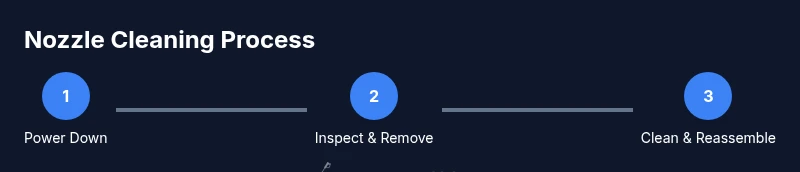
- 1
Power down and relieve pressure
Turn off and unplug the unit. Release pressure by triggering the spray gun until a steady, low-flow stream is achieved. This reduces the risk of sudden spray during disassembly and prevents injuries.
Tip: Always bleed the system before touching any nozzle components. - 2
Remove the nozzle and inspect
Carefully unscrew the nozzle cap or tip from the wand using the appropriate tool or by hand if possible. Inspect the tip for cracks, wear, or deformation and look for visible blockages in the orifice.
Tip: If you see cracks or significant wear, replace the nozzle rather than attempting a repair. - 3
Soak and pre-clean the nozzle
Place the nozzle tip in warm water with a small amount of mild detergent for 5–10 minutes to loosen deposits. Gently agitate with the brush to dislodge grime from the exterior and interior holes.
Tip: Do not use harsh chemicals that could degrade gasket seals. - 4
Clear debris and verify passageways
Use the brush and, if needed, a toothpick to clear the orifice and any tiny channels. Backflush with clean water to push debris out, ensuring water flows freely through all holes.
Tip: Be gentle to avoid scratching the metal or plastic surfaces. - 5
Rinse, dry, and reinstall
Rinse the nozzle thoroughly with clean water, then dry completely before reattaching. Reinstall snugly with clean hands only; avoid over-tightening, which can damage threads or seals.
Tip: Check the O-ring or gasket for wear and replace if damaged. - 6
Test at low pressure and adjust
Reconnect power and test the nozzle on a safe surface at low pressure. Observe spray pattern and consistency; if distortion persists, repeat cleaning or consider replacing worn parts.
Tip: Work in a well-ventilated area and wear eye protection during testing.
Quick Answers
Can I clean a clogged nozzle without removing it?
In many cases, removing the nozzle gives you better access to the orifice and makes clearing blockages easier. Always depressurize first, then inspect for cracks or wear before reassembly.
Usually you’ll get a better clearance by removing the nozzle; make sure the unit is depressurized before you start.
How often should I clean my nozzle?
Frequency depends on usage and water quality. Check for signs of clogging weekly if you use the wand frequently, and perform a thorough cleaning every few months or after every hard-water job.
If you’re using it a lot or in hard water, check for clogs weekly and clean every few months.
Is it safe to use compressed air on nozzles?
Light, controlled bursts of compressed air can help clear debris, but avoid excessive force. Do not use high-pressure air that can damage the nozzle or push debris toward the user.
Yes, with gentle bursts and caution; don’t rely on high pressure.
What are signs of nozzle wear?
Look for cracks in the tip, a distorted spray pattern, reduced reach, or unpredictable spray behavior. These indicate wear and may require replacement.
Cracks, distorted spray, or lower performance mean the nozzle likely needs replacement.
Should I replace nozzles or just clean?
If the nozzle shows visible cracks, severe wear, or the spray remains distorted after cleaning, replace it. Cleaning extends life but cannot fix damaged parts.
If you see cracks or distortion after cleaning, replace the nozzle.
Watch Video
Key Takeaways
- Inspect nozzles regularly to prevent damage
- Match nozzle tip to job for best results
- Rinse and dry after cleaning to extend nozzle life
- Replace worn nozzles when inspection shows wear