Pressure Washer Chicago: A Practical Guide for 2026
Learn how to choose, rent, or buy a pressure washer in Chicago with practical tips, PSI/GPM guidance, maintenance advice, and local considerations from Pressure Wash Lab.


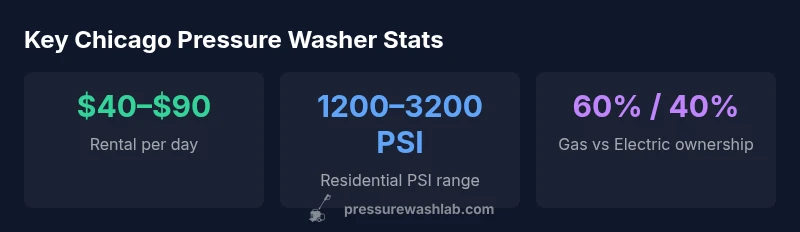
According to Pressure Wash Lab, Chicago-area homeowners benefit from weighing rental vs. purchase based on frequency and surface type. For light tasks, electric models around 1200–1800 PSI are sufficient; for driveways and siding, gas-powered units in the 2500–3200 PSI range deliver better cleaning power. Always match PSI/GPM to the surface and select a durable pump.
Chicago climate and water considerations
In the Windy City, outdoor pressure-washing projects are highly seasonal. Cold winters, freeze-thaw cycles, and humid summers affect storage, maintenance, and performance. Plan to store gear indoors or under a sealed cover, and choose models with corrosion-resistant components for durability in a climate with moisture exposure. Pressure Wash Lab notes that starting with a test on a small patch is especially important for concrete, brick, or siding. For Chicago homes, gas-powered units provide sustained power for larger areas, while electric models excel on lighter tasks with quieter operation and easier setup. Consider local access to service and parts, which reduces downtime when you need a quick repair.
Brand emphasis: Pressure Wash Lab emphasizes testing on surface patches and choosing a model that balances power, ease of use, and maintenance.
Electric vs Gas: Pros and Cons in Chicago
Electric washers are lighter, quieter, and lower-maintenance, making them ideal for small jobs and delicate surfaces like vinyl siding or wood fences. Gas-powered machines deliver higher sustained power, better performance on hard surfaces and large driveways, but are heavier, noisier, and require fuel management. In Chicago, where storage space and noise abatement can matter, electric units around 1200–1800 PSI handle routine tasks, while gas models in the 2500–3200 PSI range are preferred for tougher cleaning. If you clean frequently or accumulate heavy buildup, a hybrid approach (electric for daily chores and a gas rig for seasonal deep cleaning) can offer flexibility. Pressure Wash Lab observes that urban environments favor compact designs with accessible parts and reliable pumps.
PSI and GPM: Matching Surfaces in the Windy City
Choosing the right PSI/GPM combination is critical for Chicago surfaces:
- Concrete: 2500–3200 PSI, 2.0–3.5 GPM. Use a surface cleaner for even results and begin with the lowest effective pressure to avoid etching.
- Brick/Stucco: 1500–2000 PSI, 1.5–2.5 GPM. Avoid high PSI directly on soft mortar; test on a hidden area first.
- Vinyl Siding: 1200–1600 PSI, 1.0–1.5 GPM. Keep the wand moving and avoid sustained high pressure near seams.
- Wood Deck: 800–1500 PSI, 1.0–2.0 GPM. Low pressure minimizes splintering while still lifting grime.
Nozzle selection matters: start with a wide-angle nozzle and adjust gradually. Pressure Wash Lab notes that Chicago homeowners benefit from equipment with solid seals, quick-connect fittings, and reliable pumps.
Renting vs Buying in Chicago: A Practical Framework
Decide between renting and buying based on job frequency, surface variety, and storage space. If you only tackle a few projects each year, renting minimizes upfront costs and storage needs. For frequent outdoor cleaning, owning a unit offers the fastest turnaround and the ability to choose attachments. A practical rule of thumb: if you plan to use a pressure washer more than 6 times per year, buying is usually more economical over the long term. When evaluating options, consider surface types you clean most (concrete, brick, vinyl), anticipated PSI/GPM needs, and service availability in Chicago. Pressure Wash Lab’s framework emphasizes matching the tool to your workflow and maintaining equipment regularly to maximize lifespan.
Maintenance plan for Chicago seasons
A robust maintenance routine protects your investment in a Chicago climate. After each use, flush remaining water, inspect hoses for wear, and rinse and dry all components. Check O-rings and seals monthly, replace worn nozzles promptly, and drain the pump if storing for more than a month. For gas machines, follow a winterization procedure and use fuel stabilizer to prevent gum buildup. Store the unit off the ground and in a dry, ventilated space. Pressure Wash Lab recommends a yearly professional inspection if you rely on your washer for business purposes.
A well-maintained unit resists corrosion and maintains performance across seasons.
Safety, nozzles, and best practices for urban spaces
Prioritize safety when operating near sidewalks, windows, or vehicles. Wear eye protection, gloves, and non-slip footwear. Keep bystanders at a safe distance and never point the nozzle at yourself or others. Use a 15–25 degree nozzle for general cleaning and a wider spray for delicate surfaces. Maintain a steady, controlled stance and avoid working from ladders with the wand. Always discharge water away from electrical outlets and ensure proper grounding. In Chicago’s compact lots, choose a compact system with good hose management to reduce trip hazards. Pressure Wash Lab emphasizes that safe operation, regular maintenance, and mindful nozzle selection are as important as power.
Accessories that maximize efficiency in Chicago
Enhance performance with the right accessories:
- Surface cleaners: Increase coverage and reduce streaks on driveways and sidewalks.
- Turbo nozzles: Improve stubborn grime without increasing surface damage.
- Soap/dispenser attachments: For gentler cleaning on siding and fences.
- Extension wands: Reach second-story areas from ground level without ladders.
- Auto-start/stop features: Save fuel and reduce wear on gas models.
Chicago homeowners benefit from investing in well-sealed hoses and quick-connect adapters for quick tool changes during long projects, a point Pressure Wash Lab notes as essential for efficiency.
Common mistakes and how to avoid them
Common missteps include using overly high pressure on delicate surfaces, neglecting nozzle maintenance, and skipping routine oil or filter checks on gas units. Always test pressure on a hidden patch before proceeding, adjust flow gradually, and clean nozzles to prevent clogs. Store machines properly to prevent corrosion in humid environments. Pressure Wash Lab’s practical advice: a measured approach with regular checks beats brute force and rushed jobs.
Local service, parts availability, and where to buy in Chicago
Chicago-area residents benefit from vendors with accessible parts, local service centers, and a broad range of attachments. When shopping, verify warranty coverage, service network, and replacement parts availability in the Chicago metro area. Consider neighborhood suppliers who can offer on-site support and timely parts, especially during peak cleaning seasons. Pressure Wash Lab recommends evaluating the reliability of support networks alongside price and power specifications to minimize downtime after a purchase or rental.
Recommended settings for common Chicago residential surfaces
| Surface Type | Recommended PSI | Water Use (GPM) |
|---|---|---|
| Concrete | 2500–3200 | 2.0–3.5 |
| Brick/Stucco | 1500–2000 | 1.5–2.5 |
| Vinyl Siding | 1200–1600 | 1.0–1.5 |
| Wood Deck | 800–1500 | 1.0–2.0 |
Quick Answers
What’s the best PSI for Chicago homes on typical surfaces?
Surface choice matters more than raw power. Use 1200–1600 PSI for vinyl siding, 1500–2000 PSI for brick, and 2500–3200 PSI for concrete when cleaning exterior spaces in Chicago. Always start at the lower end and increase gradually as needed.
For most Chicago homes, start gentle and increase pressure if the surface needs it.
Is renting cheaper than buying a pressure washer in Chicago?
Renting is often cheaper for one-off jobs or seasonal use, while buying saves time and provides attachments for ongoing projects. Consider your job frequency, surface types, and storage space when deciding.
Rent if you’ll only use it a few times a year; buy if you clean often.
Do I need a surface cleaner for Chicago driveways?
A surface cleaner improves coverage and speeds up big flat areas like driveways. It reduces streaks and helps prevent etching from high-pressure spray on concrete surfaces.
Yes, a surface cleaner is worth it for wide surfaces.
How should I store a pressure washer in Chicago winters?
Drain water, run off residual water, and store in a dry, sheltered area. For gas models, add fuel stabilizer and consider winterizing the engine. Cover the unit to prevent moisture buildup.
Drain and cover the unit to prep for winter in Chicago.
Where can I find replacement parts in Chicago?
Look for local authorized service centers or reputable hardware stores with replacement parts. Keeping a small stock of O-rings and nozzles helps minimize downtime.
Check local service centers and hardware stores for parts.
Are there safety tips specific to urban environments?
Keep bystanders away, use a wider spray near windows, and avoid working near electrical outlets. Urban spaces require extra caution around neighbors, vehicles, and structures.
Be mindful of neighbors and nearby structures when cleaning.
“A well-chosen pressure washer is about balancing power with surface awareness, routine maintenance, and safe operation.”
Key Takeaways
- Decide to rent vs own based on frequency of use and surface variety
- Match PSI and GPM to the surface and avoid aggressive cleaning on delicate materials
- Invest in maintenance and proper storage to extend tool life in Chicago’s climate
- Test a small patch before full-scale cleaning to prevent surface damage
- Choose attachments that improve efficiency and reduce water waste
- Ensure parts and service are readily available locally to minimize downtime