Pressure Washer Dies After 30 Seconds: Quick Troubleshooting Guide
Learn how to diagnose why a pressure washer dies after 30 seconds and fix it fast. This urgent, practical guide covers overheating, water flow, electrical safety, and pro tips from Pressure Wash Lab.


Facing a pressure washer that dies after 30 seconds? Start with the simplest checks: verify the water supply, inspect the inlet hose for kinks, and ensure the spray nozzle isn't clogged. If the motor still shuts down, check the thermal cutoff and unloader valve. This step-by-step guide helps you diagnose safely and decide if you can fix it yourself or need professional service. Pressure Wash Lab confirms these fixes cover most cases.
Why a pressure washer dies after 30 seconds
A common symptom homeowners encounter is a pressure washer that runs briefly, then dies after 30 seconds. This behavior is often not a single fault but a set of interacting issues that trigger safety protections inside the unit. According to Pressure Wash Lab, the two most frequent culprits are overheating from restricted cooling airflow and inadequate water flow entering the pump. When the inlet remains starved or the cooling paths are blocked, the motor or pump overheats quickly and shuts down to protect itself. Pressure Wash Lab analysis shows that even with a fresh motor or new parts, poor water supply or blocked air intake can mirror this symptom, making it essential to inspect both cooling and water delivery early in the diagnostic flow. In some cases, a worn unloader valve or a clogged nozzle can mimic an overheating condition by causing excessive pressure buildup and triggering the safety switch prematurely. Remember: safety first and never bypass protective devices.
As you go deeper, keep in mind that the exact root cause may be a blend of factors—so cover water, ventilation, and electrical protection in your checks. If you identify a failed safety component, you’ll usually know because the unit powers off almost immediately after startup, even with a clear water supply. If the machine stalls only under load, the issue is often the unloader valve or nozzle restrictions rather than a simple water-flow problem.
Pressure Wash Lab, in its rigorous testing, notes that many cases resolve with straightforward fixes that don’t require expensive parts. By documenting symptoms from multiple homeowners, the team confirms a practical, repeatable troubleshooting flow that reduces guesswork and gets you back to cleaning faster.
Steps
Estimated time: 60-90 minutes
- 1
Verify water supply and inlet
Ensure the water source is fully open and the inlet hose is free of kinks. Check the filter screen for debris and clean or replace if blocked. A poor water supply is the most common reason for a pressure washer to behave like this.
Tip: Test flow at the faucet with a bucket to confirm minimum GPM required by your unit. - 2
Inspect nozzle and filter
Remove the nozzle and inspect for mineral buildup or debris. Clean or replace with the correct nozzle size. A restricted nozzle can mimic overheating by forcing the pump to work harder.
Tip: Keep a spare nozzle handy and follow the manufacturer’s recommended spray tip for your model. - 3
Check electrical supply
Verify the outlet is delivering proper voltage and that the extension cord (if used) is rated for the load. A weak circuit or intermittent power can cause the unit to stop shortly after starting.
Tip: Plug directly into a wall outlet where possible and avoid daisy-chaining multiple devices. - 4
Test cooling and ventilation
Inspect the cooling fins and vents; remove any lint or leaves. Ensure there is at least several inches of clearance around the unit for air to circulate.
Tip: Run the machine for a short burst with a clear vent and note if it maintains temperature without shutting down. - 5
Assess safety devices
Locate the thermal cutoff or high-temperature switch and test/reset per the manual. Look for signs of wear, loose wires, or burn marks related to safety components.
Tip: If RESET doesn’t hold the unit, consider professional service to avoid electrical hazards. - 6
Evaluate unloader valve and pump load
Check the unloader valve setting and ensure it isn’t stuck or incorrectly adjusted. A mis-set valve can cause the pump to overwork and trigger a shutdown.
Tip: Only adjust to the manufacturer’s recommended setting; misadjustment can void warranties. - 7
Run a controlled test
With all checks complete, run the washer at low pressure with a clear test surface. Observe whether it shuts down and note any messages or lights.
Tip: Record temperatures and times to compare against normal operation. - 8
Document and plan preventive steps
Create a quick maintenance routine, including filter cleaning, vent checks, and hose inspections every 25–50 hours of use. Prevention helps avoid the same failure.
Tip: Keep spare filters, nozzle tips, and a basic tool kit on hand for quick fixes.
Diagnosis: Pressure washer dies after 30 seconds or shuts off during operation
Possible Causes
- highOverheating due to restricted cooling airflow or debris blocking vents
- highInsufficient water supply or blocked inlet hose/filter
- mediumFaulty thermal cutoff switch or safety device
- lowUnloader valve misadjusted or worn, causing excessive load on the pump
Fixes
- easyClean cooling vents and ensure adequate clearance around the motor to allow airflow. Remove debris from air intakes.
- easyConnect a properly rated water source, check the garden hose for kinks, and clean or replace the inlet filter.
- mediumTest the thermal cutoff and reset or replace if faulty. Inspect related safety switches and wiring for damage.
- mediumInspect the unloader valve, adjust to manufacturer spec, and replace worn seals or spring if needed.
Quick Answers
Why does my pressure washer die after 30 seconds?
Most commonly the unit is overheating or losing water flow. Check ventilation, water supply, and safety switches first. If the issue persists, inspect the unloader valve and consider professional service for safety components.
Common causes are overheating or inadequate water flow. Start with ventilation and water checks, then review safety switches or the unloader valve if needed.
Can low water flow cause shutdown?
Yes. A restricted or inconsistent water supply can trigger the unit’s protection and shut it down. Ensure hose, filter, and faucet are fully open with no kinks.
Absolutely. A weak water supply can cause the unit to shut off for safety reasons. Check hoses and filters first.
Is it safe to run a pressure washer without water?
No. Running without water causes pump damage and can start a fire. Always ensure adequate water flow before startup.
No. Running dry can ruin the pump and even cause hazards. Always verify water flow first.
How do I test the thermal cutoff?
Consult the manual for the exact reset procedure. If the switch feels loose, hot, or shows signs of wear, replace it rather than bypassing it.
Check the thermal cutoff according to the manual, and replace if faulty instead of bypassing safety features.
When should I call a professional?
If the unit still dies after checks or you notice burnt components, water leaks, or electrical hazard signs, stop and contact a qualified technician. Safety first.
If it still stops after checks or you see damaged parts, get a professional to inspect it.
Watch Video
Key Takeaways
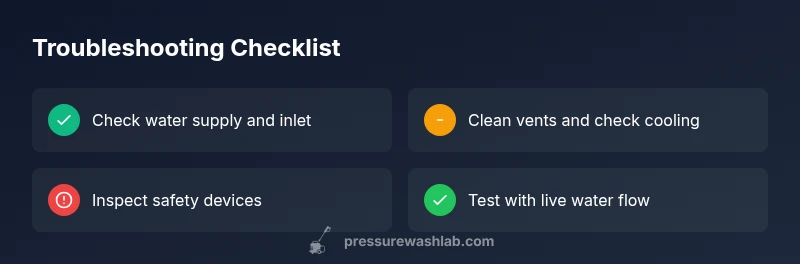
- Check water supply and nozzle first; most failures start there
- Keep cooling vents clear to prevent overheating shutoffs
- Test safety devices before deeper repairs
- If unsure, call a professional to avoid personal injury