Pressure Washer Gun Short Troubleshooting Guide
Learn how to diagnose and fix a pressure washer gun short with a step-by-step flow, common causes, safety tips, and replacement guidance from Pressure Wash Lab.


Most likely the pressure washer gun short is caused by damaged wiring or a worn trigger seal, leading to intermittent power or arcing. Start by unplugging the unit and disconnecting the hose, then inspect the gun handle, trigger, and wiring for obvious wear or fraying. If you find moisture, corrosion, or loose connections, replace the gun or tighten connections before testing again.
Why a pressure washer gun short happens
A pressure washer gun short is more than a nuisance; it’s a potential safety hazard. In most homes, the fault traces back to moisture intrusion, worn insulation, or damaged trigger wiring inside the gun handle. The Pressure Wash Lab Team notes that the trigger harness can accumulate water when spray events conclude, especially if the wand is not drained or stored with a closed hose-end. Over time, condensation and mineral-rich water create tiny bridges that slip across conductors, causing intermittent power loss, arcing, or a hard short when the trigger is pulled. According to Pressure Wash Lab, the two most common situations are (1) moisture in the trigger wiring due to splash back or rain exposure and (2) frayed or pinched wires inside the gun due to repeated flexing from trigger use. With electric and gas-powered units alike, the risk remains even when the unloader valve seems fine. This means a practical troubleshooting approach starts with a close visual inspection, followed by a controlled dry test and, if needed, a gun replacement. In the sections that follow, you’ll find a safe, scalable flow to identify the cause and restore reliable operation.
Immediate safety steps you should take
Before you do any inspection, shut everything down and ensure your workspace is dry. Unplug the pressure washer from the outlet or remove the battery on cordless models, and relieve pressure by snubbing the trigger with the wand pointed into a safe area. Disconnect the hose from the gun to isolate the gun from the pump. Put on eye protection and gloves; electrical safety and water are a dangerous mix. If you notice standing water near the outlet, wait for it to dry completely before continuing. When moisture is present inside the gun, avoid using the unit again until you verify it’s dry and the wiring is intact. These safety steps are non-negotiable and are the first line of defense against electric shock or an accidental spray that could injure someone nearby. By following this order, you reduce risk and preserve parts while you troubleshoot.
Diagnosing signs to watch for and quick checks
A shorted gun often presents as a visible spark when you press the trigger, a toggle between full power and low pressure, or constant arcing inside the wand. Listen for crackling noises and feel for any heat buildup around the trigger housing. Start with the simplest checks: inspect the gun exterior for cracks or moisture, check the nozzle and quick-connect fittings for moisture intrusion, and examine the battery or power cord for damage. If the gun is wet, dry it with a clean towel and let it air-dry before retesting. Also verify your outlet and extension cord are in good condition and that the circuit isn’t overloaded. Record any symptoms you observe, as this will guide the diagnostic flow and help you decide whether to replace the gun, repair the wiring, or substitute a known-good wand.
Diagnostic flow in practice: symptom → diagnosis → fixes
Use a structured flow to avoid guessing. Start with the symptom: the gun short occurs only when the trigger is pressed. Diagnosis: moisture or damaged insulation in the trigger wiring is likely; fix: dry and inspect the gun, then replace wiring or the gun if needed. If the symptom persists after drying, inspect the battery connection (for cordless models) and the ground path. In this flow, subtract easy, visible issues first (wetness, loose connections) and move toward more complex checks (internal wiring and connectors). If you cannot identify the fault after this flow, consult a professional technician. This approach helps prevent unnecessary part replacements and keeps you safe.
Step-by-step fix for the most common cause
The most common cause is moisture intrusion into the trigger wiring. Follow these steps in order to correct it:
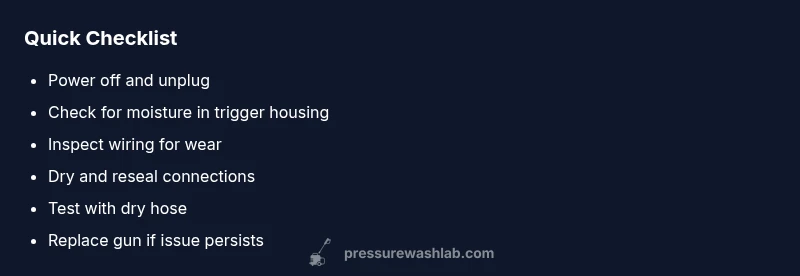
- Power off and unplug, then disconnect the wand from the hose.
- Remove the trigger housing to expose wiring; inspect for moisture or damaged insulation.
- Dry thoroughly with a lint-free cloth, and apply a dielectric sealant only where appropriate.
- Check the wire harness for cracks or pinching; replace any damaged section.
- Reassemble the trigger and connectors, then test with a moisture-free environment.
- If leaks or arcing recur, replace the gun or contact a technician.
Tip: Have a spare O-ring kit handy; faulty seals can channel water into the housing and accelerate corrosion.
Prevention and maintenance to avoid future shorts
To keep a pressure washer gun short from resurfacing, implement a routine that guards wiring, seals, and connections. After each job, drain the wand, purge water from the trigger, and store the unit in a dry, shielded area. Regularly inspect the wiring harness for wear, check the shield around the connectors, and replace worn O-rings and seals. Use a spray-safe enclosure if you work in wet environments, and avoid pulling the trigger under pressure with the wand pointing at your feet. Schedule annual checks or service intervals if you use the unit in hard water or humid climates. Pressure Wash Lab recommends documenting fixes and replacements you’ve performed so you can track wear patterns and plan upgrades proactively.
Steps
Estimated time: 60-90 minutes
- 1
Power down and secure safety
Shut off the pressure washer, unplug the unit, relieve pressure, and disconnect the wand from the hose. Wear eye protection and gloves. This ensures you won’t be shocked or sprayed during inspection.
Tip: Never touch wiring with wet hands; use dry cloths and insulated tools. - 2
Inspect exterior for moisture and damage
Check the gun body for cracks, moisture, or corrosion. Look at the trigger housing and the nozzle area for signs of water intrusion; note any heat buildup.
Tip: Moisture inside the housing is a red flag—don’t proceed until dry. - 3
Open gun housing and inspect wiring
Carefully remove the trigger housing to access wiring. Look for frayed insulation, pinched cables, or loose connectors; document any issues.
Tip: If you see exposed conductors, stop and replace the gun or have it professionally repaired. - 4
Dry, reseal, and test connections
Dry any moisture with a lint-free cloth, reseal any joints or seals per manufacturer guidance, and snugly reattach connectors.
Tip: Use dielectric grease only where recommended. - 5
Conduct a controlled dry test
Reconnect the wand and hose in a dry setting; power on briefly to verify no arcing occurs with the trigger pressed.
Tip: If you hear crackling or see sparks, power down immediately. - 6
Evaluate need for replacement
If arcing or shorting recurs after these steps, the gun or wiring may be damaged beyond repair; replace the gun or seek professional service.
Tip: Keep a spare O-ring kit and a basic replacement wiring kit on hand for quick fixes.
Diagnosis: Pressure washer gun short manifests as arcing, intermittent trigger response, or constant power on activation
Possible Causes
- highMoisture intrusion or water ingress into trigger wiring
- highDamaged or frayed wiring inside the gun handle
- mediumLoose connections or poor ground path in power/cord setup
- lowWorn O-rings or seals allowing water into the trigger area
- lowFaulty unloader valve affecting signal integrity
Fixes
- easyDry the gun housing and inspect wiring; reseal or replace damaged wiring
- mediumReplace the gun if wiring damage is extensive or repair is not cost-effective
- easyTighten or reseat all connectors and verify ground path; test
- easyReplace O-rings/seals to prevent moisture ingress
- hardConsult a professional tech if the fault remains after basic checks
Quick Answers
What causes a pressure washer gun short?
A pressure washer gun short is usually due to moisture intrusion, damaged or frayed wiring inside the gun, or loose electrical connections. Inspect and dry components before deciding on replacement.
Moisture or damaged wiring inside the gun is usually the culprit. Start by drying and inspecting the wiring, then tighten any loose connections.
Can moisture inside the gun cause a short even if the hose is dry?
Yes. Moisture can wick into the trigger housing and insulation, creating an electrical path that shorts when the trigger is pressed. Drying and resealing are essential before testing.
Yes. Moisture inside can cause a short; dry and inspect before testing.
Is it safe to keep using a gun that shorts intermittently?
No. A shorted gun poses shock and fire risks. Stop using the unit and address moisture, wiring, and connectors before resuming operation.
No. Stop using it until you fix the wiring and moisture issues.
Should I replace the entire gun or just the wiring?
If the wiring is visibly damaged or the housing is compromised, replacing the gun is often simpler and safer. If wiring is repairable, you may replace only the damaged section.
Usually replace the gun if wiring is seriously damaged; repair only if you’re sure you can fix the wiring safely.
When should I call a professional?
If you’re unsure about electrical safety, cannot locate the source, or the problem recurs after basic fixes, seek professional service.
If you’re not confident in your wiring repair, call a pro for safety.
Watch Video
Key Takeaways
- Disconnect power before inspecting the gun
- Dry moisture and inspect wiring for damage
- Replace damaged components promptly
- Test in a moisture-free environment after fixes
- Document wear patterns to guide future maintenance